what are you looking for?

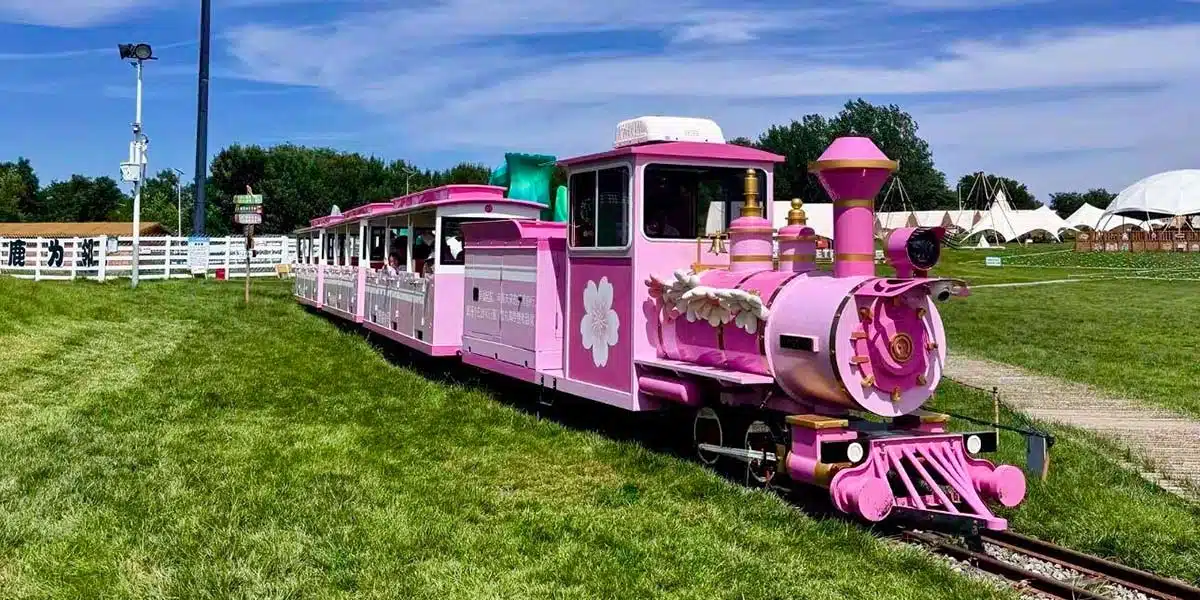
The global tourism and entertainment industry is evolving. Visitors now expect immersive experiences rather than passive sightseeing. When many investors, farm owners, or theme park developers hear the term “sightseeing train,” they often picture a small toy ride circling a short track in a local playground.
However, this common perception overlooks a significant commercial opportunity. Today, a modern commercial amusement park track train is a major tourism infrastructure asset. It is completely different from standard playground rides, rubber-tired shuttles, or municipal transit railways. It features specialized engineering standards and highly targeted application scenarios. Its primary business objective is clear: to generate premium ticket revenue, optimize crowd flow, and serve as a mobile landmark that increases the venue’s overall brand value.
Whether you are planning a 500-acre mega theme park, developing an eco-friendly mountain resort, revitalizing a rural agritourism complex, or looking to increase family dwell time inside an indoor shopping mall, understanding the mechanics, costs, and procurement strategies of an amusement tracked train ride is key to maximizing your capital expenditure (CAPEX) return.
In this comprehensive guide, we will break down exactly what you need to know about rail amusement park trains. From how they work and their real-world application scenarios to exact cost tiers and procurement strategies, this guide will provide you with a clear, actionable roadmap to make the right investment decision.
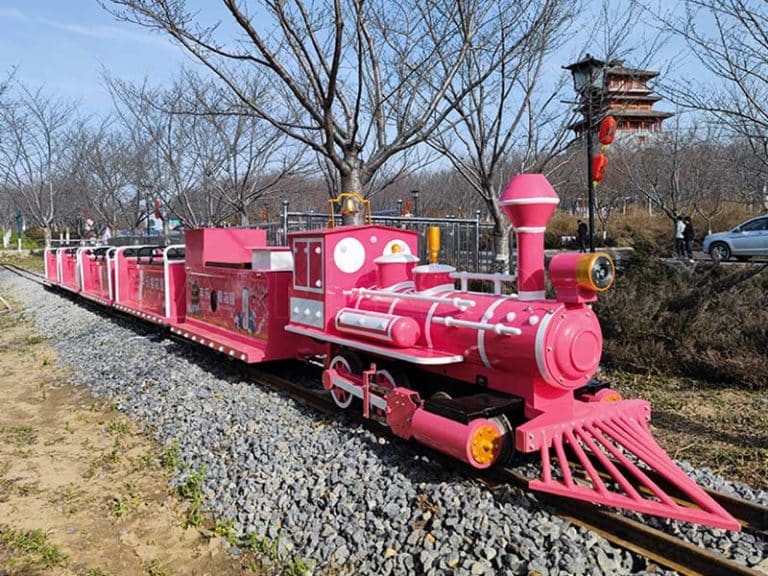
Simply put, a rail amusement park train is a customized passenger vehicle that runs on a dedicated steel railway. Unlike standard city subways or standard buses, it is built entirely for sightseeing and entertainment inside a specific venue.
Here are the three main features that make it stand out:
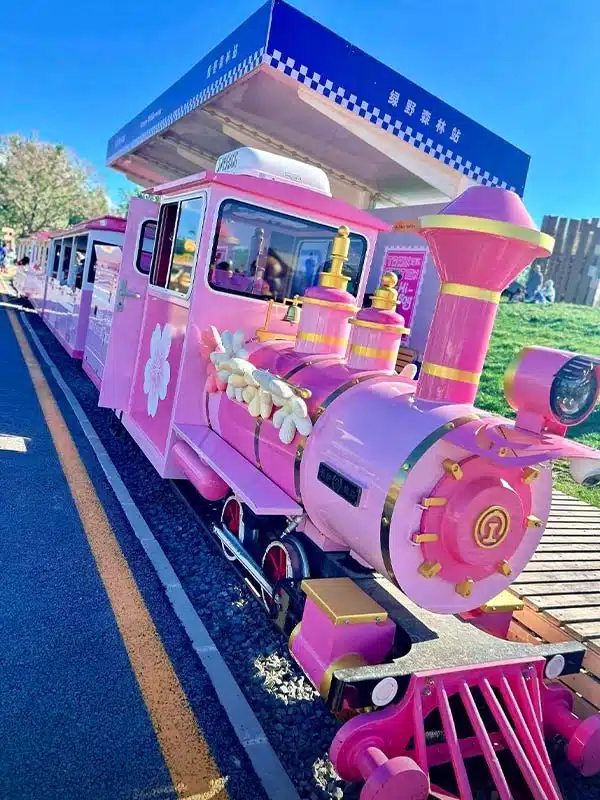
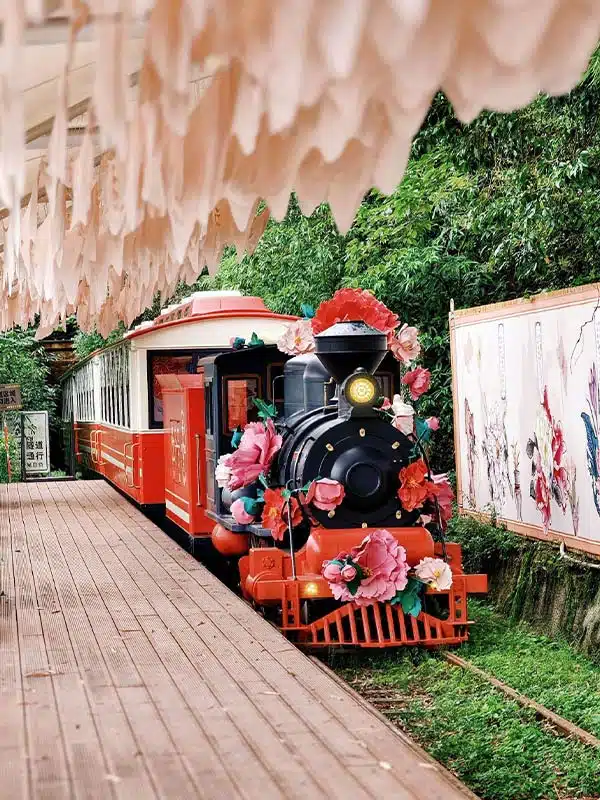
Unlike trackless trains or golf carts that have to share walking paths with your visitors, an amusement track train runs on its own fixed rails. This means it never gets stuck in foot traffic, won’t veer off course, and is incredibly safe for crowded parks. (If you are wondering whether to lay steel rails or just let rubber-tired vehicles drive on asphalt, our comparison on trackless train vs. track train will help you decide.)
City trains are designed to move people as fast as possible. But the experience of riding train with tracks in a tourism venue is meant to be slow and enjoyable. With a top cruising speed of around 20 km/h (12 mph), soft suspension, and open-air carriages, it acts as a moving observation deck rather than just a quick ride to the exit.
A park track train doesn’t drive on public streets. It stays safely within the borders of your resort, theme park, or shopping mall. Because it operates inside your private property, it follows specific amusement park safety rules instead of standard highway traffic laws. This gives you complete control over where the train goes and how much you charge for tickets.
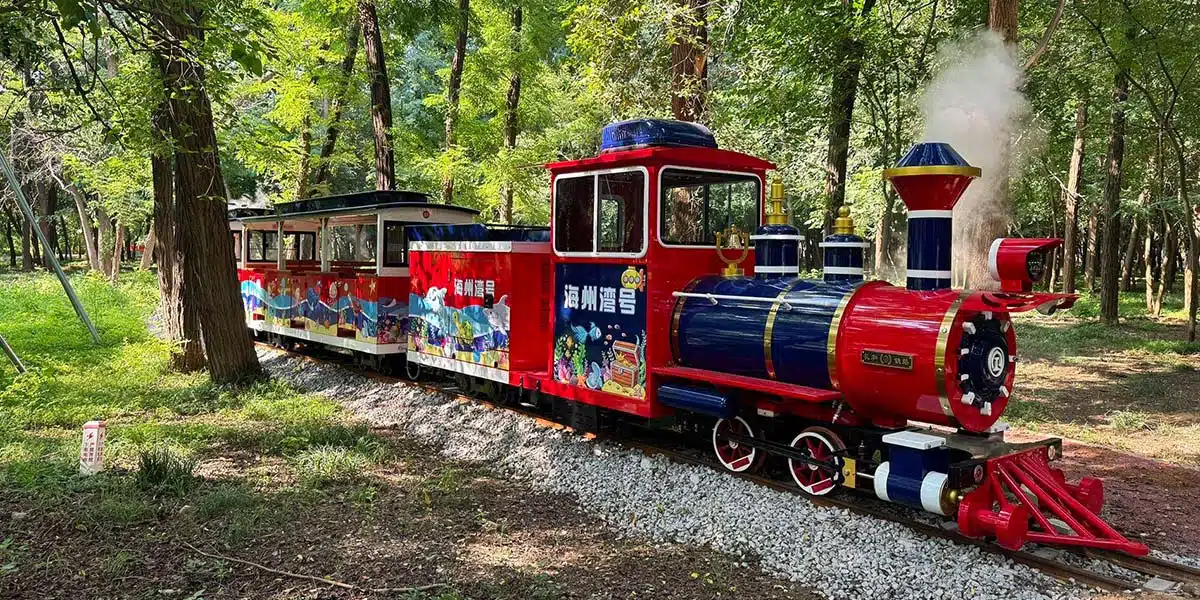
For investors without an engineering background, it is important to understand how these machines operate. While tourists see a vintage steam locomotive or a sleek bullet train, the internal mechanics combine traditional railway physics with modern clean energy.
Commercial track train rides generally utilize two distinct power systems. Both rely on a universal law of physics:
Regardless of how they receive power, all steel-rail trains rely on friction adhesion. The train moves forward through the friction generated between the smooth steel wheels and the steel rails. Because this friction is low, a small motor can pull an immense amount of weight. However, the locomotive must possess enough weight to grip the track properly. Engineers precisely calculate the ratio of the locomotive’s weight against the towing load to prevent the wheels from slipping during startup or on inclines.
This system is common in controlled, moderate-sized environments that are protected from heavy rain or snow (such as large indoor parks or semi-enclosed commercial spaces). It powers the train directly through the venue’s electrical grid.
The Power Control Cabinet: This unit takes standard alternating current (AC) from the grid and uses transformers to step the voltage down to safe, low-voltage direct current (DC) for amusement equipment (e.g., 24V, 48V, or 96V). It controls precise voltage output, time relays, onboard music, and emergency braking.
The Load-Bearing & Conductive Rails: The track consists of steel rails, sleepers, and a conductive column. The sleepers support the rails, provide electrical insulation, and absorb shock. A conductive steel column is installed parallel to the center of the track, acting as the power conductor.
Cabin Motors & Contact Wheels: The bottom of the locomotive is equipped with highly wear-resistant contact wheels. These wheels press against the side rails and the central conductive column, drawing a continuous stream of electricity to drive the motors.
For large outdoor scenic spots, national parks, or complex mountain terrains, laying fully electrified tracks is neither economical nor safe against severe weather. Therefore, the battery operated riding track train has become the standard for outdoor tourism projects.
In this system, the track serves purely for physical load-bearing and guidance; it carries no electric current. Heavy-duty battery banks (typically maintenance-free lead-acid or long-range lithium batteries) are housed inside the locomotive. These batteries feed power directly to electric traction motors. This allows for safe, all-weather, zero-emission operations through muddy trails, shallow water, and natural forests.

The commercial appeal of amusement track trains lies in their customization. Purchasing a train involves tailoring the machinery to your specific venue. Here are the critical technical dimensions:
The gauge is the inner distance between the two parallel steel rails.
Ultra-Narrow & Mini Gauges (300mm – 500mm): Designed for spaces with strict limitations, such as indoor shopping malls, dense gardens, or narrow historical town alleys. These compact electric ride on train with track models often have a carriage width of just 1.2 meters. They can navigate tight turning radiuses of 8 to 10 meters easily.
Medium Standard Gauges (600mm – 762mm): This is the most common amusement track width globally. It provides excellent stability, allowing carriage widths to reach 1.5 to 1.8 meters. This comfortably seats two adults side-by-side, making it the standard choice for mid-to-large scenic areas and farms.
Broad Gauges (900mm – 1435mm): Built for large-scale theme parks with massive daily attendance. These large models feature pneumatic air brakes, and a single broad carriage can hold 40 to 60 passengers.
Tourism traffic fluctuates heavily between weekends and weekdays. The greatest operational advantage of a rail amusement train is its modular capacity. A locomotive equipped with a standard 15kW motor can tow a significant amount of weight. Operators can attach six carriages during peak holiday rushes to move 100+ people at once, and reduce it to just two carriages during quiet weekdays. This strategy lowers battery consumption, reduces wheel wear, and cuts operational costs.
The visual design of a train directly impacts ticket sales. The outer shells of modern track trains are crafted from high-strength Fiberglass Reinforced Plastic (FRP). Professional manufacturers use 3D modeling and precision sculpting to create highly detailed designs.
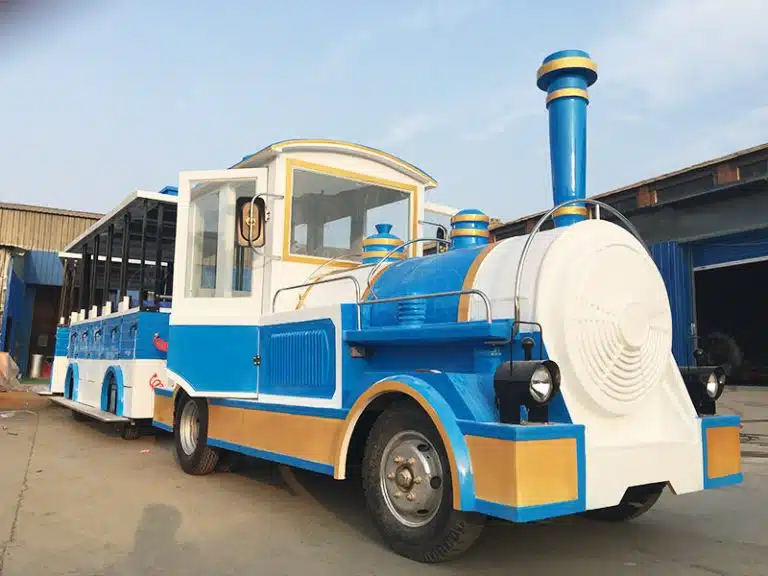
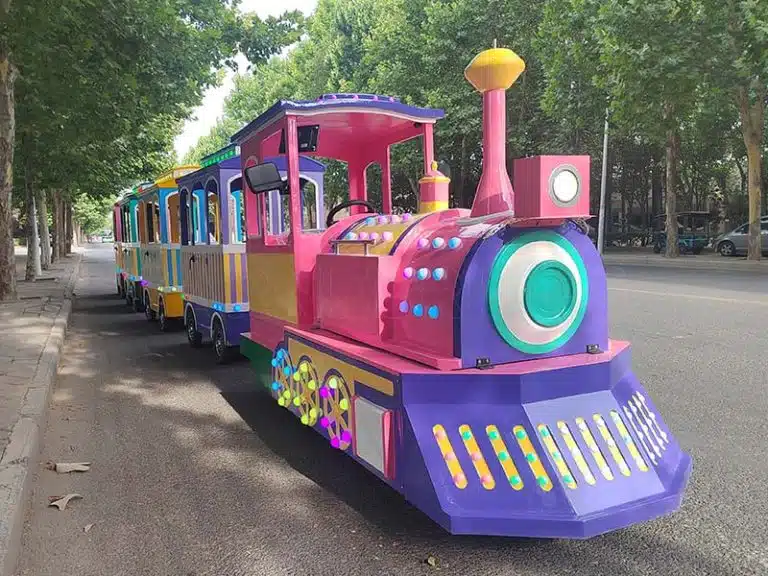
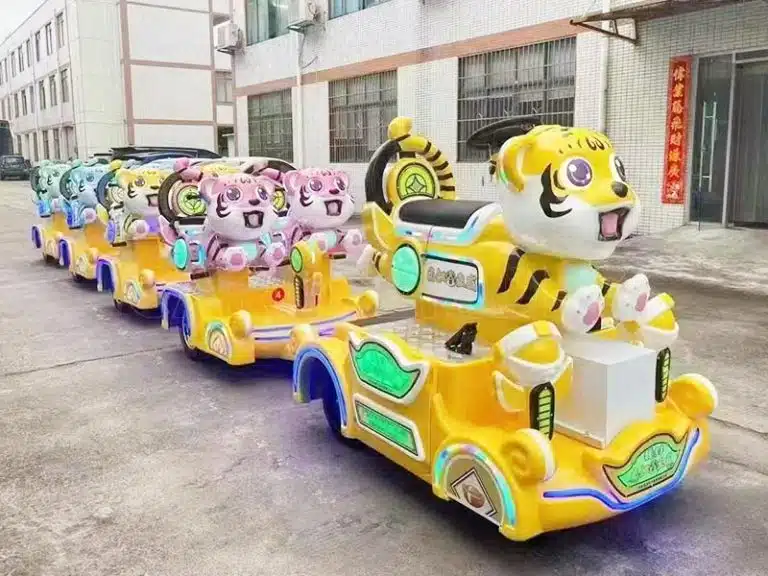
Whether you need an industrial 19th-century steam locomotive, an aerodynamic bullet train, or a custom cartoon shell featuring your park’s mascot, professional baking paint processes (including automotive metallic paints and high-gloss clear coats) ensure the train remains visually striking after years of outdoor use.
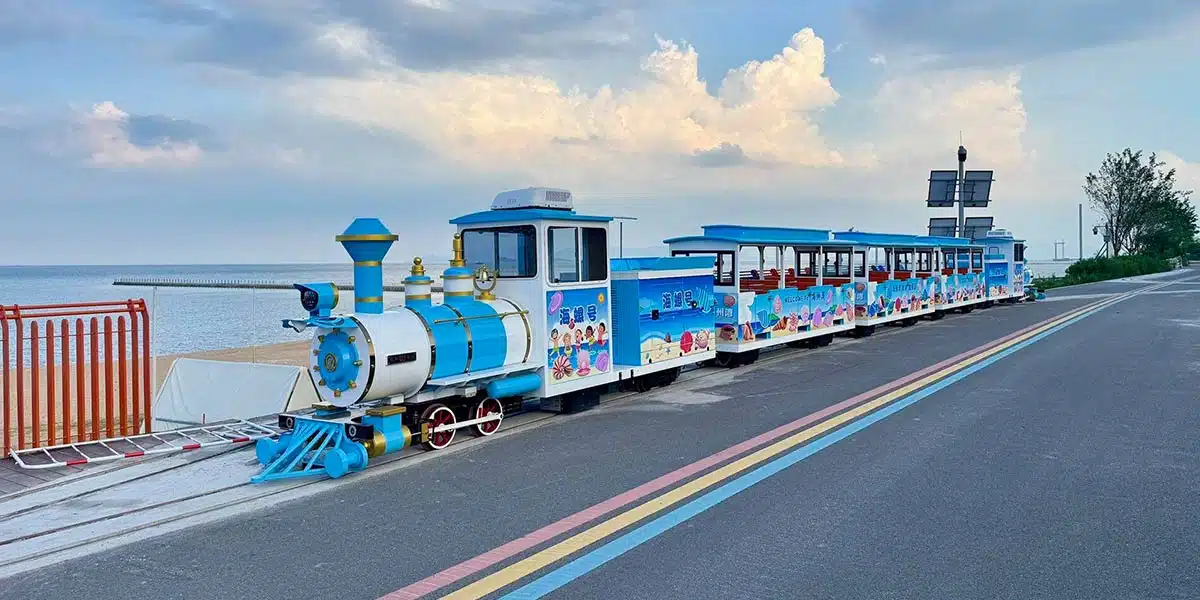
Installing a fixed-track system generates a high return on investment (ROI) for venues that have premium scenery, cover a large footprint, and require structured crowd management. Let’s examine its practical application across different sectors:
The Challenge: Guests walking through a massive park become physically exhausted by the afternoon. As a result, they often skip retail shops and leave the park early.
The Solution: Laying a high-capacity track train loop around the park’s perimeter. The train ride acts as the main transport artery, comfortably moving tired families from the deepest ride zones directly back to the retail hub near the exit. By giving guests a chance to rest, operators reignite their desire to shop, which increases per-capita spending on food and souvenirs.
The Challenge: Paving wide asphalt roads for buses damages underground water systems and ancient tree roots. Additionally, diesel bus exhaust is harmful to wildlife.
The Solution: Deploying ecological railways using permeable crushed-stone ballast, paired with a zero-emission, low-noise battery operated riding track train. Tourists sit in open-air carriages, experiencing the natural environment up close without leaving a carbon footprint.
The Challenge: Farms are expansive, and attractions like petting zoos and picking gardens are widely dispersed. The lack of structured transport leaves visitors feeling disconnected.
The Solution: Build a train ride with track that cuts through the agricultural landscape. The appearance of a vintage tractor-style or rustic steam train instantly elevates the farm’s appeal. It serves as both a practical transport tool and the farm’s most iconic photo opportunity, drawing large crowds of young families.
The Challenge: Guests staying in private hillside villas do not want to hike uphill or squeeze into crowded golf carts after visiting valley-floor hot springs.
The Solution: Introduce a premium track train ride as a scheduled shuttle. Featuring padded leather seating, wood trim, and smooth air suspension, the train glides quietly through the resort. This seamless transportation method reinforces the resort’s luxury positioning.
In the central atrium of a large shopping mall, a micro-scale children’s ride on train with track (with rails raised just a few centimeters off the floor) is highly profitable. Vibrant lighting and music attract young children. When a child rides the train, parents are required to stop and wait. This forced dwell time correlates directly with secondary purchases at nearby coffee shops or toy stores.
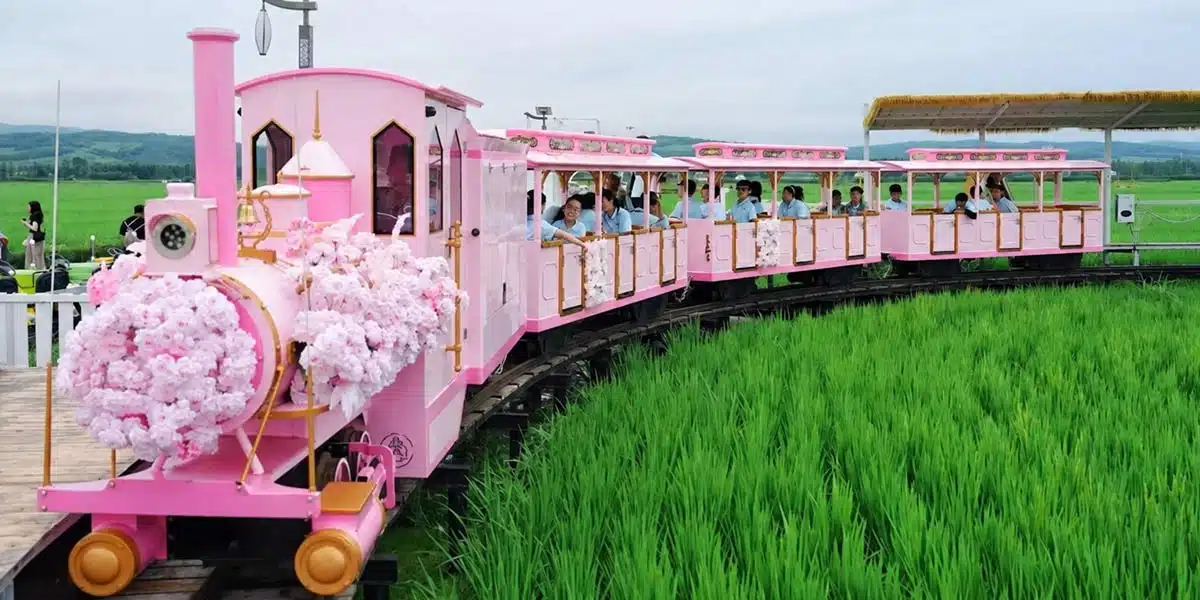
For investors, the financial return is the most important factor. Investing in commercial track trains yields reliable, multi-dimensional revenue:
Tourists often dislike paying for basic transportation. If a venue charges a high fee for a standard shuttle bus, guests view it as a hidden tax. However, if that same journey is packaged as a "Scenic Vintage Train Journey," tourists will gladly pay premium prices ($15 to $25) for the experience. It is perceived as a primary attraction. This premium pricing structure ensures that the initial capital expenditure of laying the track is often recouped within the first 6 to 12 months.
The track is fixed, which gives operators complete control over where guests travel. The vast majority of tourists will disembark exactly where the train stops. Operators can strategically position the terminal stations inside the venue's most profitable retail zones or dining areas. You are physically guiding consumer traffic directly to your highest-margin businesses.
A highly aesthetic track train ride acts as a powerful marketing tool. As it travels through beautiful scenery, tourists will naturally record photos and videos to upload to social media platforms. The train becomes a recognizable focal point for your venue, generating consistent, organic online traffic.
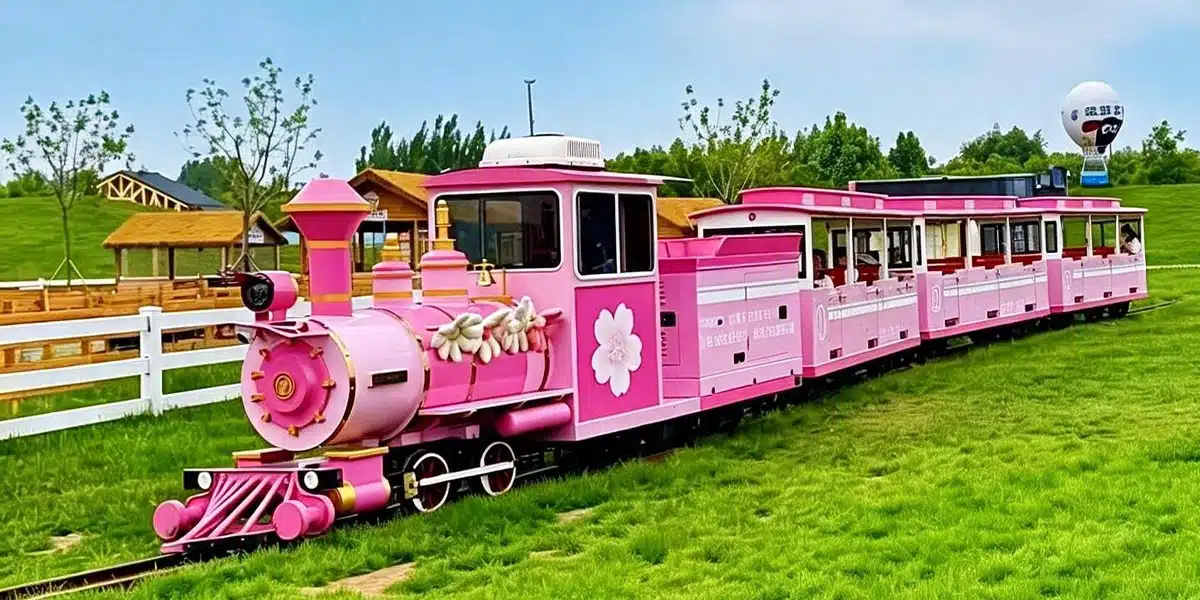
When preparing a budget, investors should note that amusement park track trains are highly customized, meaning pricing varies significantly. Based on Ex-Works (EXW) factory pricing from major amusement manufacturers, we can categorize the investment into three tiers:
Extremely friendly for modest budgets. For around five thousand dollars, you can acquire a compact, exquisite children's train ride. Usually utilizing a 300mm narrow gauge and towing 3 to 4 vibrant carriages (like an ocean-themed or classic aesthetic), these are perfect for indoor mall atriums, small family farms, or community parks.
The "Golden Choice" for the vast majority of mid-to-large scenic spots, zoos, and resorts. These feature wider gauges (e.g., 600mm for high stability), spacious seating for adults, massive battery capacities (supporting 8-12 hours of high-intensity operation), and thickened, premium FRP shells designed for extreme longevity.
Engineered for international-level mega theme parks experiencing daily foot traffic in the tens of thousands. They boast heavy-duty steel chassis, complex air-braking systems, and luxuriously intricate shell designs (e.g., highly realistic brass piping, smoke-emitting funnels, and exclusive IP character sculpting).
【Financial Budgeting Note】: The prices above represent the factory equipment cost (EXW). When calculating the total project budget, investors must also account for the procurement of steel rail materials, sleepers, and the "civil engineering costs" of excavating the site and laying the ballast. We recommend sending a detailed topographical CAD layout to the manufacturer for a comprehensive quote.
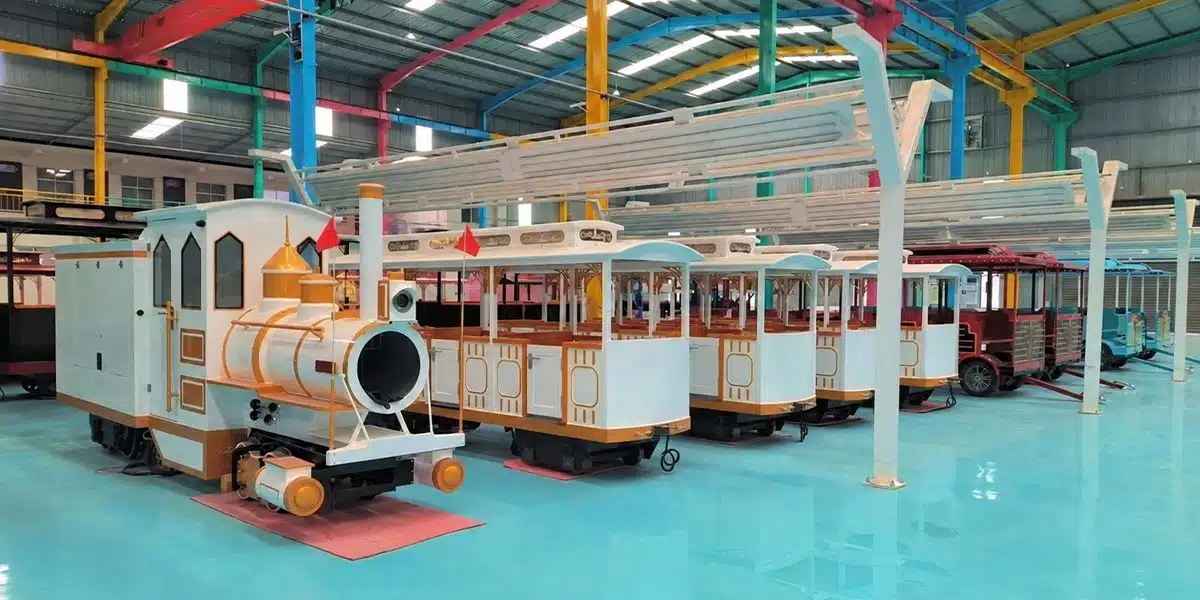
As a source factory with a profound heavy-industry heritage that has engineered railway systems for countless top-tier parks globally, Carnee Rides has witnessed too many investors suffer devastating financial losses due to inexperience. If you are making procurement decisions, treat these three rules as gospel:
This is the industry’s biggest minefield. Many investors sign contracts hastily because the train’s shell looks pretty, only to find the locomotive cannot climb the slopes at their scenic spot. As mentioned earlier, the safe climbing limit for a standard friction track train is generally between 3% and 4% (with some high-power, lightweight models pushing 5%). If your mountain terrain features gradients of 8% or 10%, standard steel wheels will absolutely spin in place, creating a highly dangerous rollback risk. In these scenarios, you must utilize an expensive, specialized “Rack Railway (Cogwheel)” system. To prevent hundreds of thousands of dollars in wasted infrastructure, we strongly urge you to read our expert-level avoidance guide on buying amusement track trains 8 traps before paying any deposits.
Do not be blinded by obscenely low quotes from trading companies. Amusement equipment is a high-frequency production tool; its true cost lies in its future TCO.
Inferior trains use paper-thin fiberglass (under 3mm) and cheap commercial paint. Under UV exposure and harsh weather, they fade, crack, and turn to scrap within six months. Worse, cheap unbranded traction motors frequently burn out under peak summer loads. If your equipment breaks down for a single day during a holiday week, the lost ticket revenue alone would have paid for a brand-new, premium train.
Always work directly with a source factory that possesses independent welding, baking paint, and assembly workshops. They use 4-5mm thickened FRP, multi-layer automotive paint, provide standard CE/ISO certifications, and guarantee a 10-year parts supply.
An elite amusement track train ride supplier doesn’t just “sell you metal boxes”; they are your railway engineers. They must possess a robust technical team capable of analyzing your aerial drone footage and topographical elevation data to precisely calculate minimum turning radiuses, design safe bypass tracks, and output rigorous CAD track-laying blueprints long before you move a single shovel of dirt.
During the final mile of project implementation, our engineering team is frequently asked the following operational details:
A: It does not need to be absolutely flat, as modern tracks can follow gentle terrain, but there are strict engineering physics limits. Generally, track undulations should not exceed a 3%-4% gradient. Furthermore, curves must be precisely calculated; the outer rail requires proper superelevation (banking) to counteract centrifugal force, ensuring absolute stability when the train rounds corners at speed.
A: Modern pure electric technology is incredibly mature. We equip our trains with industrial-grade, high-capacity traction batteries. A single overnight charge (usually taking 8-10 hours) supports 8 to 12 hours of continuous, fully loaded, high-intensity daytime operation. This perfectly covers the standard operating hours of almost any scenic spot, meaning mid-day charging is rarely required.
A: Absolutely. The power of Fiberglass Reinforced Plastic (FRP) molding gives us limitless creativity. Whether you need a classic vintage steam locomotive, a sci-fi bullet train, or want to turn your farm’s exclusive IP mascot (like a giant rabbit) into the locomotive shell, we can recreate it 100% via 3D modeling. Seating can also be configured as high-density benches for children or spacious face-to-face booths for adults.
A: This is a common misconception; the exact opposite is true! Once a track is laid with high quality, the downstream maintenance costs are exceptionally low. Unlike traditional diesel buses or trackless shuttles that require constant rubber tire replacements and complex steering/transmission repairs, pure electric track trains are remarkably simple. Daily operators only need to check battery fluids (if using lead-acid), grease the wheel bearings, and visually inspect track joint bolts. It is incredibly worry-free.
A: This depends entirely on your venue’s environment. Traditional treated wooden sleepers offer the best visual aesthetics, incredible retro texture, and excellent shock absorption, making them ideal for mostly dry, outdoor environments. However, in extremely humid regions or areas prone to termite infestations (like dense southern forests or near water parks), we strongly recommend modern, high-strength FRP sleepers. They never rot, never rust, and boast a lifespan of decades.
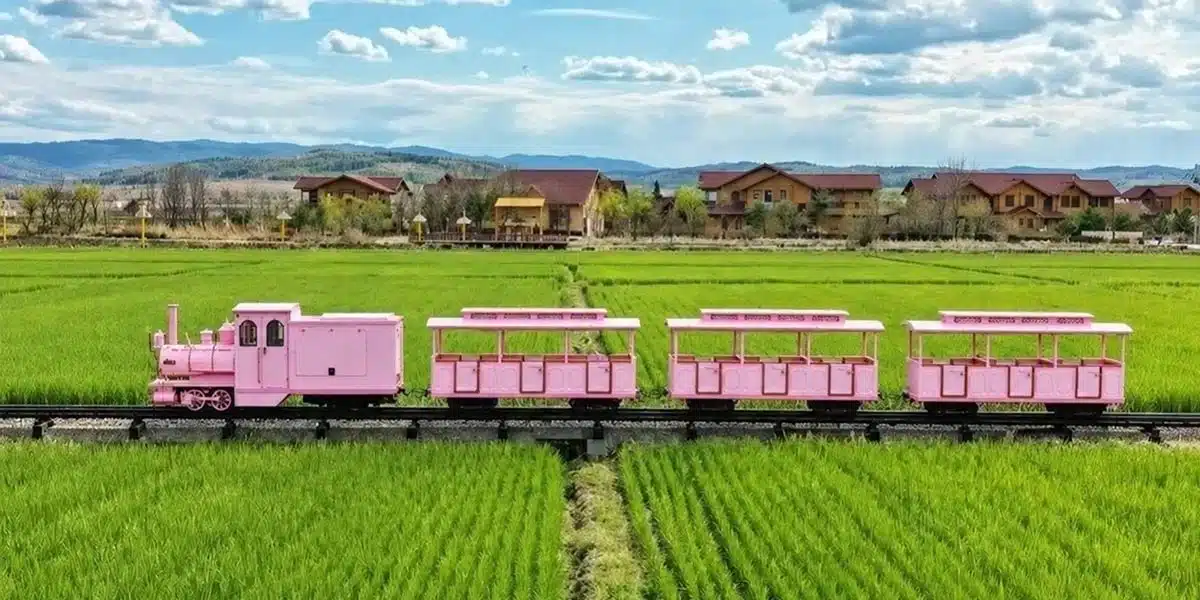
A commercial rail amusement park train is much more than just a ride; it is a smart investment that solves crowd movement problems and guarantees a steady stream of ticket revenue. Whether winding through a natural forest, a bustling theme park, or a family farm, the unique charm and reliable performance of a real steel-rail train simply cannot be matched by rubber-tired buses or golf carts.
If you are ready to upgrade your venue and boost your profits, we invite you to explore our full catalog of premium track train rides for sale. The experienced engineering team at Carnee Rides is ready to review your site layout, help you avoid expensive setup mistakes, and build the perfect railway solution that fits your budget.

Tags :
Whatsapp : +86 13623710276
Email : [email protected]
Address : High-tech Industrial Development Zone, Zhengzhou


WhatsApp us