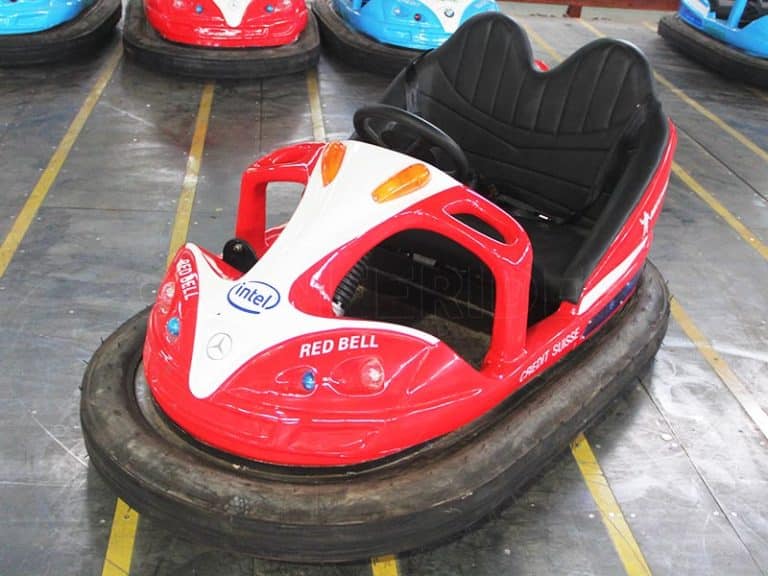
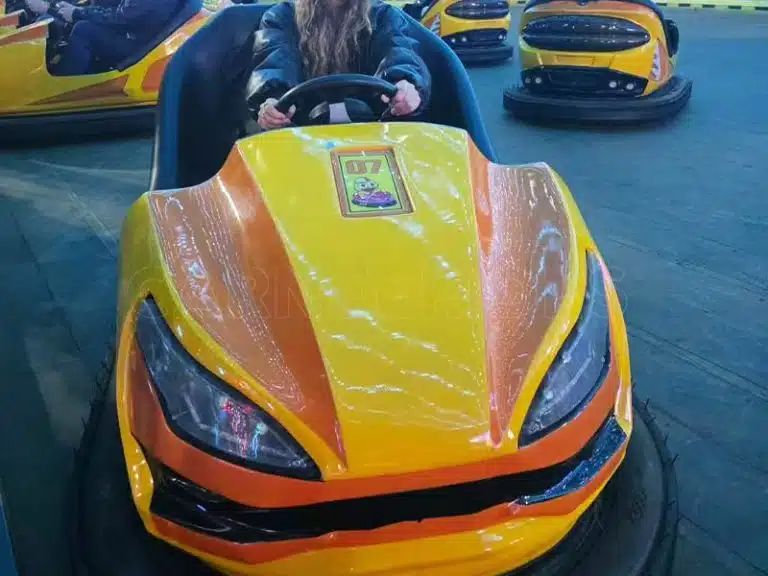
For amusement park operators, traveling funfair organizers, and carnival event rental entrepreneurs, maximizing attraction ROI comes down to three crucial elements: mobility, operational speed, and durability.
Historically, bumper cars (also known as dodgems or autoscooters) required permanent concrete foundations, days of structural assembly, and fixed venue lease commitments. Today, the advent of portable trailer bumper cars and trailer-mounted dodgem arenas has revolutionized the amusement landscape. An entire commercial-grade driving track can now be folded, towed across cities, and deployed on any flat, hard surface in less than an hour.
However, purchasing a commercial folding bumper car arena from an overseas manufacturer involves critical technical considerations. It is not just about choosing vehicle aesthetics; it demands engineering harmony between the hydraulic lifting system, structural load limits, electrical compliance, corrosion resistance, and shipping configurations.
Founded in 1998, Carnee Rides is a premier professional amusement equipment manufacturer based in China. Specializing in the engineering and production of mobile amusement rides, Carnee Rides brings over 20 years of dedicated manufacturing experience in hydraulic folding bumper car systems, backed by more than 200 successful, proven commercial project cases deployed worldwide. Drawing on this deep manufacturing heritage and global export expertise, this ultimate guide answers every technical, operational, and commercial question to help you make an informed, profitable investment.
For the latest models, technical drawings, and custom proposals, you can explore our factory-direct portable trailer bumper cars for sale.
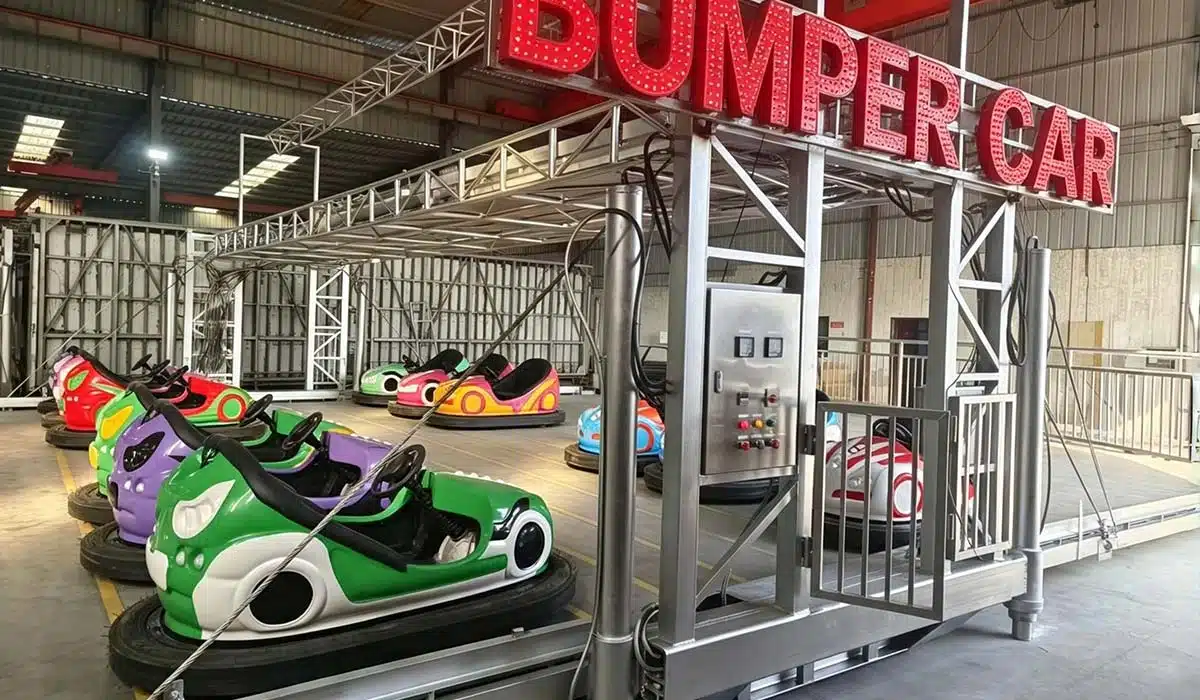
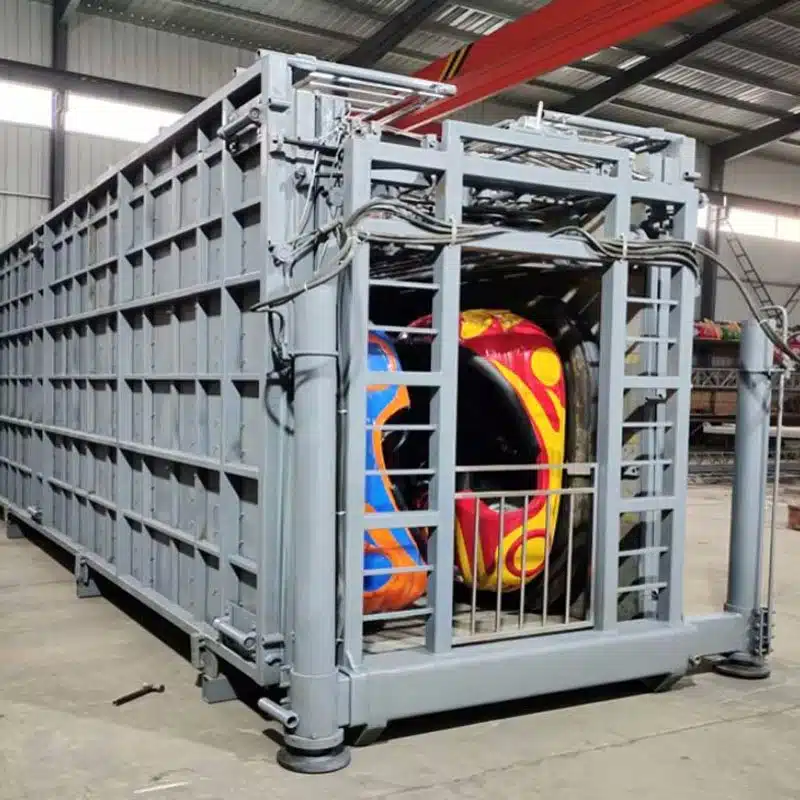
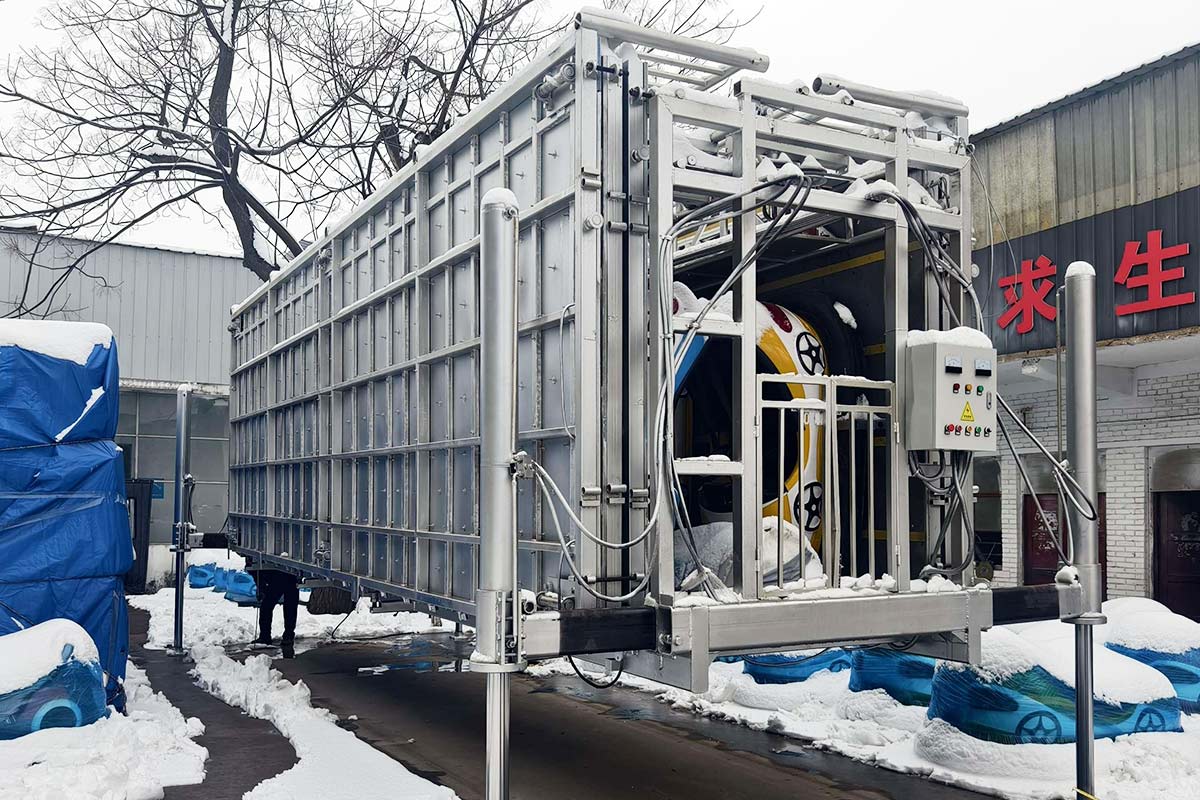
A commercial portable trailer bumper cars system is a turnkey, mobile attraction engineered to collapse into a compact, street-legal trailer configuration for transport, and expand via heavy-duty hydraulics into a fully functioning dodgem arena on-site.
Unlike static theme park rides, a mobile bumper car system integrates every functional subsystem into one transportable footprint:
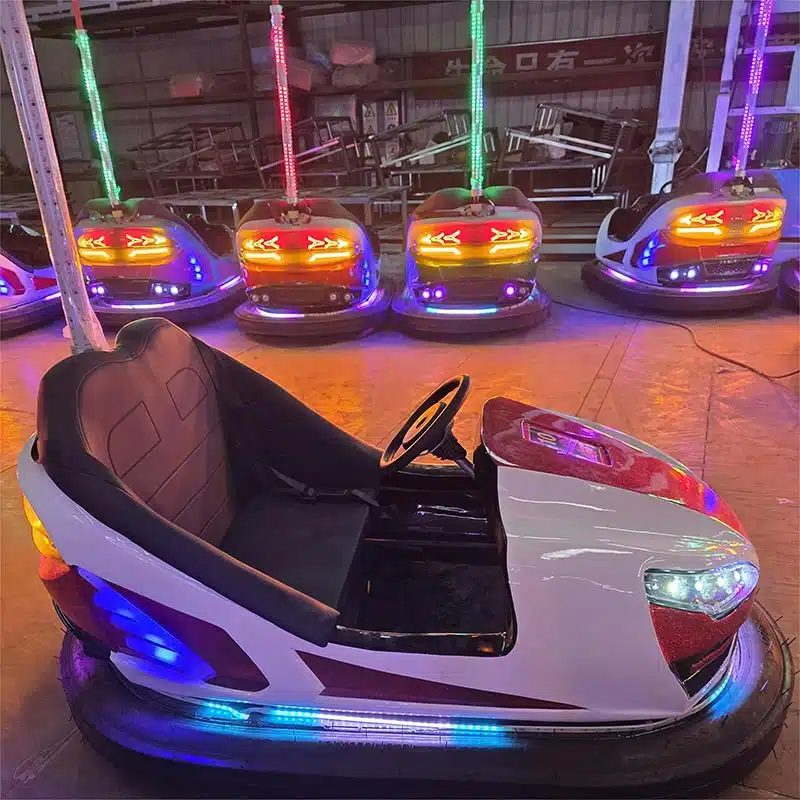
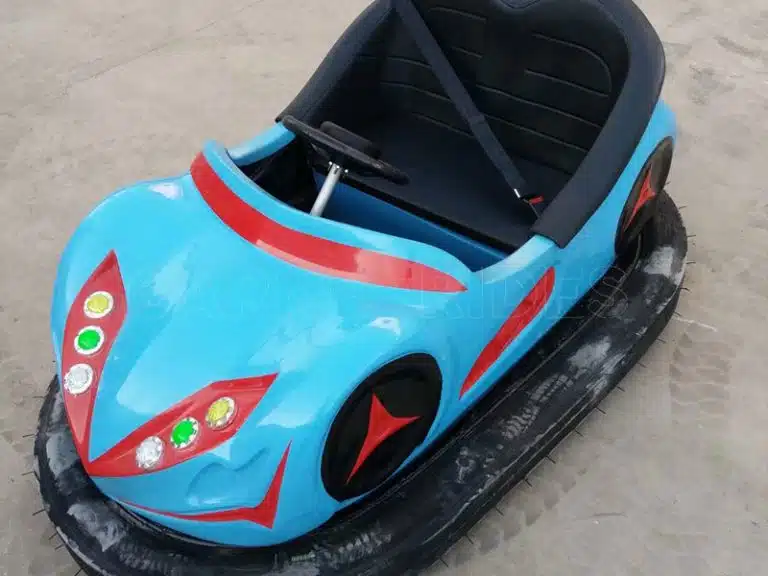
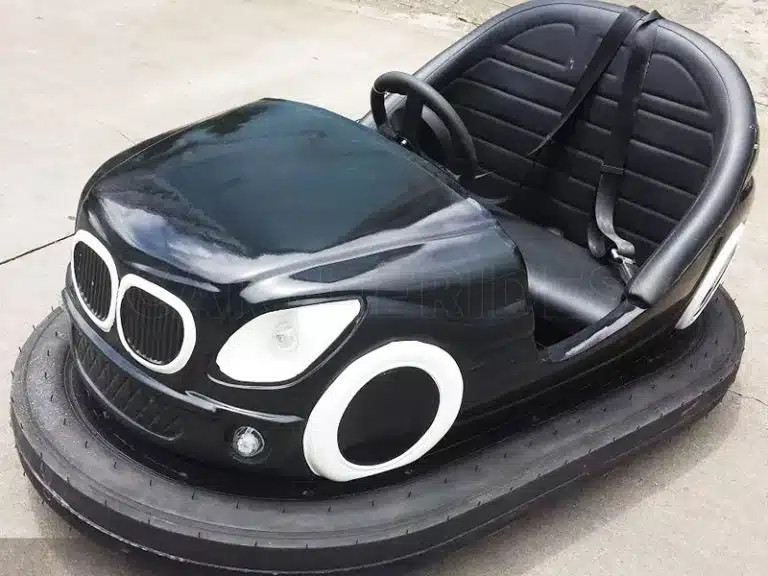
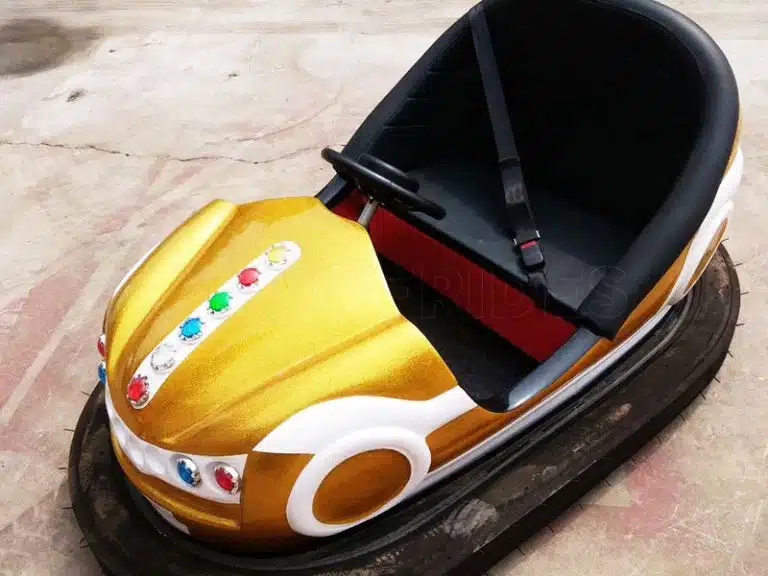
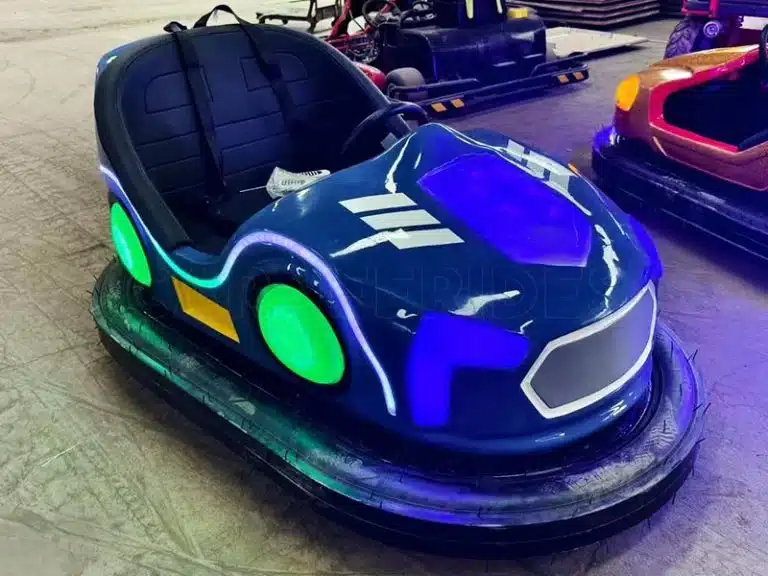
High-impact passenger vehicles designed for continuous operation.
Automated folding steel floor wings and/or overhead ceiling trusses.
Conductive ground-grid steel plates or an electrified ceiling mesh connected to an industrial transformer/rectifier control cabinet.
Integrated barriers and Inox (stainless steel) fencing with operator-controlled passenger entry/exit gates.
Emergency-stop circuitry, synchronized multi-color LED track lighting, and background audio systems.
A heavy-duty subframe that can be built directly onto an integrated trailer or designed to mount seamlessly onto a customer’s existing flatbed trailer.
When researching “portable bumper cars” online, search engines frequently show consumer toy products such as Flybar bumper cars, 6V or 12V toddler ride-on toys, or remote-control plastic bumper cars under $300.
It is vital for commercial buyers to separate consumer novelties from industrial-grade equipment:
Consumer Ride-Ons: Plastic, battery-operated mini toys designed for individual children on domestic driveways, lasting 1–2 hours per charge with minimal impact tolerance.
Commercial Folding Arenas: Multi-ton, heavy-duty amusement installations weighing 18 to 20 tons. They run industrial DC power systems, handle hundreds of adult and teenage riders per hour, feature automotive-grade fiberglass, and comply with international ride safety standards.


The primary business advantage of a mobile bumper car arena is zero civil foundation work. As long as the operating ground is flat, firm, and level (asphalt, concrete, or compacted fairground surfaces), the system can be deployed anywhere crowds gather:
Operators can travel from city to city, setting up for weekend festivals and packing up overnight.
Commercial event companies can rent the entire arena out for high-budget corporate milestones, music festivals, and municipal holidays.
Landlords or seasonal concessionaires can place the arena in open plazas or indoor mall atriums during peak Christmas and summer shopping seasons without drilling into venue floors.
Coastal resorts and eco-parks can introduce a high-earning family interactive ride during peak tourist months and store the folded unit during the off-season to eliminate weather wear.

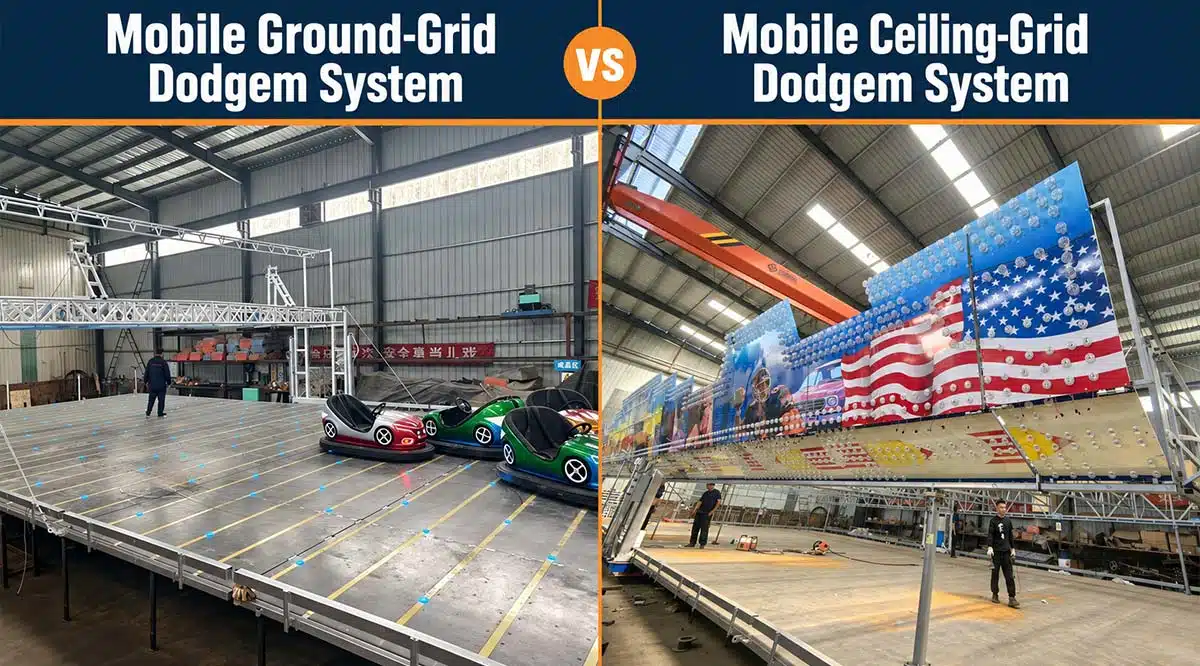
A mobile hydraulic folding bumper car system can typically be configured with either ceiling-grid (skynet) bumper cars or ground-grid bumper cars. It is critical to recognize that depending on the type of bumper car system you select, the entire structural engineering, mechanical framework, and lifting mechanisms of the mobile arena will be completely different. Consequently, the total capital expenditure and project pricing will also vary substantially:
Mobile Ground Grid Bumper Car Systems: The mechanical emphasis is positioned entirely on the folding floor panels and base chassis. This configuration eliminates the need for heavy overhead trusses, keeping the center of gravity low and manufacturing costs streamlined and cost-effective.
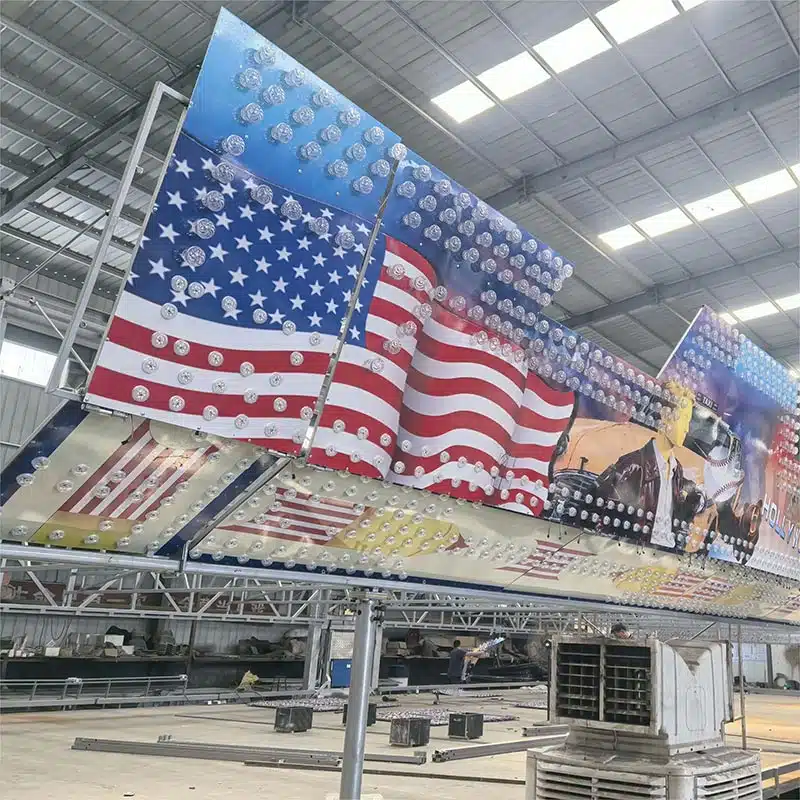
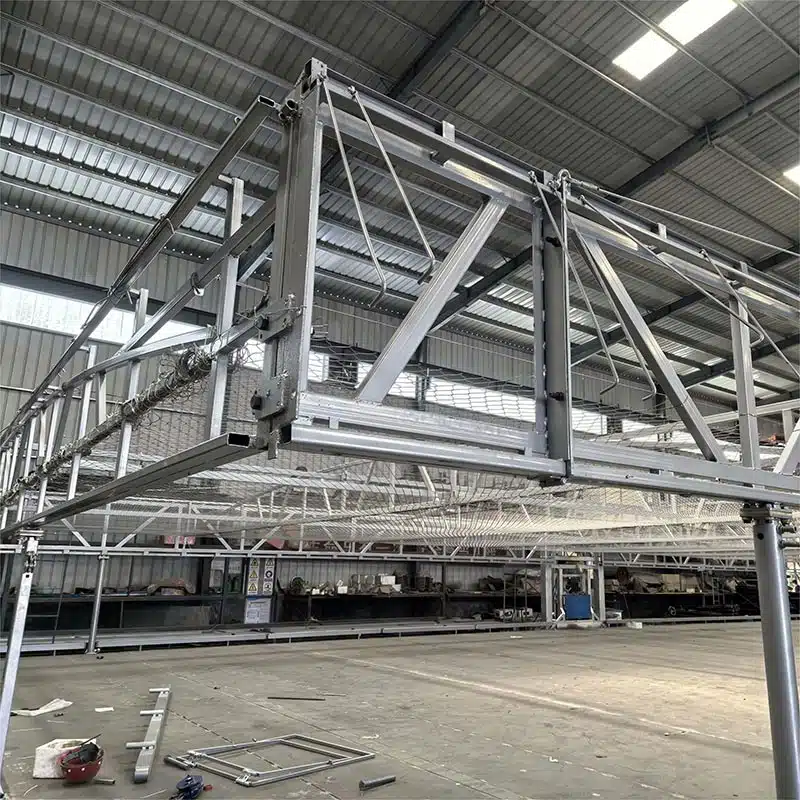
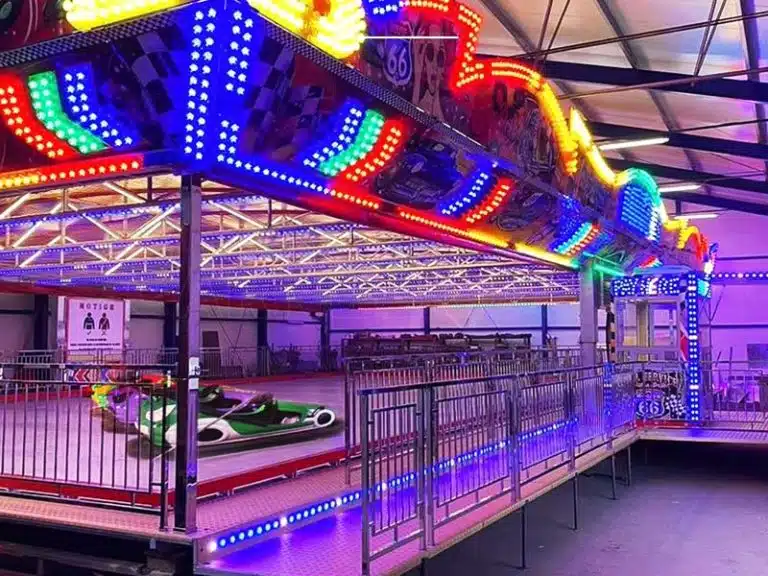
Ceiling-Grid Hydraulic Folding Bumper Car Systems: The arena must incorporate both a heavy-duty floor and a motorized/hydraulic overhead canopy truss that folds down for road transport. The substantial engineering requirements for overhead hydraulic rams, synchronized elevation, and wind-load distribution mean that a folding ceiling system involves an entirely different level of structural investment and higher pricing compared to standard floor systems.
| Feature | Hydraulic Folding Ground-Grid Dodgem System | Custom Foldable Ceiling-Grid Dodgem System |
| Power Conduction | Conductive alternating steel strips on the arena floor | Overhead electrified wire mesh via vehicle trolley poles |
| Folding Mechanism | Hydraulic bi-fold floor panels that fold inward onto the trailer bed | Coordinated hydraulic floor unfolding + motorized/hydraulic folding roof canopy |
| Engineering Complexity | Streamlined mechanical setup; lower center of gravity during transit | Advanced structural engineering; multi-pivot overhead trusses |
| Arena Atmosphere | Open-top view, clean overhead profile, easy indoor clearance | Classic vintage fairground look; integrated weather roof protection |
| Relative Cost | Highly economical; industry standard for mobile operations | Higher capital expenditure due to overhead lifting steelwork and dual-structure folding |
| Maintenance Focus | Keeping the floor surface clean and dry; under-car brush wear | Inspecting ceiling mesh tension, trolley pole contact shoes, and overhead wiring |


Yes. While many factories avoid manufacturing folding ceiling-grid arenas due to the complex mechanical engineering involved, Carnee Rides manufactures fully customizable ceiling-folding systems.
Adding a foldable ceiling transforms the engineering equation:
Structural Load Calculations: The trailer chassis must handle both the dead weight of the overhead steel canopy and dynamic wind-load ratings for outdoor fairs.
Hydraulic Synchronization: Multi-stage hydraulic cylinders must lift the heavy overhead trusses evenly to prevent frame binding or structural fatigue.
Safety Clearances: The overhead clearance must maintain standard operating heights (typically 4.2+ meters) while folding down to legal transport dimensions (under 4.0 meters road height).
For a standard 20-car ceiling-folding setup, our engineering department recommends an arena footprint of roughly 11.5 × 22 meters. If an operator wishes to scale up to 25 cars, the entire overhead truss span must be recalculated rather than simply extending the floor by a few meters.
Mobile amusement rides face far more physical punishment than static indoor park equipment. Frequent loading, highway vibrations, rain, UV radiation, and abrasive collisions will quickly degrade inferior equipment.
Here is how high-grade manufacturing addresses these operating realities:

For traveling showmen operating in coastal cities, humid climates, or rainy fairgrounds, surface paint alone is inadequate. We provide hot-dip galvanization for the underlying trailer chassis, structural outriggers, folding floor frames, and conductive mesh. Hot-dip galvanizing chemically bonds molten zinc to the steel, preventing rust and galvanic oxidation for decades.
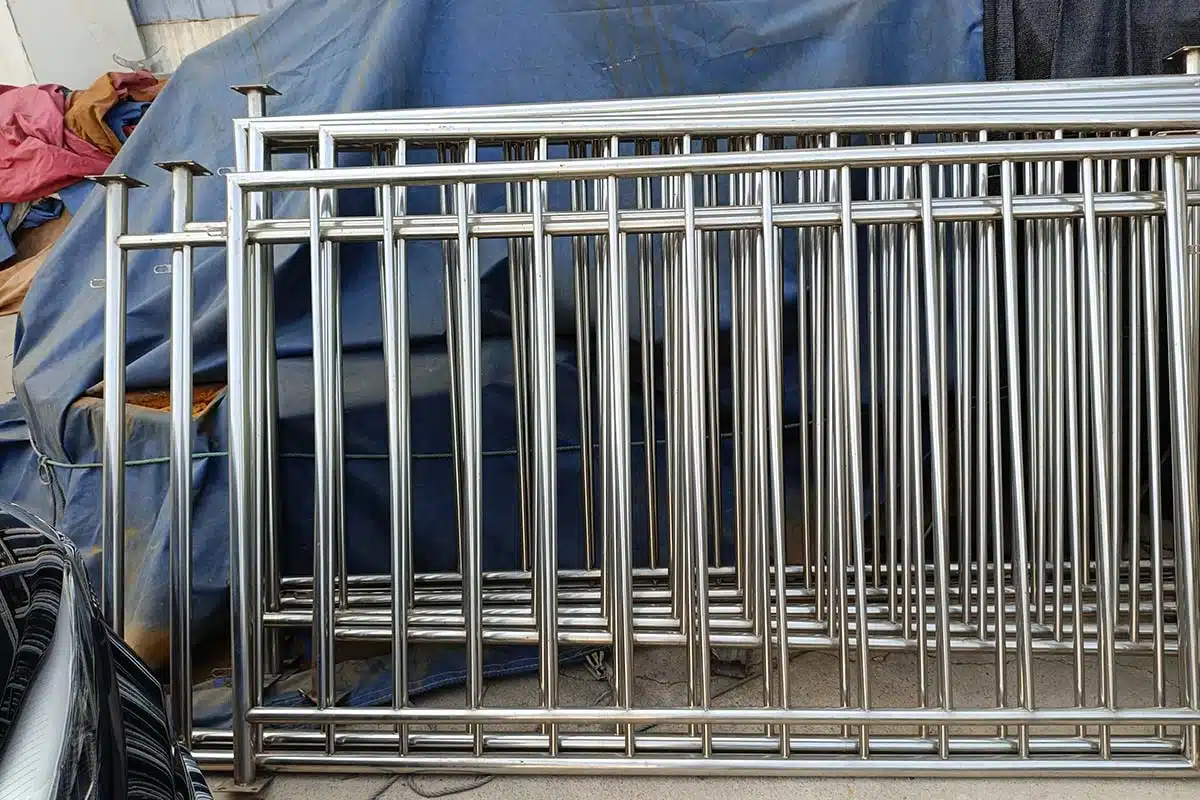
Standard painted steel safety fences chip and rust after repeated transport cycles. Upgrading to Inox (stainless steel) perimeter fencing (0.8mm to 1.0mm wall thickness) ensures:
Absolute corrosion resistance without paint flaking.
High impact resistance against accidental queue crowd surges.
A sleek, polished aesthetic that instantly elevates the perceived quality of your venue.
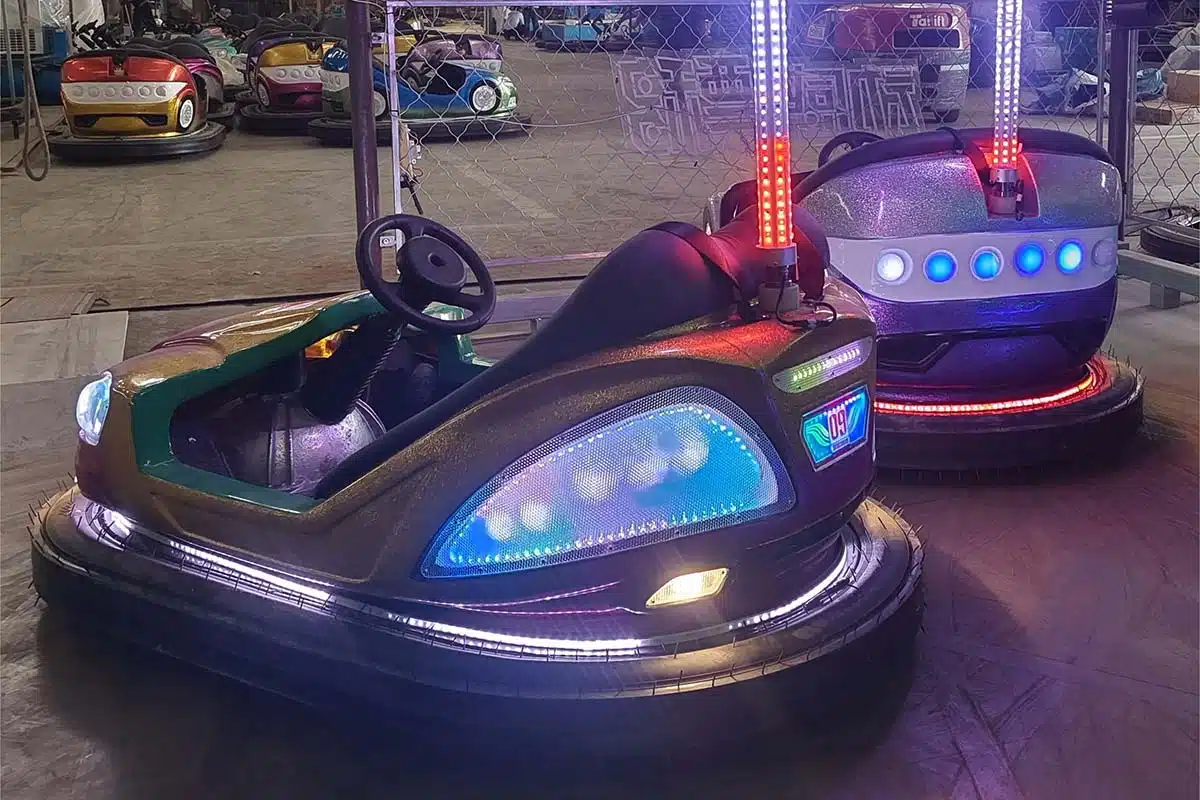
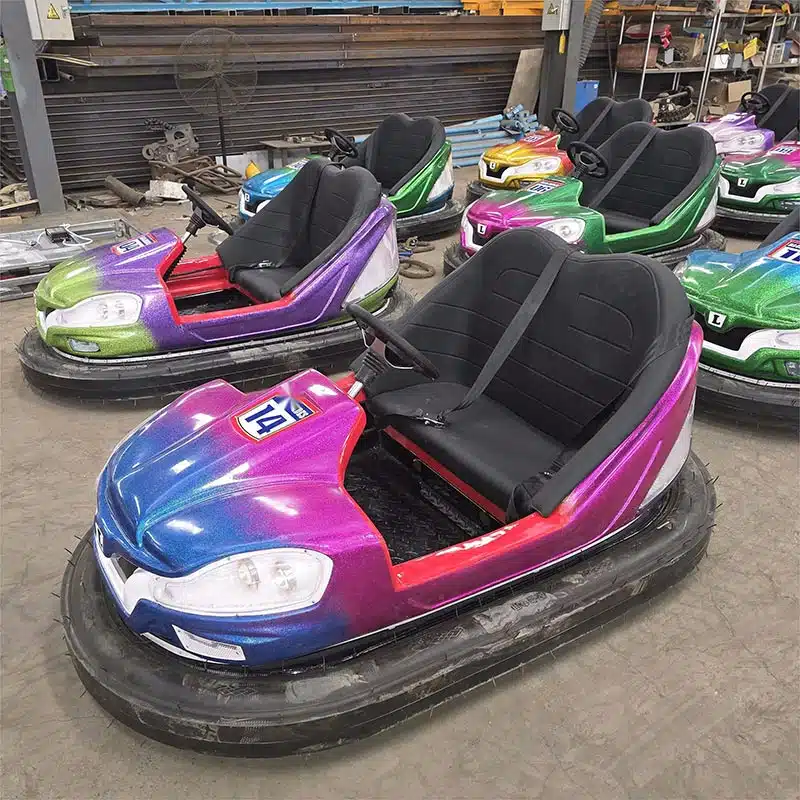
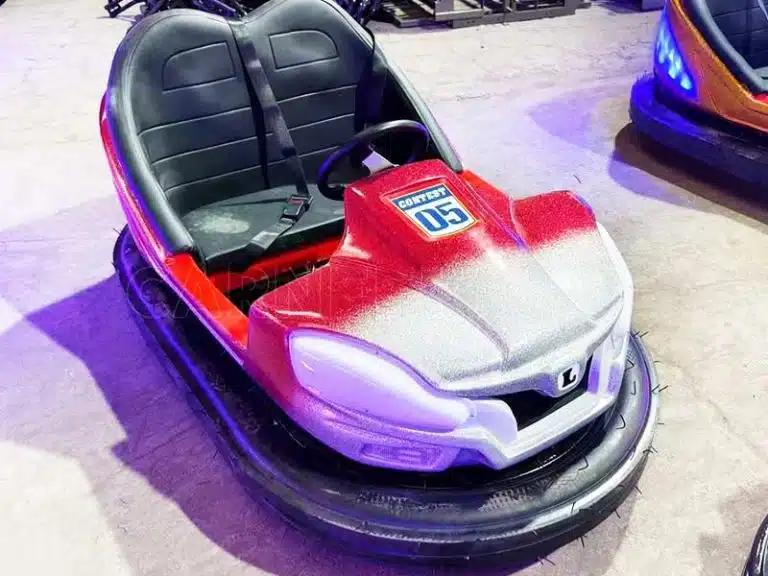
The outer bodies of the trailer-mounted folding bumper cars are cast from multi-layer reinforced fiberglass (FRP). Unlike brittle injection-molded plastics, high-grade FRP absorbs vehicle collisions without cracking.
The shells are finished with automotive-grade baking varnish, ensuring that vibrant colors (pinks, blues, yellows, oranges) maintain their deep gloss under strong UV exposure without fading or peeling.
The internal structural frames of the mobile bumper cars are treated with electrostatic powder coating. This provides a hard, scratch-resistant barrier against moisture, battery acid vapors, and road grime, drastically reducing frame maintenance.
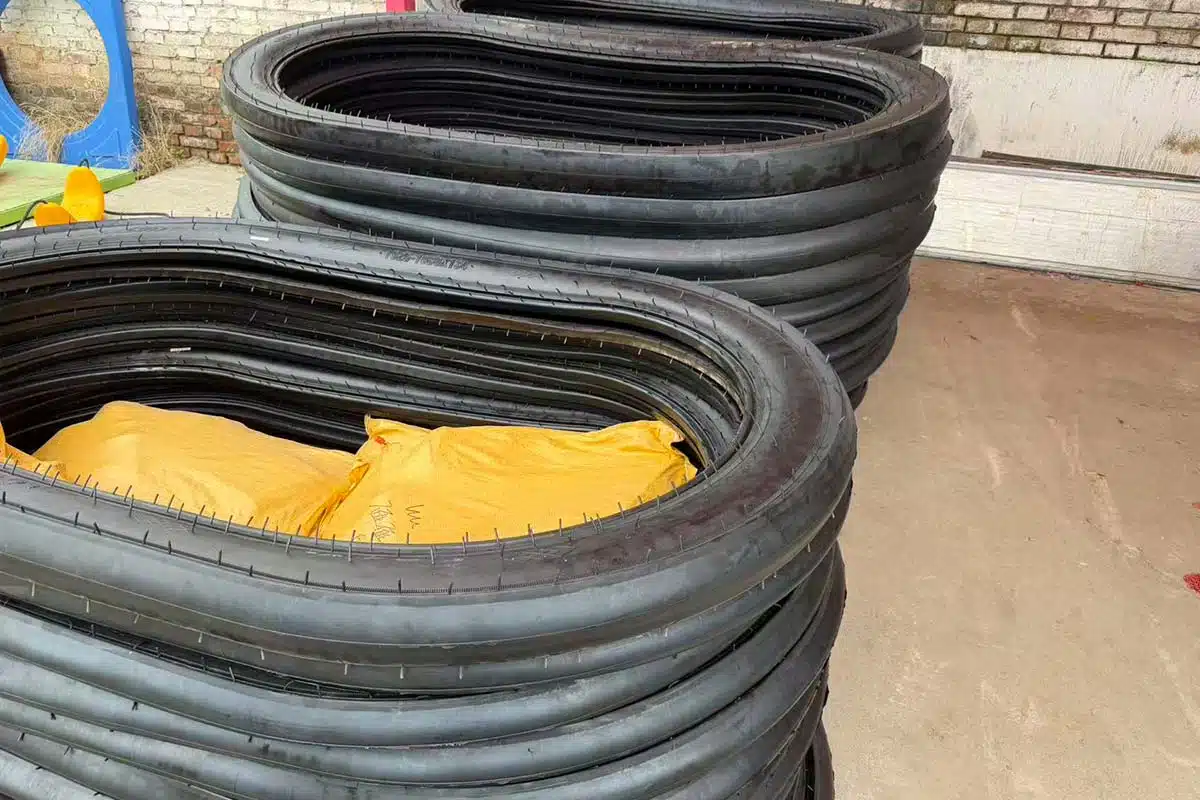
Each vehicle is circled by a custom-molded, high-density, wear-resistant rubber bumper tire. Engineered with internal shock-absorbing air chambers or heavy solid rubber cores, these bumpers absorb kinetic impact forces, protecting passengers and shielding the drive mechanisms from shock damage.
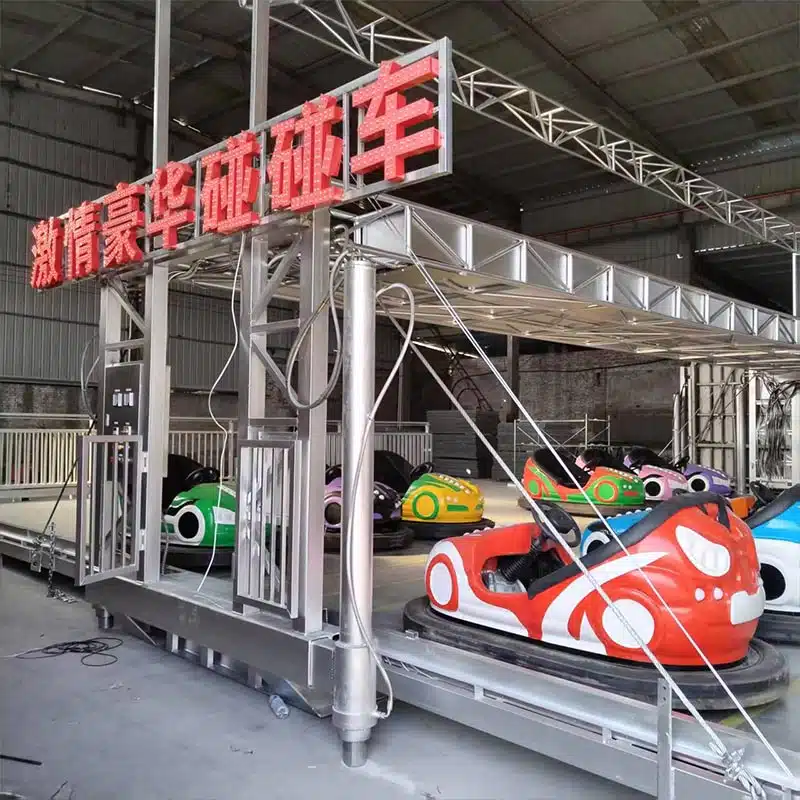
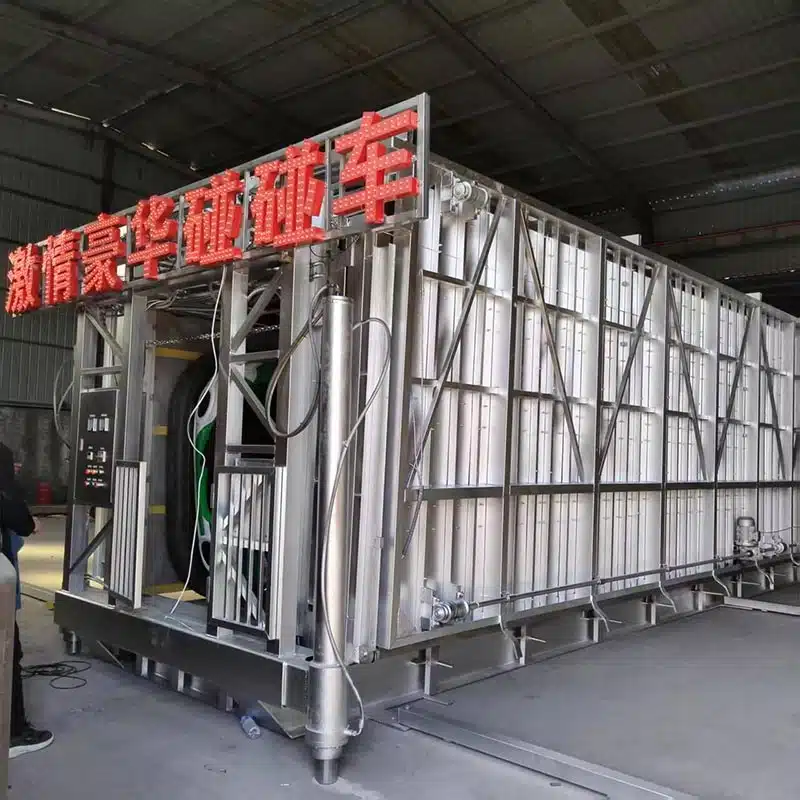
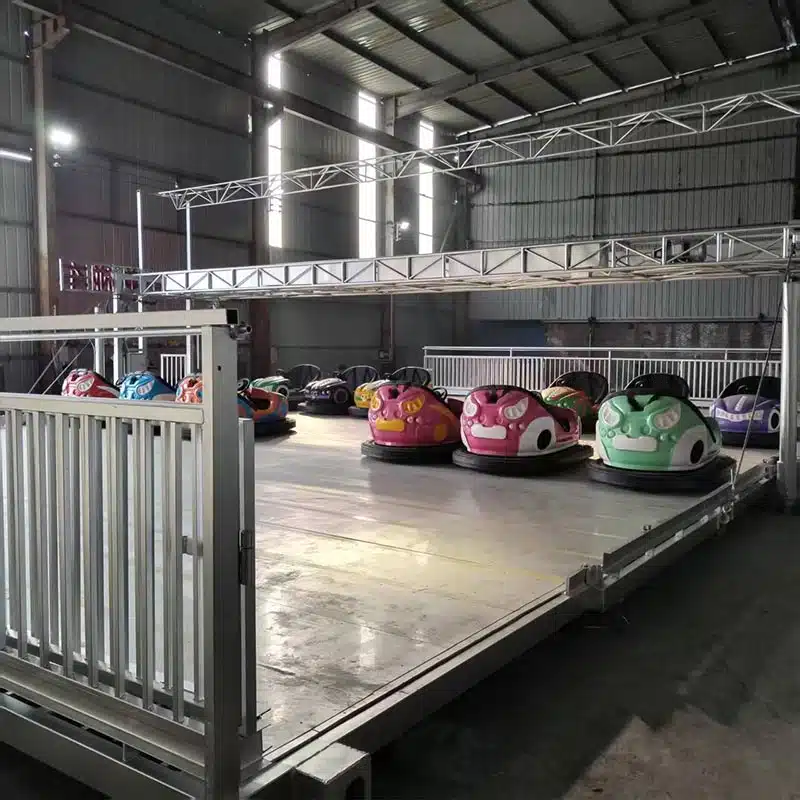
While every portable amusement project can be tailored to specific spatial constraints, reviewing standard export configurations helps venue planners visualize the footprint:
| Technical Parameter | Engineering Benchmark Specification |
| System Classification | Full Automatic Hydraulic Folding Ground-Grid Bumper Car Arena |
| Folded Dimensions (Road Transit Mode) | ~11.8 m (Length) × 2.3 m (Width) × 2.8 m (Height) |
| Expanded Arena Dimensions (Operating Mode) | ~16.0 m (Length) × 11.8 m (Width) × 4.23 m (Total Operational Height) |
| Total Arena Operating Surface | ~188 m² (~2,020 sq. ft.) of open driving floor |
| Vehicle Fleet Configuration | 12 Commercial Dual-Seater Bumper Cars |
| Total Equipment Operating Weight | ~18,000 kg to 20,000 kg (18–20 Metric Tons) |
| Hydraulic Pump Station Power & Supply | 5.5 kW / AC 380V Industrial 3-Phase Power |
| Track & Vehicle Operating Voltage | Intrinsically Safe DC 48V (Integrated Isolation Transformer) |
| Vehicle Operating Speed | Adjustable from 1.2 m/s to 2.0 m/s (Console controlled) |
| Individual Vehicle Carrying Capacity | 150 kg to 160 kg (Engineered for 2 Adults or 1 Adult + 1 Child) |
| Setup & Unfolding Deployment Speed | Fully automatic hydraulic actuation; 1 operator in ~40 minutes |
| Structural Frame Surface Finish | Heavy-duty structural steel with optional Full Hot-Dip Galvanization |
| Safety Perimeter Enclosure | Heavy-duty Inox (Stainless Steel) perimeter fence & entry gates |
| Body Shell Construction | Marine-grade FRP (Fiberglass) with automotive UV-resistant baking varnish |
(Note: Compact domestic-use reference models are also manufactured with dimensions of approximately 10.7m × 3.0m folded and 15.8m × 10.7m expanded. Custom 20-car and 25-car installations require dedicated structural layouts).
A common mistake in mobile ride planning is attempting to pack too many vehicles into a constrained footprint.
As a reliable engineering rule of thumb:
Under-sizing the Track: Placing 16 cars on a 150-square-meter track leads to continuous vehicle gridlock, sluggish driving speeds, frequent bumper car stall resets, and diminished customer satisfaction.
Over-sizing the Track: While providing thrilling high-speed drifting and collision space, an oversized track increases trailer tare weight, requires larger towing rigs, and increases shipping container requirements.
8 to 12 Cars (~130–190 m²): Ideal for shopping mall atriums, traveling carnival midways, and compact mobile event operations. Easy to transport on a single integrated chassis.
16 to 20 Cars (~240–320 m²): The commercial sweet spot for high-capacity funfairs, regional theme parks, and large municipal festivals.
20 to 25+ Cars (~350–500 m²): Large-scale installations. Requires multi-trailer setups or dedicated oversized custom engineering (such as our 11.5 × 22m skynet layout).


Commercial folding bumper car systems are engineered capital investments, not off-the-shelf consumer goods. Pricing reflects structural steel grades, hydraulic cylinder quality, electronics, and vehicle counts:
While a folding trailer arena carries a higher initial manufacturing cost than static floor bumper cars, its operational profitability is vastly superior:
Traditional indoor family entertainment centers (FECs) spend 15% to 30% of their monthly gross revenue on commercial leases. A mobile operator pays nominal daily fairground pitch fees or event split percentages only when actively operating.
If visitor numbers drop in one town, a mobile operator folds the arena in under an hour and moves to the next festival, maintaining high seat occupancy year-round.
Fitted with programmable multi-color LED chasing lights, high-output perimeter floodlights, and integrated sound systems, the arena acts as a visual magnet at evening carnivals, driving high ticket sales long after daylight attractions wind down.

Importing heavy amusement machinery from a Chinese manufacturer is straightforward when following a structured commercial procurement workflow:
Provide the factory with your core operating conditions:
Target number of bumper cars.
Ground-grid vs. ceiling-grid preference.
Indoor vs. outdoor operational environment.
Whether you require an integrated trailer chassis or wish to mount the system directly onto your own existing trailer.
Local electrical parameters (e.g., 380V/50Hz 3-phase, 220V/60Hz 3-phase, or 480V).
The engineering department produces a detailed 2D CAD layout and 3D rendering showing folded road transit dimensions, expanded operating clearances, safety gates, hydraulic pump placement, control box location, and emergency egress paths.
Ensure the formal Proforma Invoice (PI) itemizes all agreed hardware: hot-dip galvanization scope, Inox fence grades, fiberglass thickness, LED lighting packages, and exact spare parts inclusions. Confirm the Incoterms (EXW, FOB, CIF, or DDU).
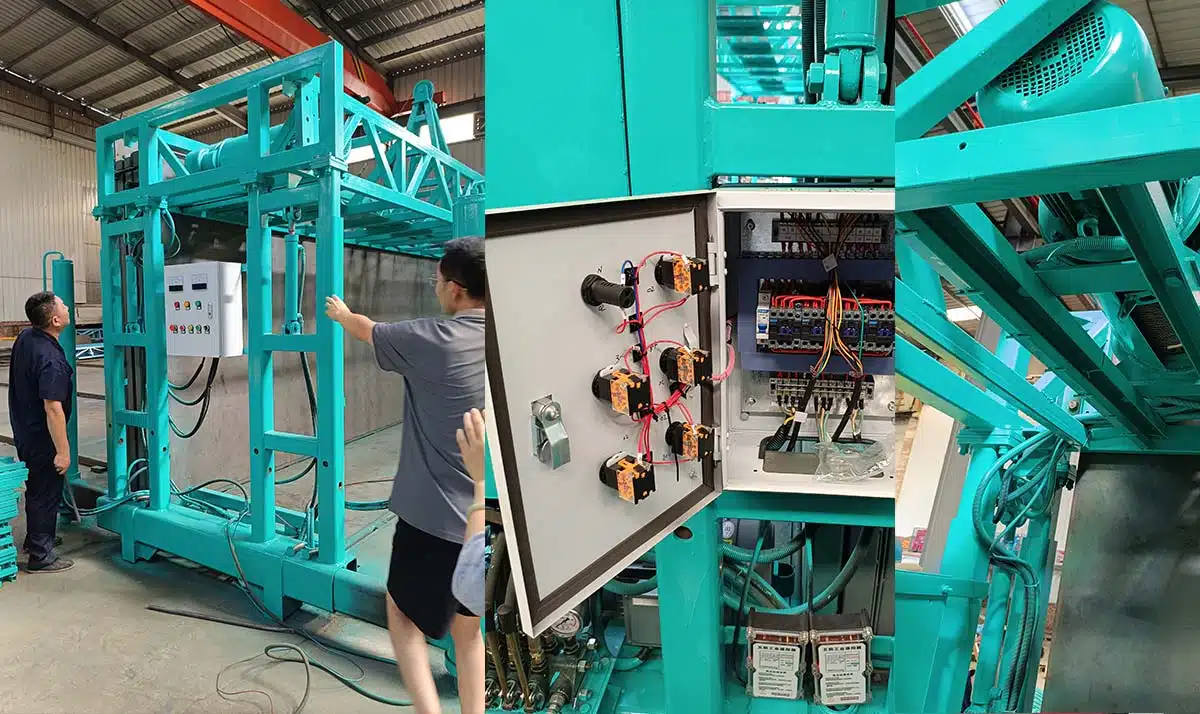
Following receipt of the production deposit (typically 30%), fabrication commences. A trustworthy manufacturer provides visual transparency throughout the build, sharing photos and video clips of steel chassis welding, sandblasting, powder coating, fiberglass molding, and electrical wiring.
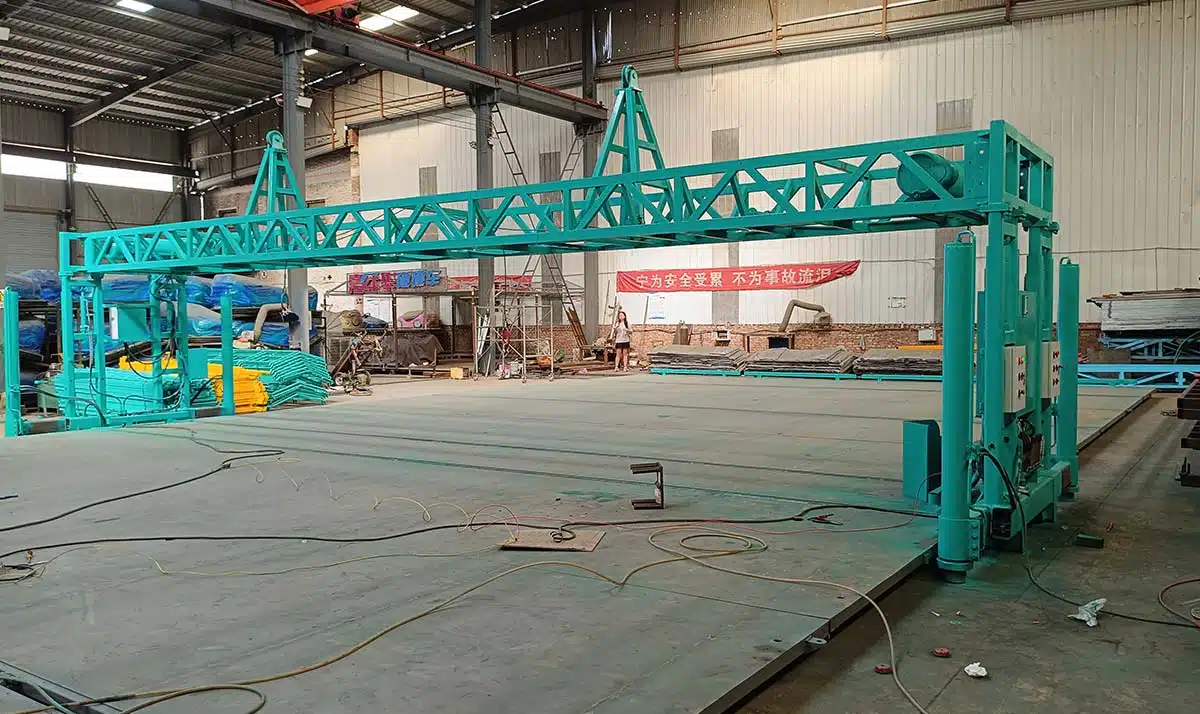
Never pay the final balance without a live functional demonstration. Before shipment, the entire arena must be assembled on the factory floor:
The hydraulic folding wings must complete multiple open-and-close cycles.
The electrical system must be powered on to verify track voltage consistency.
The bumper cars must undergo live test driving.
A live video call should be scheduled so you can inspect welds, paint finishes, and safety cutoffs in real time. Once satisfied, the balance payment is released.
Transporting multi-ton folding structures requires specialized maritime logistics:
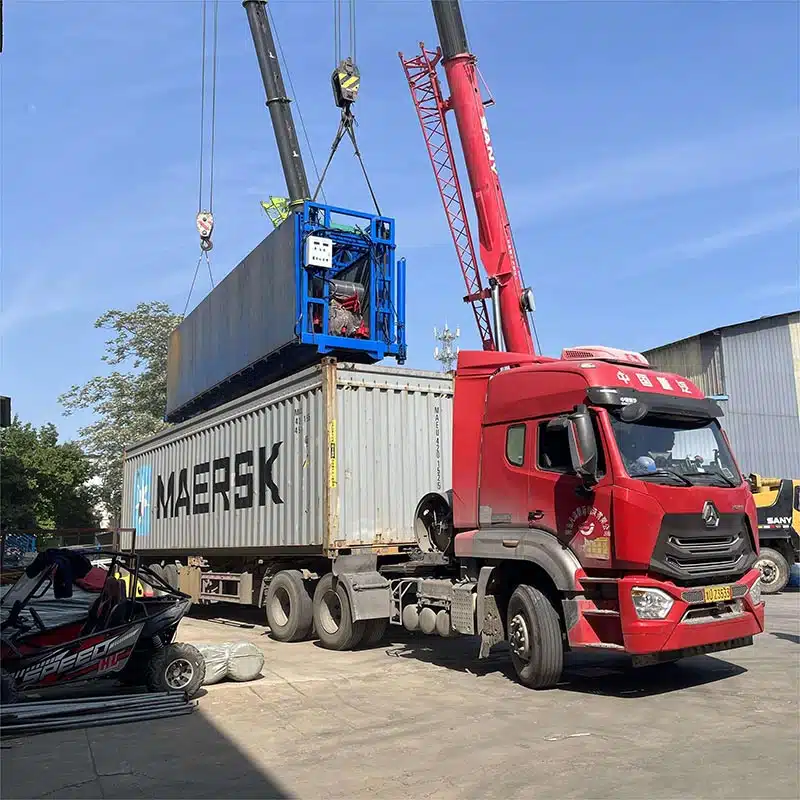
40OT (Open Top) Container: Standard closed shipping containers cannot accommodate the height and width of dense hydraulic folding subassemblies. A 40-foot Open Top container allows overhead crane loading at the port.
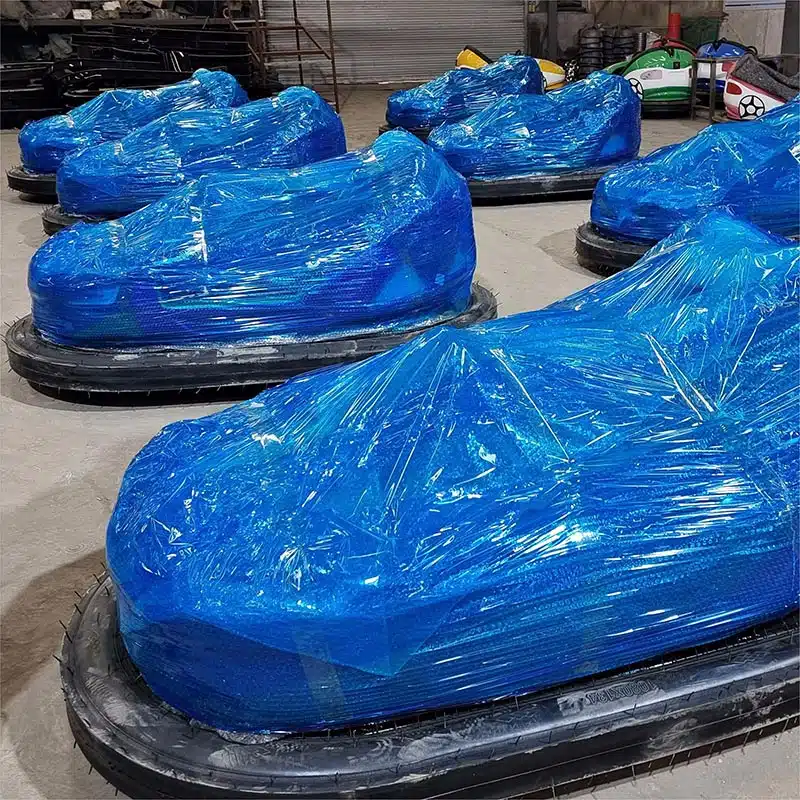
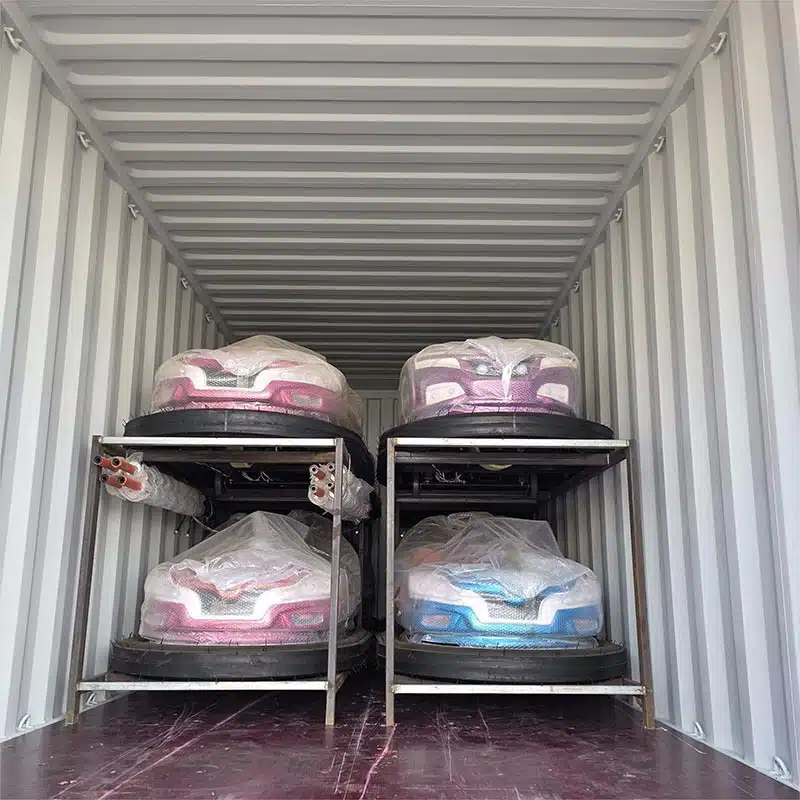
40HQ (High Cube) Container: Used to transport the fleet of bumper cars, which are individually secured inside custom, heavy-duty wooden crates to prevent ocean transit scuffing.
Consolidation Advantage: In a dual-container shipment (40OT + 40HQ), there is often approximately 15 to 17 cubic meters of remaining space inside the 40HQ. Experienced manufacturers will help you consolidate additional spare parts, backup batteries, or complementary amusement rides into this space at zero extra ocean freight cost.


Not all amusement ride suppliers possess the specialized engineering capabilities required to build dynamic, road-going folding machinery. Sourcing heavy hydraulic structures requires rigorous assessment of the manufacturer’s real production background:
Examine how many years the company has been in actual physical production, how mature their hydraulic technologies are, and whether they maintain dedicated, heavy-duty industrial fabrication workshops.
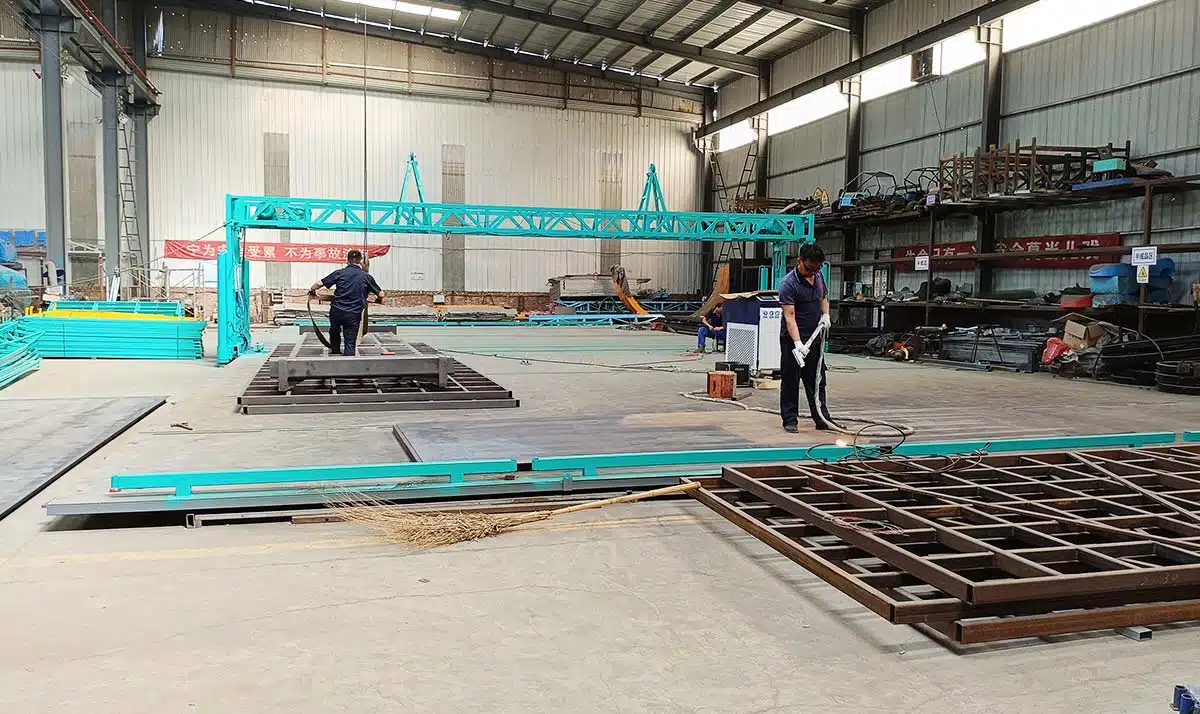
The Gold Standard: Conduct an In-Person Factory Visit. If your travel schedule allows, we strongly recommend visiting the factory in person. Walking the factory floor, inspecting the CNC cutting tables, reviewing welding seam quality, and meeting the engineering team gives you unvarnished proof of physical capability that trading middlemen cannot mimic.
Proven Industry Pedigree: Carnee Rides, founded in 1998, has stood as a pillar of Chinese amusement machinery manufacturing for over a quarter of a century. Specifically in the arena of hydraulic folding bumper cars, Carnee Rides boasts 20 years of mature technical iteration and over 200 operational project cases globally. This track record gives buyers complete certainty regarding engineering safety and structural stability.
Does the supplier operate their own structural welding, machining, and painting workshops, or are they trading agents outsourcing to unknown third parties?
Can the factory show historical video documentation of hydraulic folding mechanisms operating under full dynamic load across multiple seasons?
Are they willing to state in writing that structural steel is hot-dip galvanized and fencing is genuine Inox stainless steel rather than low-cost chrome-plated iron?
Can the factory configure control cabinets and transformers to match your home country’s local electrical codes and plug configurations?
Does the manufacturer provide professional English operating manuals, electrical schematics, hydraulic maintenance schedules, and dedicated remote engineering support via WhatsApp or WeChat?
Running a commercial Hydraulic Folding dodgem attraction safely requires strict adherence to operating protocols:
Physical Perimeter Inspection: Ensure all Inox fence interlocks and gate latches are securely pinned before admitting the public.
Emergency Stop Verification: Test the console master E-stop and remote-control kill switches daily to verify instantaneous power cutoff to the floor grid.
Debris Sweeping: Sweep the conductive floor grid daily. Small stones, bottle caps, or metal shavings cause electrical arcing and uneven tire wear.
Tire & Trolley Contact Checks: Inspect the wear on under-car pickup brushes or overhead trolley pole shoes. Replace worn contacts promptly to maintain smooth current transfer.
Hydraulic System: Inspect hydraulic hoses, fittings, and cylinder seals for fluid weeping every 30 days. Maintain fluid levels with clean anti-wear hydraulic oil.
Structural Pivot Pins: Grease all folding hinge points, leveling jacks, and trailer hitch assemblies every 50 operating hours to prevent mechanical binding.
Vehicle Fasteners: Check wheel axle nuts, steering linkages, and seatbelt anchor bolts during scheduled monthly servicing.
A single trained operator can fully unfold and level a standard hydraulic folding ground-grid bumper car arena in approximately 40 minutes. Setting up the perimeter Inox fencing, queue line railings, and connecting the central control cabinet takes an additional 20 to 30 minutes, allowing complete site setup in under an hour and a half.
Yes. Carnee Rides can engineer the folding chassis subframe to mount directly onto your existing heavy-duty commercial flatbed trailer or truck chassis. Our engineers will review your trailer’s Gross Vehicle Weight Rating (GVWR), deck dimensions, axle configuration, and chassis mounting points to design an exact custom fit, saving you the expense of buying a new trailer base.
Yes. Commercial mobile bumper cars are built with heavy-duty structural steel frames and high-density FRP bodies rated for payloads of 150 kg to 160 kg per car. They comfortably seat two riders (parent and child or two full-grown adults) and feature safety lap belts, high-backed ergonomic seats, and cushioned steering columns.
The ground-grid power system converts high-voltage alternating current (380V/220V AC) down to an intrinsically safe DC 48V via an isolated industrial transformer. Human skin resistance prevents electrical shock at this low voltage. In addition, the system incorporates high-sensitivity earth-leakage breakers and immediate over-current protection.
For outdoor operations subject to passing showers, hot-dip galvanized steel framing and waterproof electrical enclosures protect the hardware. However, for ground-grid power systems, standing water on the conductive floor must be swept clean before resuming operations to prevent electrical tracking and loss of tire traction. If frequent wet-weather operation is expected, an integrated folding canopy roof or overhead ceiling-grid bumper cars system is recommended.
While used mobile bumper car carnival rides might appear cheaper initially, they frequently harbor hidden structural fatigue, corroded electrical grids, leaking hydraulic rams, obsolete control boards, and zero manufacturer warranty. For high-ticket traveling rides, purchasing new equipment directly from a certified factory guarantees fresh structural integrity, modern safety compliance, custom branding, and years of reliable, low-maintenance operation.

Investing in a portable folding trailer bumper car arena delivers the ultimate balance of entertainment appeal, operational autonomy, and rapid financial return. By eliminating static venue rental overheads and deploying a full-sized commercial dodgem track in under an hour, operators can capture peak amusement revenues wherever public crowds assemble.
The key to long-term profitability lies in choosing the right engineering configuration: high-efficiency hydraulics, hot-dip galvanized structural longevity, robust Inox fencing, and a manufacturer capable of delivering full factory transparency.
If you are evaluating mobile attraction investments or need a customized site footprint analysis:
Contact the Carnee Rides engineering team with your site dimensions, desired vehicle quantity, and power preferences. Backed by 20 years of hydraulic folding ride manufacturing and 200+ global deployments, we provide full 2D/3D project layout proposals and detailed commercial quotations within 24 hours.

Whatsapp : +86 13623710276
Email : [email protected]
Address : High-tech Industrial Development Zone, Zhengzhou

WhatsApp us