Operating a commercial trackless train on flat, paved ground is a relatively straightforward task for any trained driver. However, when navigating the dynamic terrains of mountain resorts, hilly botanical gardens, and multi-level theme parks, the physical dynamics of the vehicle change drastically.
A trackless train consists of a locomotive pulling multiple trailing carriages; when this articulated vehicle encounters a slope, the weight distribution shifts violently. When the route includes uphill sections, downhill roads, or uneven surfaces, the driver must understand how the vehicle’s power system, braking system, tires, and passenger load affect safety.
As a leading trackless train manufacturer in China with over 20 years of experience, Carnee Rides has supplied sightseeing trains and amusement equipment for global customers. Through years of production and operation experience, we understand that safe slope driving depends not only on high-quality manufacturing but also on advanced driving techniques, strict safety protocols, and rigorous maintenance.
This advanced guide explains how to drive a trackless train uphill and downhill safely, helping amusement park operators, resort owners, and drivers prevent mechanical failures and ensure absolute passenger safety.

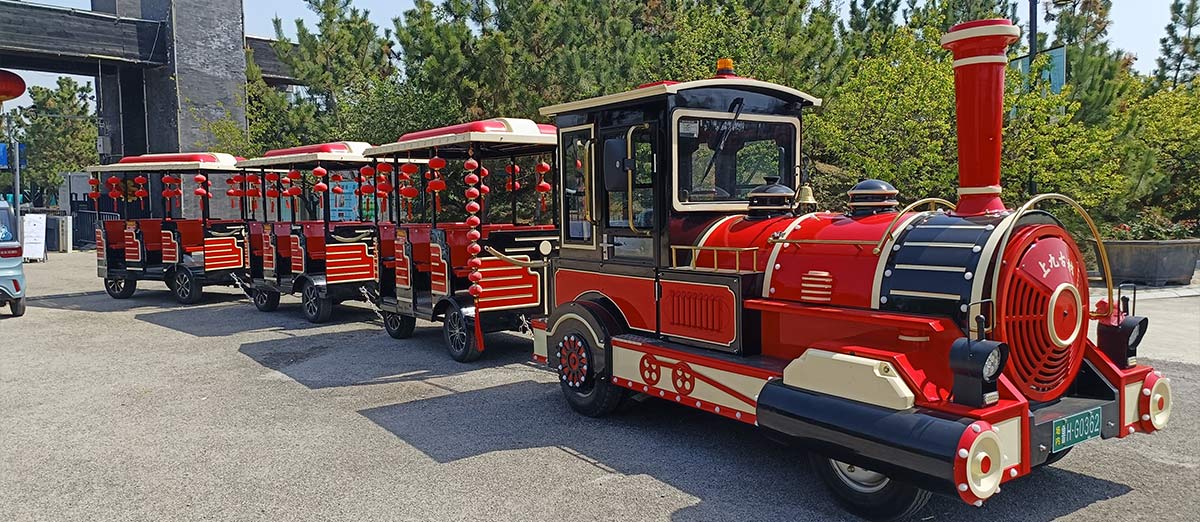
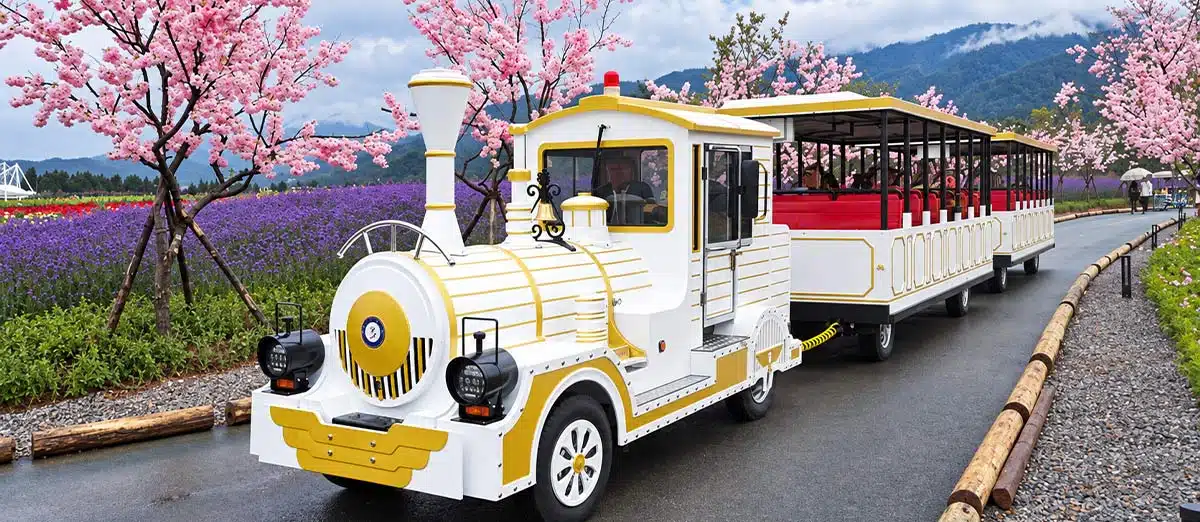
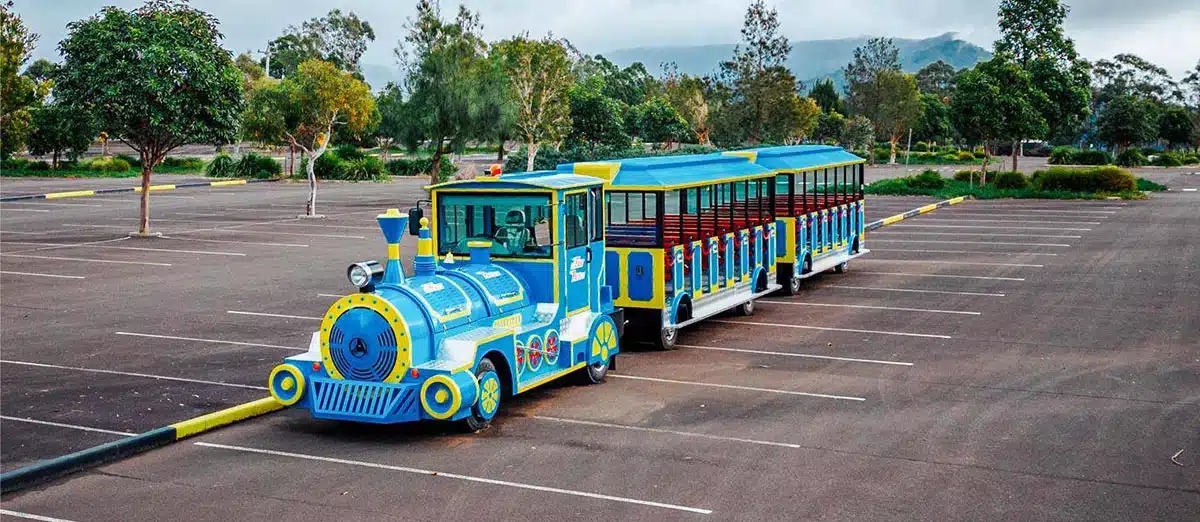
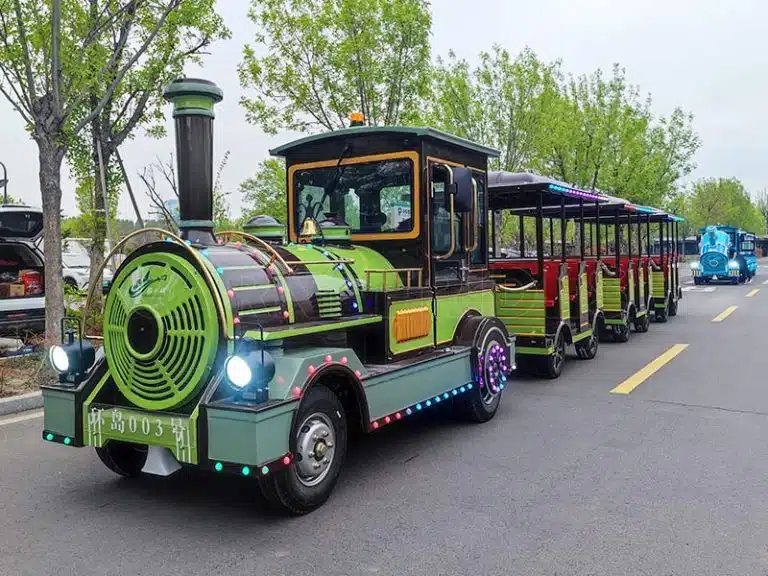
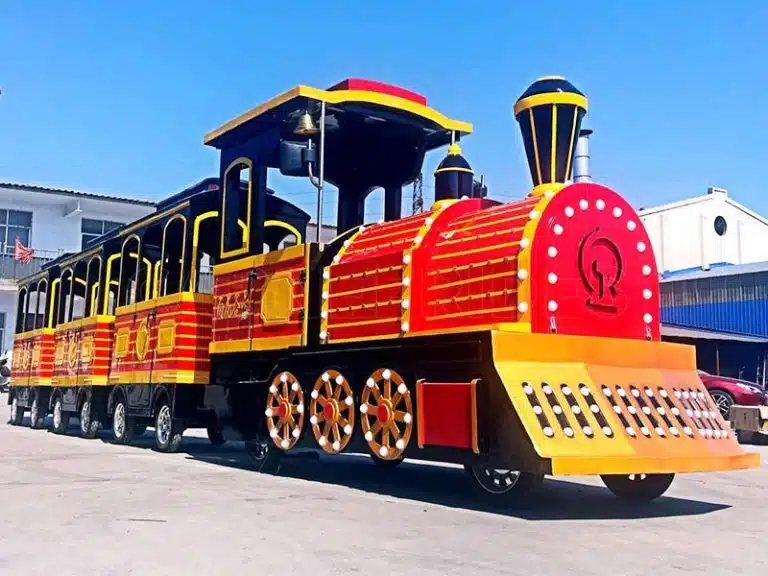
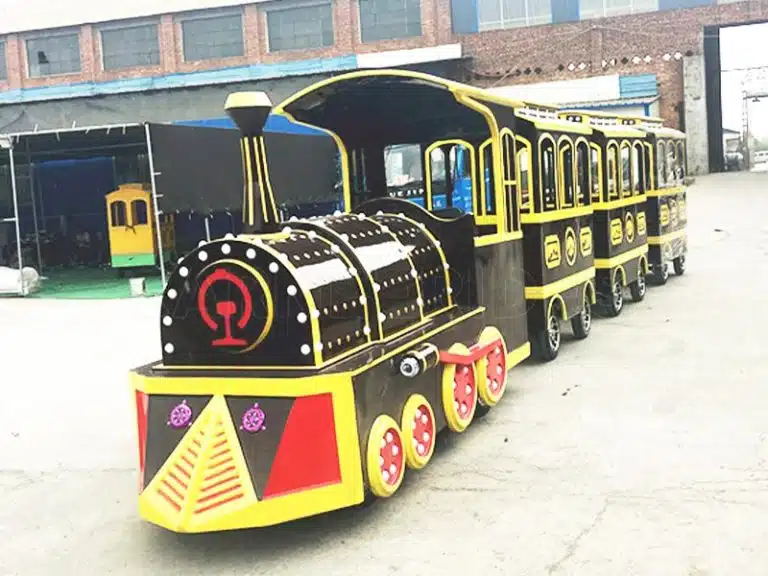
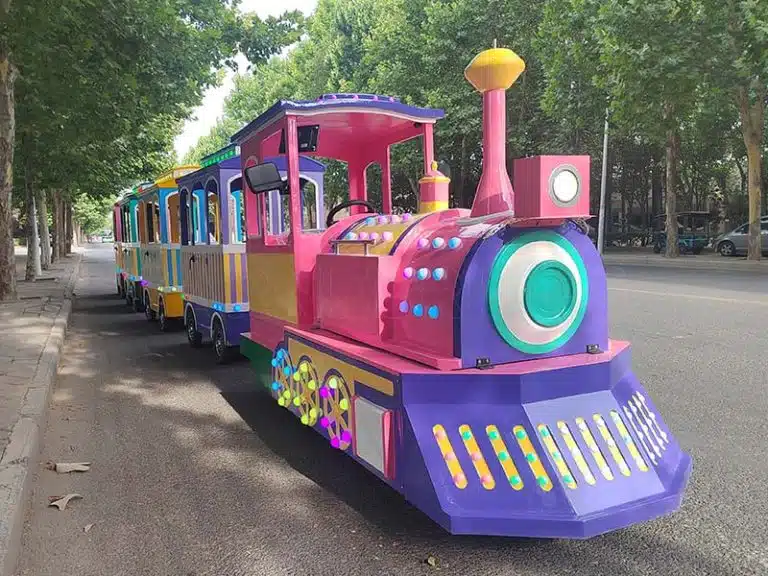
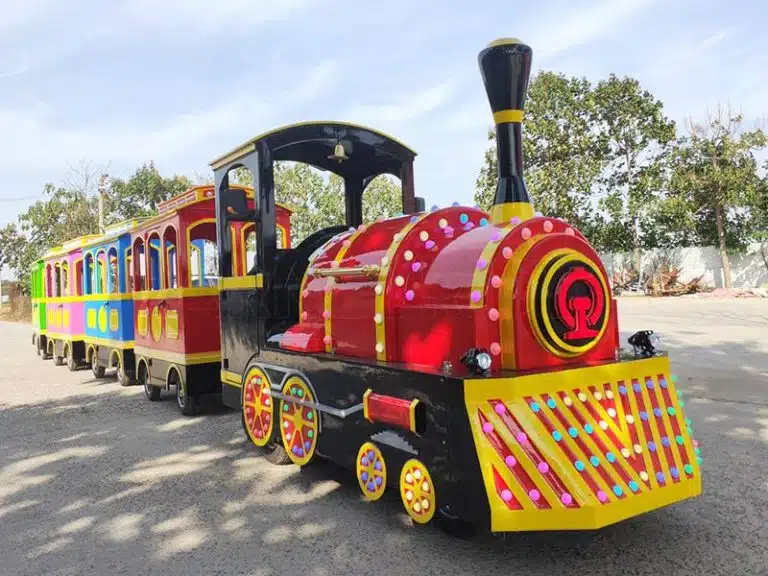
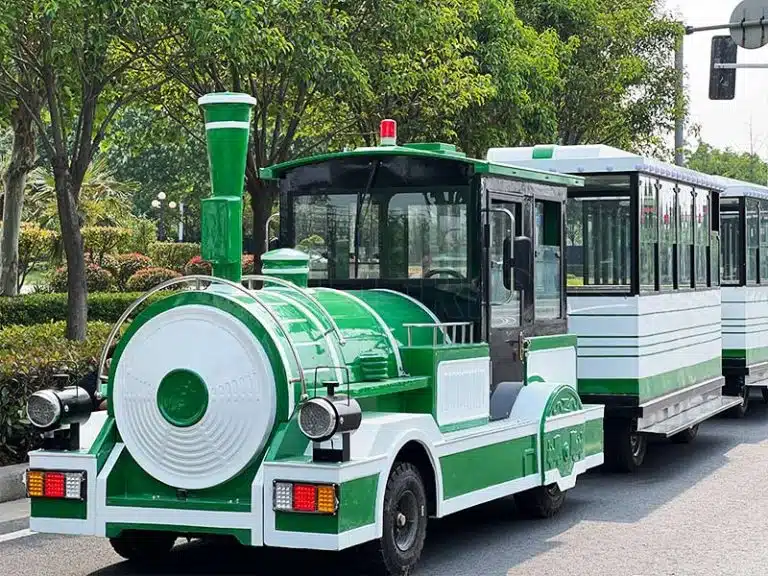
Unlike ordinary passenger cars, trackless trains are specifically designed for high-capacity tourism environments. A typical commercial sightseeing train has several unique characteristics:
For example, during uphill operation, the motor requires massive torque to pull the heavy trailing carriages. During downhill operation, the immense pushing force (inertia) from the rear carriages places an extraordinary load on the locomotive’s braking system. Therefore, mastering trackless train slope navigation is a critical survival skill for every operator.

Before driving a trackless train on any route with significant elevation changes, the driver must complete a strict pre-hill safety inspection.
Check the dashboard air pressure gauges (if equipped with a dual-circuit pneumatic braking system). Ensure the brake pedal response is immediate and the mechanical parking brake is fully functional.
Commercial trackless trains rely heavily on their rubber vacuum tires (tubeless tires) for grip. Inspect the tire pressure and tread depth. Good tire traction is the only thing keeping a heavy train from sliding backward on a steep uphill or skidding out of control on a downhill.
For electric trackless trains, verify that the battery level is sufficient. Attempting to climb a long, steep gradient with low battery power can result in a sudden stall, creating a highly dangerous rollback scenario.
(Note: If you are setting up a new train for the first time, please refer to our foundational manual on how to install and operate a trackless train before attempting any slope driving).


While driving uphill generally feels more controlled than driving downhill, it presents unique hazards. The primary goal during an ascent is maintaining steady momentum while keeping the vehicle’s center of gravity centered.
When navigating an uphill route, the operator must keep the steering wheel as straight as possible. Avoid frequent lane changes, weaving, or sudden steering corrections. Sharp turns on an incline force the vehicle’s weight to shift laterally to the outer wheels. Because the trackless train is articulated, a sudden lateral weight shift on a slope can easily cause the rear carriages to lose traction and tip over.
During uphill driving, do not stomp on the accelerator. A smooth, steady acceleration process protects the motor from overheating, reduces rapid battery drain, and maintains passenger comfort. Stable power output is far more efficient than frequent acceleration changes.
Stopping on an uphill section should be avoided unless absolutely necessary. Restarting (a hill start) requires higher motor torque, perfect tire traction, and extremely careful control. If an emergency forces a stop on a hill, the driver must immediately engage the parking handbrake, confirm vehicle stability, and restart slowly to prevent the vehicle from rolling backward into trailing traffic.

In the amusement transport industry, there is a common saying: “Going up the mountain is easy; going down is the real test.” Downhill driving is where the vast majority of mechanical failures and safety incidents occur.
Never enter a downhill road at high speed. Drivers must proactively decelerate the vehicle before reaching the slope. As a general safety standard, we strongly advise keeping the vehicle’s speed below 8 km/h (approx. 5 mph) on steep descents. Once a trackless train ride exceeds 10 km/h on a downward slope, the massive pushing force from the fully loaded rear carriages makes the vehicle highly susceptible to losing control.
For long downhill sections, drivers must never keep the brake pedal pressed continuously (riding the brakes). Continuous braking generates extreme friction, causing the brake pads to superheat, which can lead to a complete loss of braking efficiency (brake fade).
Instead, drivers must use Point Braking (intermittent braking). The driver should press the brake pedal firmly to reduce speed, release the brake completely for a moment to allow the system to cool, and repeat. This method preserves brake life and ensures stable stopping power.
Many premium electric trackless trains manufactured by Carnee Rides feature regenerative braking (motor resistance braking). When going downhill, the operator can simply lift their foot off the accelerator. The motor reverses its function, acting as a generator to slow the train down smoothly without relying entirely on mechanical brake pads. This extends brake life and feeds energy back into the battery.
Rain, morning dew, or loose gravel drastically reduce tire grip. When operating on wet declines, drivers must cut their maximum speed in half and execute point braking with extreme finesse to prevent the wheels from locking up and causing the carriages to skid out of alignment.
(For detailed protocols on managing younger, unpredictable passengers during these maneuvers, operators should strictly follow our kids amusement trains safety operation guide).

A skilled driver can only safely navigate slopes if the vehicle is mechanically flawless. Operating in hilly terrain accelerates the wear and tear on critical safety components.
For trackless sightseeing trains operating on slopes daily, maintenance schedules must be aggressive. Technicians must regularly check the thickness of the brake pads, brake lines, and brake fluid levels. Simultaneously, tire tread depth and air pressure must be meticulously monitored. A heavily worn tire loses its ability to grip the asphalt, turning a controlled downhill descent into a dangerous slide.
A sudden loss of power while climbing a steep hill is a highly dangerous scenario. Maintenance crews must keep the battery surfaces, wiring, and terminal bolts impeccably clean and dry. Furthermore, technicians must constantly check that the battery terminal nuts are tightly secured; the intense vibration of driving up and down hills can loosen these connections, causing a sudden total loss of electrical propulsion.
For a complete preventive maintenance schedule, technical teams must adhere strictly to a comprehensive amusement park train maintenance SOP.

Mastering trackless train slope navigation is a combination of disciplined driving habits (like the 8 km/h rule), understanding vehicle dynamics, mastering point braking, and uncompromising daily maintenance.
However, you do not need to feel intimidated. Operating a trackless train is not overly complicated. When you purchase from a legitimate, professional manufacturer like Carnee Rides, you are not just buying a vehicle; you are receiving a complete operational ecosystem. We provide our clients with comprehensive operation manuals, detailed driver training guidelines, and continuous technical support.
If you have any questions about daily operations, slope safety, or if you need to consult on the best trackless train configuration for your specific mountain terrain or resort, please feel free to contact the Carnee Rides engineering team at any time. We are always here to ensure your attraction runs safely, smoothly, and profitably.

Whatsapp : +86 13623710276
Email : [email protected]
Address : High-tech Industrial Development Zone, Zhengzhou

WhatsApp us