Is a Trackless Train Business Profitable? The Ultimate ROI & Payback Guide (2026)

03

Sep

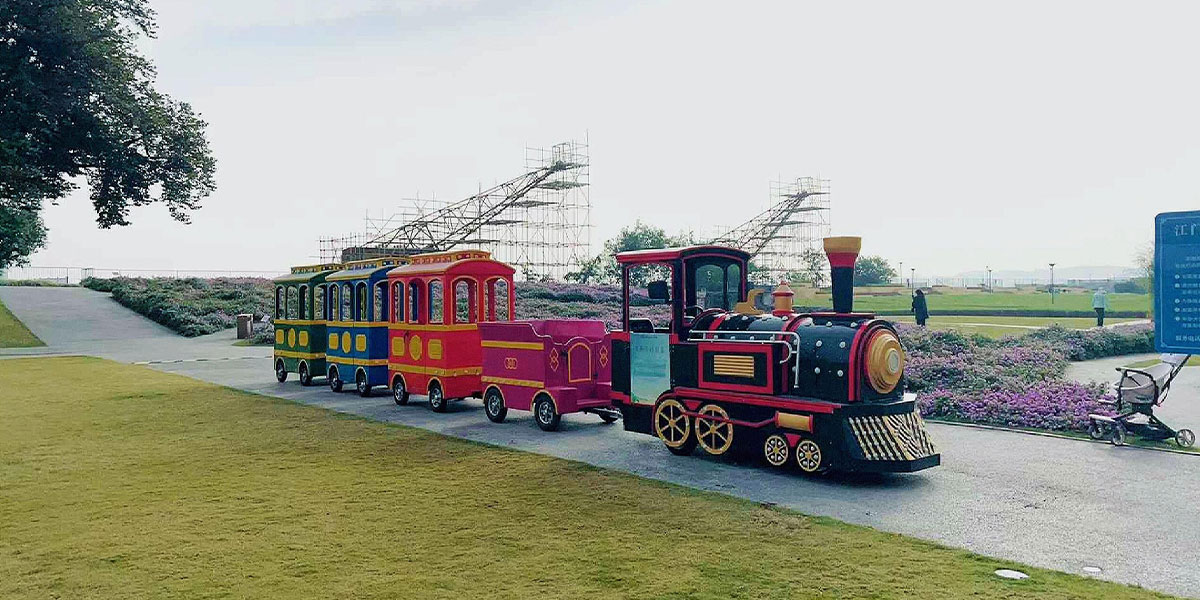
Classic black and red vintage steam-style trackless train with colorful carriages cruising along a curved pathway through a green park and flower field.
Vintage Mini Steam Trackless Train for Park Tours and Event Rentals

A commercial trackless train ride can typically recover its initial investment within 1 to 4 years. For high-traffic locations such as shopping malls, theme parks, and zoos, a well-planned project often achieves a full payback period in just 12 to 24 months. Seasonal outdoor attractions or mobile event rental businesses may see fluctuations, but peak summer operations can often recoup costs in a matter of months.

An amusement train ride does not automatically generate profit simply because you purchased the equipment. Your return on investment (ROI) depends entirely on how well the train matches your location, visitor demand, and operational strategy.

As a leading Chinese trackless train manufacturer since 1998, Carnee Rides bypasses the typical sales pitches to break down the exact mathematics of trackless train business profit. This guide exposes the hidden expenses, provides realistic financial models, and shows you how to maximize your returns.

1. How Do You Calculate Trackless Train ROI? (The Professional Formula)

Many investors make a fatal mistake when evaluating a trackless train project: they only compare the purchase price with potential ticket income. A professional ROI analysis must consider the complete investment cycle.

The basic financial formula is:

Payback Period (Years) = Initial Total Investment ÷ Annual Net Profit

(Annual Net Profit = Total Revenue – Total Operating Costs)

The True Cost of Initial Investment

The total project capital expenditure (CapEx) includes much more than just the sticker price of the train. You must budget for customized thematic design, charging equipment, international transportation, customs, and on-site commissioning.

Depending on your passenger requirements, the EXW (Ex Works) factory pricing for Carnee Rides commercial trackless trains scales directly with capacity. To understand exactly how much a trackless train costs, here are the standard 2026 manufacturer price tiers based on representative configurations:

  • 11–19 Seats (Small Kiosk/Rental): US$8,200 – US$17,800

  • 24–28 Seats (Medium Mall/Plaza): US$22,000 – US$28,000

  • 42 Seats (Standard Park Transit): US$39,000 – US$45,000

  • 58 Seats (Large Scenic Area): US$48,000 – US$61,000

  • 72 Seats (Heavy-Duty Theme Park): US$64,000 – US$74,000

2. Real-World Trackless Train ROI Calculations & Scenarios

Let’s look at conservative, realistic projections for two distinctly different commercial environments.

Scenario A: The Shopping Mall Train Ride Model (Steady Cash Flow)

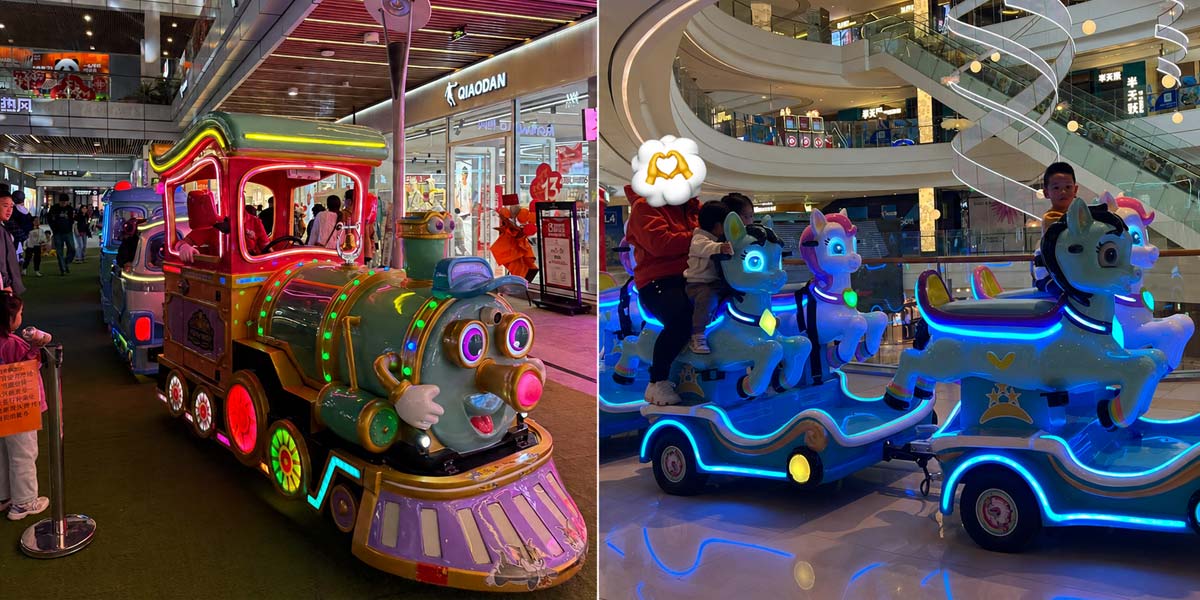
Shopping malls offer stable indoor traffic, family-oriented customers, and year-round operations unaffected by weather. We will model this using a premium 19-seat electric train.

  • Initial Equipment Investment: $15,000

  • Weekly Gross Revenue: 50 riders/weekday + 150 riders/weekend day = 550 riders/week. At a $4 ticket, that equals $8,800/month.

  • Monthly Operating Costs: Mall rent/revenue share ($1,500) + Driver Wages ($3,000) + Electricity/Insurance ($200) = $4,700/month.

  • Net Monthly Profit: $8,800 – $4,700 = $4,100 / month.

  • Trackless Train Payback Period: $15,000 ÷ $4,100 = 3.7 Months.

Scenario B: Tourist Attraction & Theme Park Trackless Train ROI (High Volume)

Let’s analyze a practical business model for a bustling scenic area using a heavy-duty 72-seat train.

  • Total Project Investment: $80,000 ($65,000 train + $15,000 shipping/facility setup)

  • Annual Gross Revenue: 150 passengers/day × $5 ticket × 200 operating days = $150,000/year


  • Annual Operating Costs: Operator salaries, electricity, maintenance, cleaning, and management total $70,000/year.

  • Estimated Annual Net Profit: $150,000 – $70,000 = $80,000 / year


  • The Payback Period: $80,000 ÷ $80,000 = 1.0 Year (12 months).
3. What Factors Affect Trackless Train Profitability the Most?

The equipment is only one part of the equation. To truly optimize your returns, you must master three operational variables.

  • Visitor Traffic Determines Revenue Potential

    Passenger flow is the absolute foundation of amusement transportation. A correctly positioned train in a busy park becomes a stable revenue machine. Operators must evaluate average daily visitors, weekend spikes, holiday peaks, and repeat visitor percentages before investing.

  • Ticket Pricing Strategy

    Your pricing must match the experience value. A simple transit train moving people from a parking lot to a gate commands a lower fee. A beautifully customized, themed family sightseeing train supports premium pricing because visitors are paying for the entertainment experience. Smart operators boost ROI by utilizing family packages, unlimited daily passes, and attraction bundle tickets.

  • Seasonal Demand & Year-Round Planning

    Seasonality is the most overlooked factor in ROI planning. Outdoor attractions see massive spikes in ridership during summer, but in the low season, passenger demand drops while costs (storage, maintenance, management) continue. Conversely, mall trains perform exceptionally well during winter holidays (Christmas, New Year) because families spend more leisure time indoors. Design your promotional activities around these fluctuations.

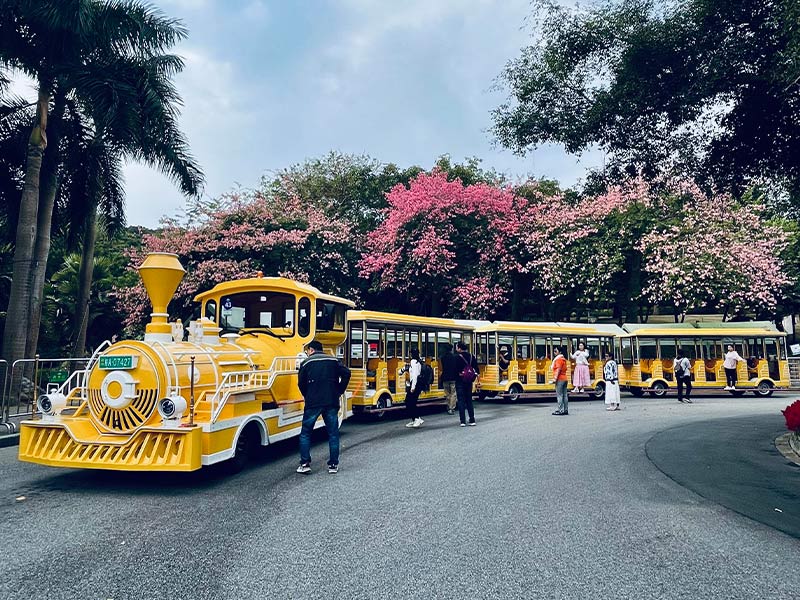
Large yellow retro commercial sightseeing trackless train with passenger coaches parked on an asphalt pathway in an outdoor mountain resort.
Commercial Passenger Trackless Train for Mountain Resorts and Scenic Areas
Front view of a custom-branded pink electric trackless train locomotive designed for botanical gardens, scenic parks, and family tourist destinations.
Custom-Themed Pink Sightseeing Trackless Train Locomotive for Parks

4. The “Hidden Costs” Suppliers Won’t Tell You About

Many cheap suppliers promise an overnight ROI, but they conveniently omit the realities of long-term commercial operations. If you want to accurately calculate your trackless train payback period and learn how to judge trackless train quality before buying, you must factor in:

  • Battery Degradation: Commercial trains run 8-12 hours a day. Standard lead-acid batteries lose capacity after 12 to 18 months of heavy use. Upgrading to a premium lithium battery increases your upfront CapEx but drastically reduces long-term replacement expenses and charging downtime.
  • Public Liability Insurance: Whether you operate in a mall or a zoo, comprehensive insurance is a mandatory operational cost.
  • Logistics and Ocean Freight: A fully assembled commercial train requires significant shipping container space. Always calculate the landed cost (including destination port fees and import duties) rather than just the EXW factory price.

5. Why “Cheaper” Often Ruins Your ROI (The Manufacturer’s Secret)

A low-cost train is not always the best investment. A properly matched, durable train produces a vastly superior long-term return.

When operators buy a suspiciously cheap train, the motors are often undersized (e.g., 1Kw instead of a commercial 4Kw motor) and the fiberglass is thin. If a cheap motor burns out on a busy Saturday, you do not just lose the cost of the repair part—you lose thousands of dollars in weekend ticket revenue and suffer permanent brand damage.

Partnering directly with one of the best trackless train manufacturers guarantees maximum uptime. When you are ready to upgrade your fleet or launch a new venue, investing in premium equipment ensures you receive heavy-duty trains engineered for daily, high-capacity commercial use.

Carnee Rides Commercial Trackless Train Manufacturing Workshop

6. Frequently Asked Questions (FAQ)

How long does it take to recover a trackless train investment?

Most commercial projects recover their investment within 1–4 years. High-traffic locations (malls, theme parks) may achieve payback within 12–24 months, while highly seasonal outdoor attractions may require longer.

Revenue depends entirely on ticket price and volume. For example, with a $5 ticket and 200 passengers per day, daily gross revenue reaches $1,000.

Yes. Shopping malls provide stable indoor traffic, family customers, and year-round operation opportunities immune to weather, making them one of the most lucrative applications for electric trackless trains.

Not necessarily. A lower purchase price usually leads to higher maintenance costs and reduced reliability. A properly designed, commercial-grade train provides much better long-term returns by eliminating downtime.

Calculating your trackless train ride ROI requires exact data, durable equipment, and a strategic partner. Do not risk your business capital on low-grade imports or overpay for overpriced European brands. Match the right capacity to your visitor flow, secure your location, and execute a transparent financial model to build a highly profitable amusement business.

Leave A Message
If you are interested in our products and want to know more details,please leave a message here,we will reply you as soon as we can.
  • author
    Leo Ma | Founder & CEO, Carnee Rides
    With over 27 years of hands-on experience in the amusement rides industry, Leo Ma has transformed his deep frontline expertise into leading a premier global amusement equipment manufacturing company. Having worked his way up from the sales floor to the Founder of Carnee Rides, Leo understands exactly what park investors need: safe, durable, and high-ROI equipment. Today, he shares his decades of insider knowledge to help clients worldwide make smart, factory-direct purchasing decisions.
Service Station
Leave A Message
Leave A Message
If you are interested in our products and want to know more details,please leave a message here,we will reply you as soon as we can.

Home

Products

About

Contact