
what are you looking for?

When investing in an electric trackless train for a theme park, scenic resort, or shopping mall, operators frequently ask one critical question: “How long does a trackless train battery last?” While sales brochures might throw out a simple “2 to 5 years,” the reality is much more complex. For amusement park investors and financial managers, understanding trackless train battery lifespan isn’t just a technical detail—it is the core of calculating your Total Cost of Ownership (TCO) and Return on Investment (ROI).
In this engineering and operational guide, we will break down the real data behind battery longevity, compare lead-acid vs. lithium, and reveal the hidden operational factors that force early replacement.
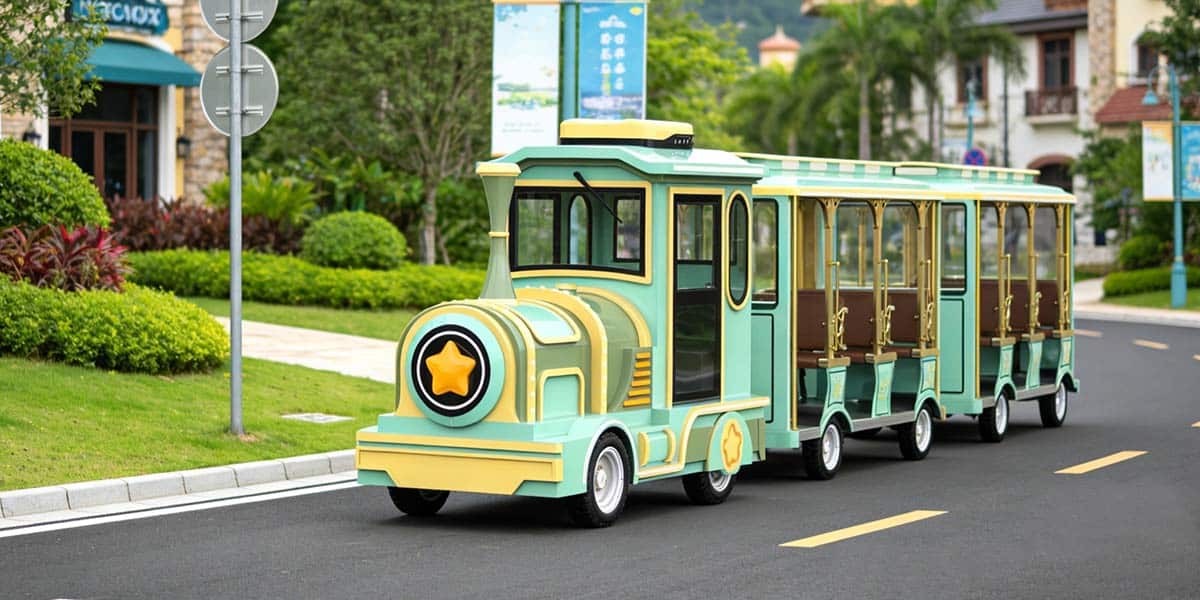
Before discussing how long a battery lasts, it is important to clarify what “battery life” means in real operation. For an electric train ride, battery life can refer to three different things.
This means how long the train can operate after a full charge. Depending on battery capacity, vehicle size, terrain, and passenger load, an electric sightseeing train battery may support several hours of operation or a full day of scheduled service.
For example, a shopping mall train with a short and flat route will usually consume less power than a scenic resort train carrying full loads on longer outdoor routes.
Cycle life refers to how many complete charging and discharging cycles a battery can handle before its capacity drops to around 80% of its original level.
Lead-acid batteries: usually 300–500 cycles
Lithium batteries: often 2,000–3,000+ cycles
This is one of the most important technical indicators of sightseeing train battery lifespan.
This is what most buyers really want to know: how many years the battery pack can stay in service before replacement becomes necessary.
Under normal commercial conditions:
Lead-acid battery life for trackless trains: about 1–2 years
Lithium battery lifespan for electric sightseeing trains: about 3–5 years, sometimes longer
Actual results vary depending on route conditions, maintenance habits, and charging practices.
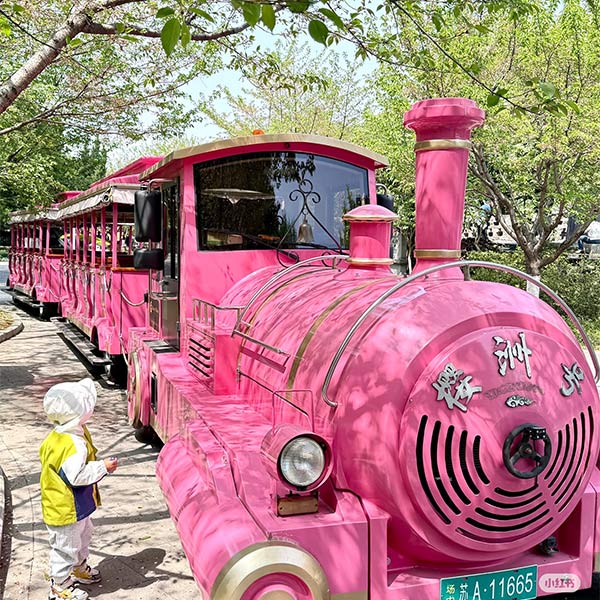

When evaluating tourist train ride battery lifespan, the most important decision is choosing between lead-acid batteries and lithium (LiFePO4) batteries. Each option offers different advantages depending on your operating environment, budget, and long-term goals.
Real-World Lifespan:
Lithium batteries for electric sightseeing trains typically last 3–5 years, and can reach up to 7 years with proper maintenance and charging practices.
Pros:
Significantly longer battery life for trackless train rides
Fast charging (usually 2–4 hours), reducing downtime
Higher energy efficiency and stable performance
Lower long-term maintenance cost
Cons:
Higher initial investment
Requires a high-quality Battery Management System (BMS)
👉 Best for:
Daily operation in amusement parks, shopping malls, and tourist train routes where uptime and efficiency are critical.
Average Cycle Life: 2,000 to 3,000+ charge cycles.
Real-World Lifespan: These systems usually last 3 to 5 years, and often up to 7 years. The secret lies in the Battery Management System (BMS). Acting as the “brain,” a high-quality BMS intelligently monitors individual cell voltage and temperature, ensuring balanced charging and absolute protection against overcharging.
Pros & Cons: Higher initial investment, but they offer rapid charging (2-4 hours), better energy efficiency, and a significantly longer service life.
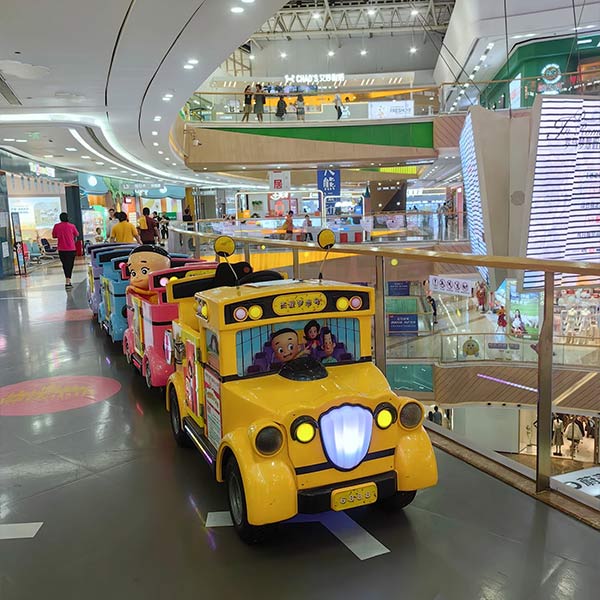
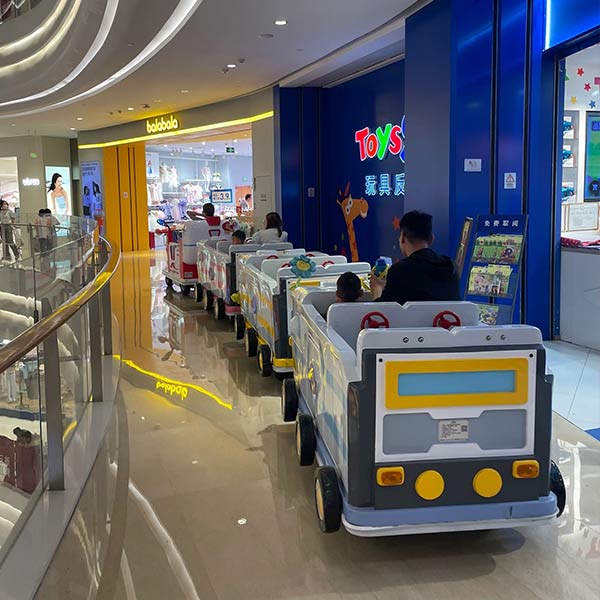
From a short-term purchasing perspective, lead-acid batteries are cheaper. But from a long-term commercial standpoint, lithium batteries often deliver better overall value.
Lead-acid systems may be suitable if:
However, they usually involve:
Lithium systems are often the better choice when:
For many operators, the real question is not “Which battery is cheaper?” but “Which battery gives the lowest total cost of ownership over 3–5 years?” In heavy-use commercial settings, lithium battery operated train rides deliver a significantly better long-term ROI.
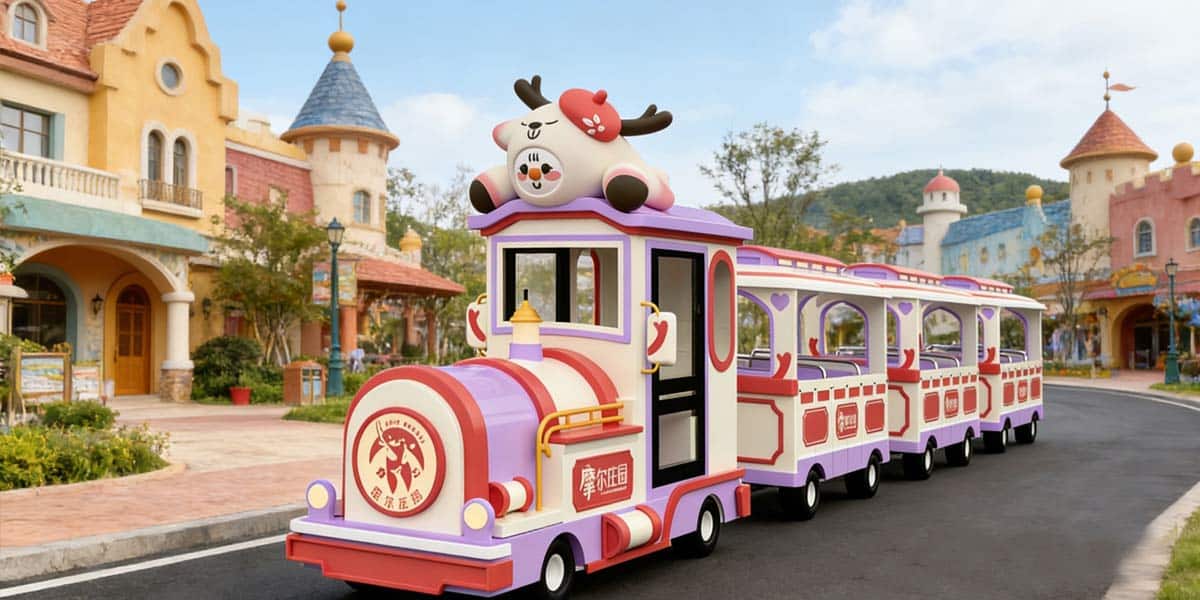
Even the best battery cells will die prematurely if subjected to harsh operational conditions.
If the electric train ride manufacturer did not calculate sufficient capacity redundancy (at least 20%-30%) during the initial design phase for your specific route length and slope, the battery will constantly operate at its absolute limit. This lack of power reserve drastically accelerates degradation.
A flat indoor shopping mall floor consumes far less energy than a long outdoor scenic route. Steep inclines and rough pavement demand massive power surges, accelerating internal aging.
Consistently draining the battery to near 0% destroys the internal plates. Shallow discharges result in exponentially longer cycle lives.
Drivers who rest their foot lightly on the brake pedal while accelerating create a continuous parasitic load, forcing the motor to draw unsustainable current and slashing the daily runtime.
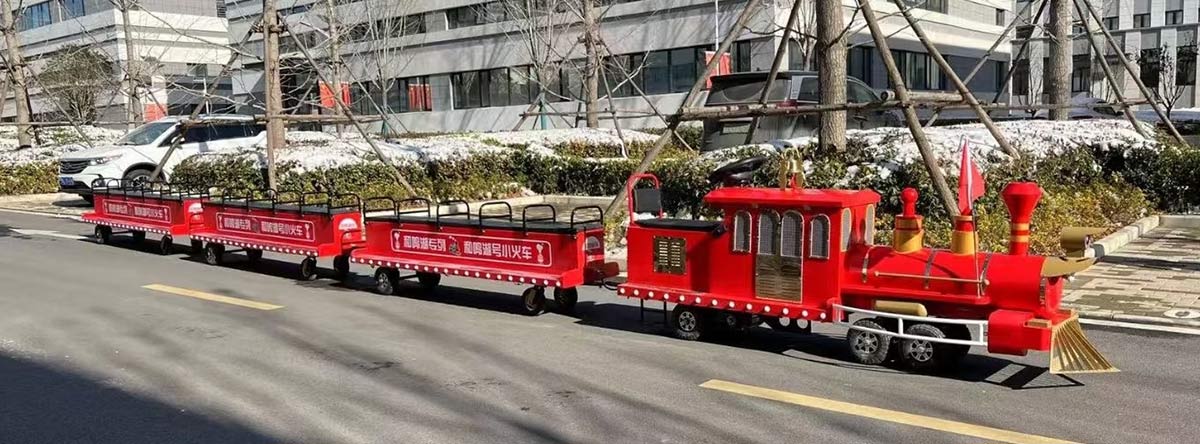
To protect your investment and extend service life, implement these strategies:
Never let the battery drop below 20%. Furthermore, during daily operations, you don't always need to force a 100% charge. Maintaining the battery level between 20% and 90% significantly reduces chemical stress and extends cycle life.
Plug the trackless train amusement ride in for brief periods during lunch breaks or low-traffic intervals to maintain that healthy 20-90% zone.
The ideal charging environment is strictly between 0°C and 45°C (32°F to 113°F). Charging in extreme heat or freezing conditions permanently damages the cells.
Advanced operators now use vehicle monitoring systems to track energy consumption per driver and route. Analyzing this data helps optimize shift scheduling and correct high-drain driving habits.
For comprehensive daily physical maintenance procedures, refer to our complete electric train ride battery maintenance guide.
Adhering to these battery maintenance practices ensures reliable electric trackless train battery performance and improved battery safety.
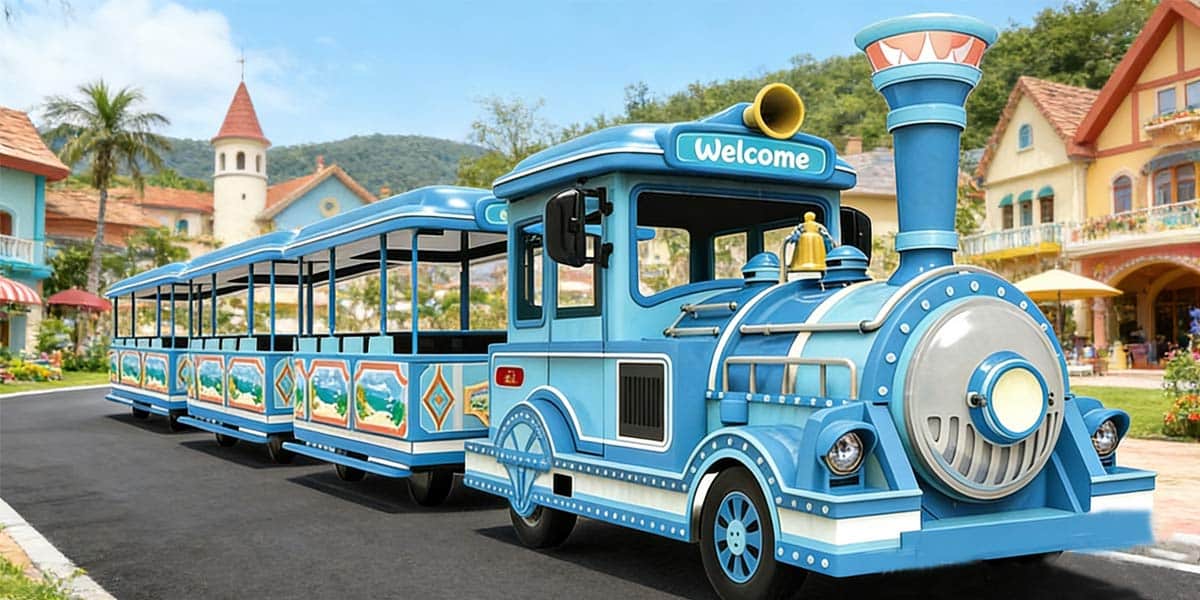
How do you know the battery is truly failing? The industry standard is the 60% Capacity Rule. If capacity drops below this, replacement is necessary. Watch for these clear physical symptoms:
Struggling on Slopes: The electric trackless train lacks power and slows down significantly on inclines or under normal passenger loads.
Abnormal Heat & Voltage Drops: The battery pack becomes unusually hot during operation, and the voltage becomes highly unstable under load.
“False” Fast Charging: A lead-acid battery that usually takes 8 hours to charge suddenly reads “Full” after just 2 hours. This indicates severe sulfation—the plates can no longer hold energy.
The answer to “How long does a trackless train battery last?” is ultimately determined by a combination of initial system matching, battery chemistry, and daily management. While lead-acid batteries offer a reliable 1-to-2-year budget solution, lithium iron phosphate (LiFePO4) technology, backed by a smart BMS, has become the gold standard for parks looking to maximize their long-term ROI.
Ready to maximize your operational efficiency?
Whether you need advice on replacing an aging lead-acid battery bank or want to explore our latest trackless trains equipped with maintenance-free lithium systems precisely calculated for your unique route, contact our engineering team today for a customized energy solution.
In most commercial applications, a sealed lead-acid battery lasts about 1 to 2 years (roughly 300 to 500 charge cycles), depending heavily on charging habits, passenger load, and daily maintenance quality.
A high-quality lithium battery (LiFePO4) usually lasts between 3 to 5 years (2,000 to 3,000+ cycles), and can easily last up to 7 years under proper operation, thanks to its intelligent Battery Management System (BMS).
Frequent deep discharging (running it to 0%), continuous operation on steep inclines without capacity redundancy, charging outside the 0°C–45°C window, and poor driving habits are the primary causes of premature battery degradation.
A battery should be replaced when it can no longer support your daily operational runtime (dropping below 60% of original capacity), struggles to climb normal slopes, or exhibits unstable voltage drops and false charging behavior.

Whatsapp : +86 13623710276
Email : [email protected]
Address : High-tech Industrial Development Zone, Zhengzhou


WhatsApp us

