HomeNewsTrain RideHow to Charge a Trackless Train Battery: Step-by-Step Guide
How to Charge a Trackless Train Battery: Step-by-Step Guide
22
Apr
For amusement park operators and scenic resort managers, learning how to charge a trackless train battery correctly is about much more than just plugging a cable into a wall. Improper charging habits are the number one cause of premature battery failure, degraded daily runtime, and—most importantly—severe electrical fire hazards.
Whether you manage a kids train ride in a mall or a heavy-duty tourist train, establishing a strict charging Standard Operating Procedure (SOP) is critical. In this comprehensive electric sightseeing train charging guide, we will walk you through the industrial electrical requirements, the exact step-by-step plug-in sequence to prevent electrical arcing, and professional operational strategies for peak seasons.
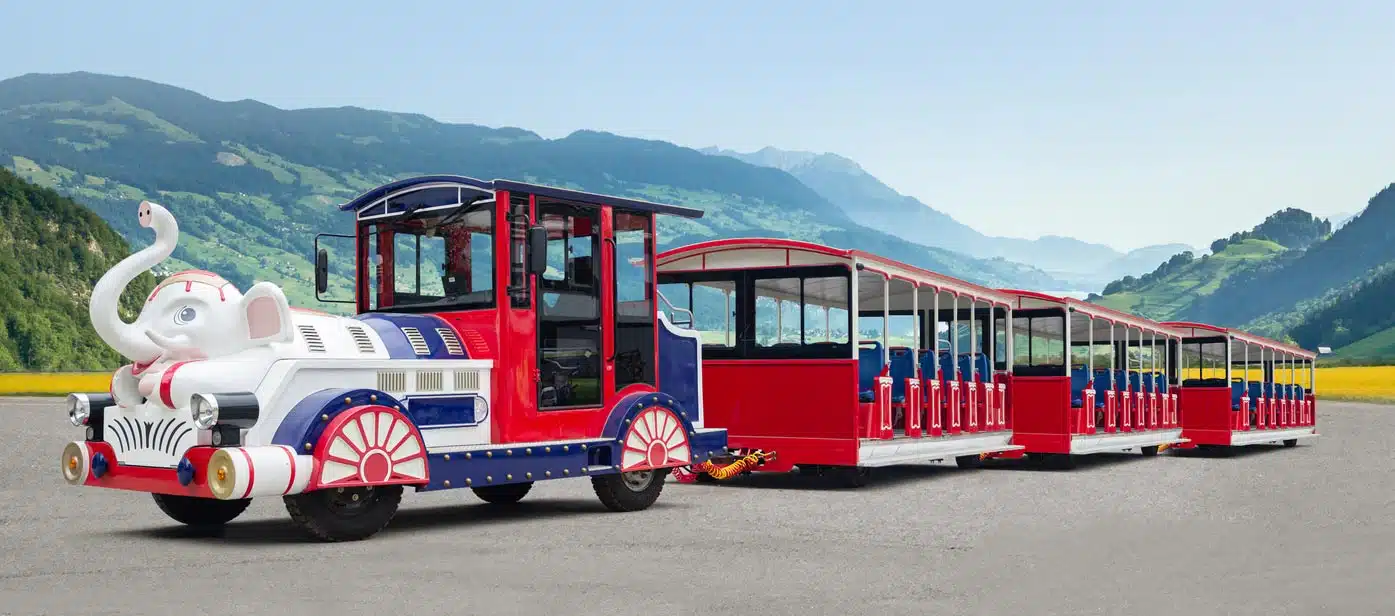
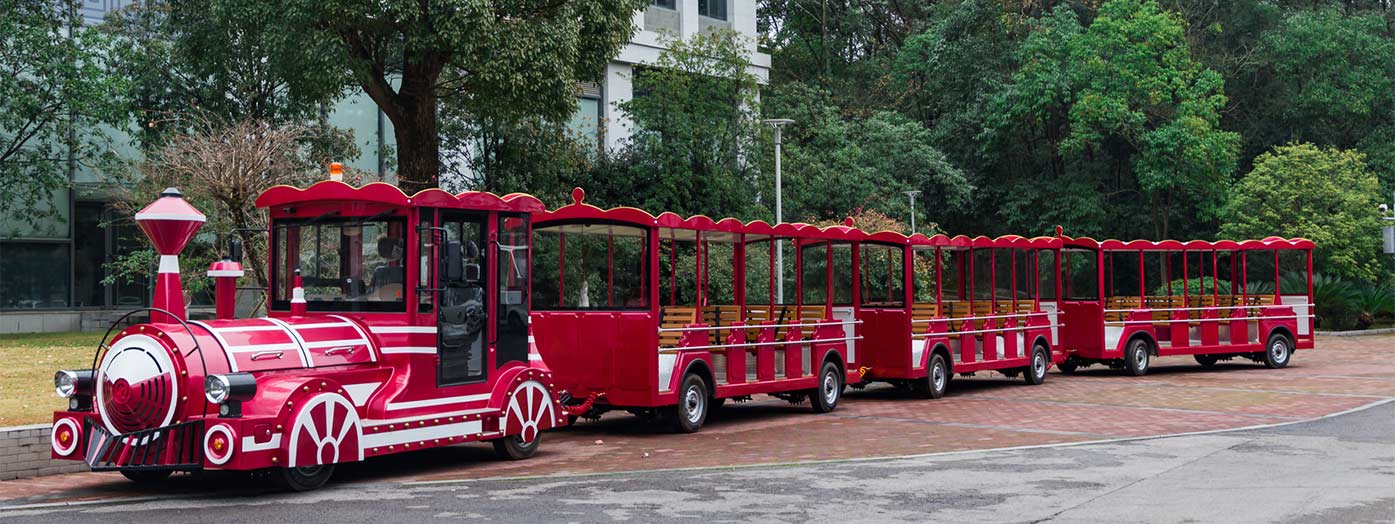
Elephant Theme Sightseeing Train – Battery Electric Amusement Ride
1. Trackless Train Battery Charging Preparation: Voltage & Electrical Guidelines
A commercial trackless train draws a massive amount of current during its charging cycle. Treating it like a household appliance is a dangerous mistake. Ensure your facility meets these strict standards:
Ditch the Extension Cords: Never use standard household extension cords. You must use a dedicated power line with at least 4mm² copper core wire. Wires that are too thin will overheat under the continuous high current.
Install a Dedicated Circuit Breaker: Your charging station must be equipped with a heavy-duty industrial socket and an independent circuit breaker (air switch).
Safe Charging Environment: Always charge under a waterproof canopy. Never cover the battery box or the charger with tarps, as proper airflow is required to dissipate heat.
Do Not Modify: Never allow untrained staff to open or modify the charger casing. If a charger malfunctions, replace it or contact professional technical support.
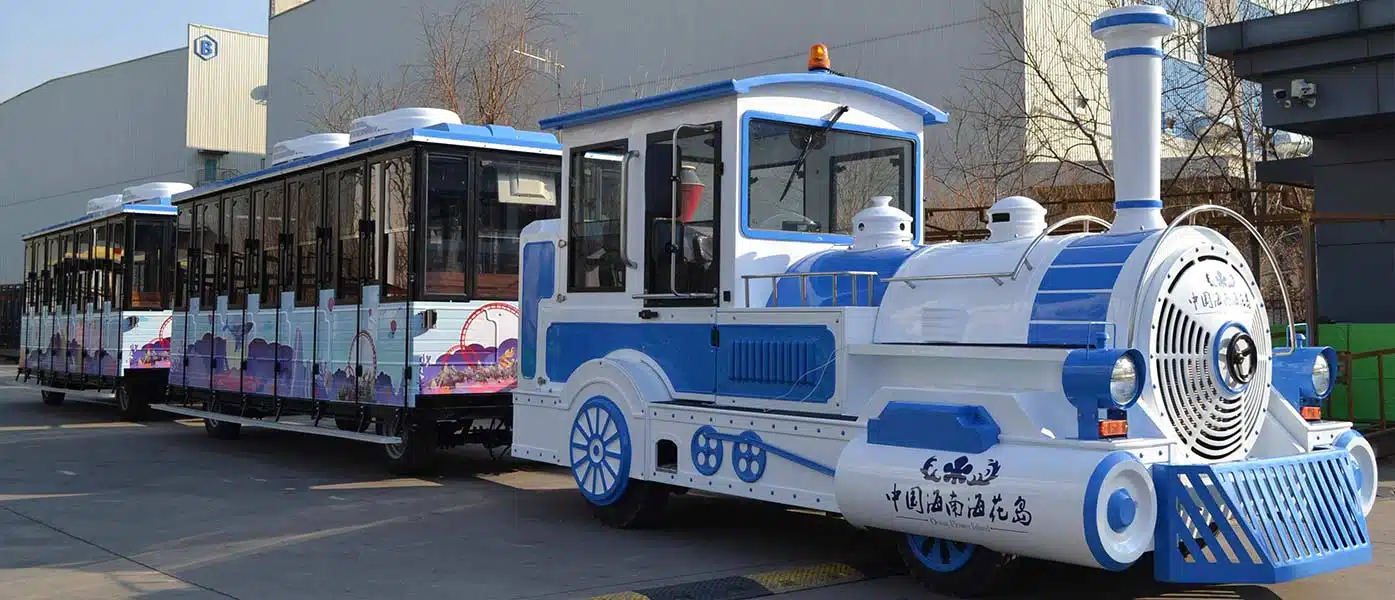
Blue & White Trackless Train in City Park – Electric Amusement Ride for Families
2. Electric Train Ride Battery Safe Plug-In and Unplug Procedure: Step-by-Step
The most common mistake new operators make when learning how to charge an amusement park train battery is plugging things in the wrong order, causing electrical arcing (sparks) that burn terminal pins.
Print this sequence and hang it in your charging room:
The Plug-In Sequence (To Start Charging):
Step 1
Verify Voltage & Power Down
First, confirm the charger matches your train's system voltage (e.g., 48V or 72V). Then, turn off the ignition key to ensure there is no electrical draw.
Step 2
Connect the Battery First
Plug the charger's DC output cable securely into the trackless train’s battery receptacle.
Step 3
Connect the AC Power
Finally, plug the charger into the 110V/220V AC wall outlet.
Step 4
Monitor the Indicators
Listen for the charger's cooling fan. Look at the indicator lights: a Red Light means active charging is in progress, while a Green Light indicates the battery is fully charged.
The Unplug Sequence (To Stop Charging):
Step 1
Disconnect the AC Power First
Unplug the charger from the wall outlet.
Step 3
Disconnect the Battery Last
emove the plug from the train's battery port.
(Pro Tip: Reversing this unplugging order while live current is flowing causes dangerous sparks!)
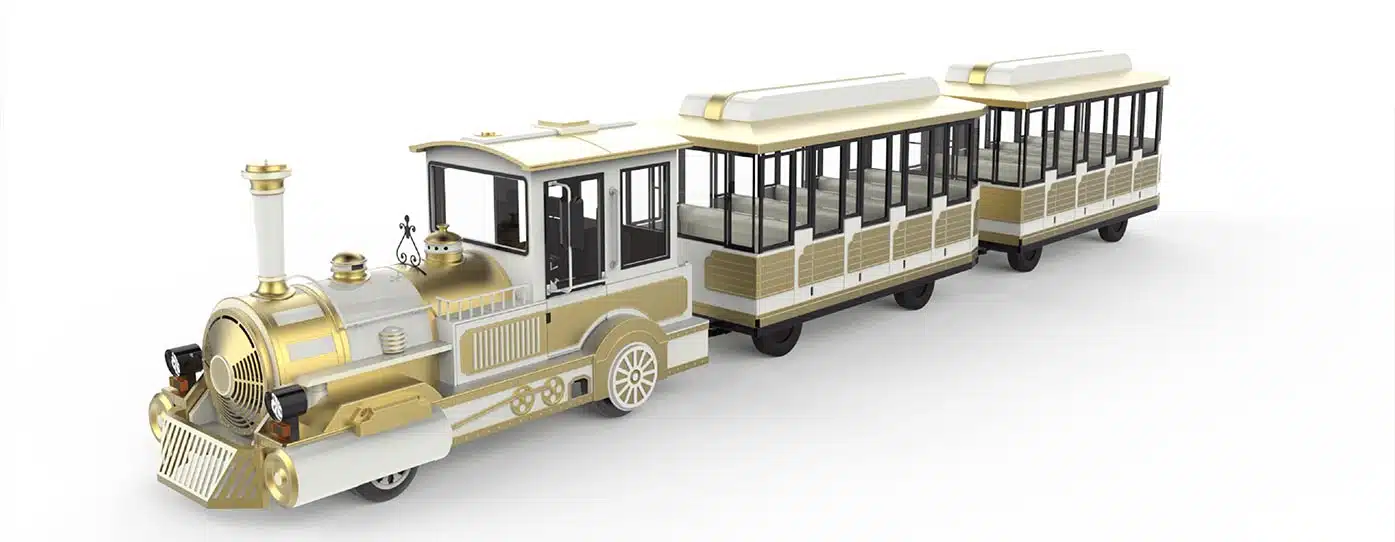
Family Friendly Battery Trackless Train Ride – Amusement Park Electric Train 3D Design
3. Lead-Acid vs. Lithium: Charging Rules & Strategies
Understanding your battery type—whether lead-acid, AGM, or lithium iron phosphate—is crucial, as each type has different charging requirements and protocols for electric tourist train ride batteries.
Normal Daily Operation: A single overnight charge is usually sufficient.
Peak Holiday Seasons: Utilize opportunity charging (plugging in for 45 minutes during lunch breaks). For extremely high-traffic outdoor resorts, keeping backup battery systems (swappable packs) ensures zero downtime.
(Want to know which battery type of theme park train ride offers the best ROI over 5 years? Check out our deep-dive comparison on trackless train battery lifespan. )
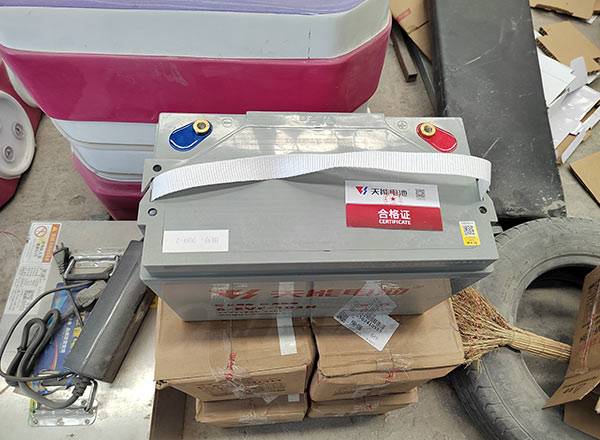
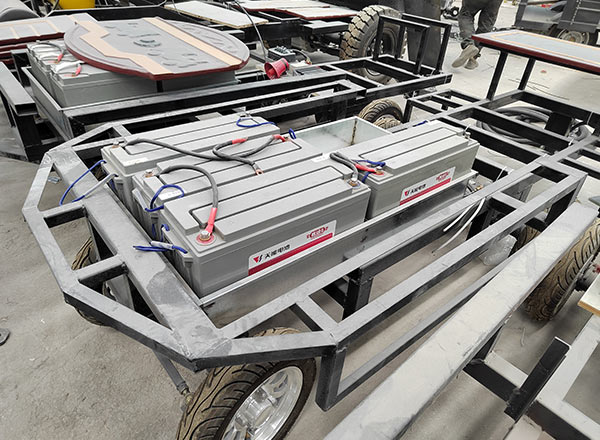
Electric Sightseeing Trackless Train Battery | High-Capacity Lead-Acid Battery for Theme Parks
Trackless Sightseeing Train Lithium Battery Pack | Efficient Power Solution for Amusement Park Electric Trains
4. Top 3 Dangerous Charging Habits to Avoid
Even with the best smart charger, human error can destroy a power bank. Ensure your staff avoids these critical mistakes:
Mistake 1
Charging immediately after a heavy shift. When a train amusement ride finishes a long route, the internal battery temperature is extremely high. Plugging it in immediately risks thermal runaway. Always let the train sit and cool down for 15 to 30 minutes before charging.
Mistake 2
Deep Discharging (Waiting until 0%). Never wait until the battery is completely drained. Train your staff to charge when the capacity drops to 20%–30%. Deep discharging causes irreversible capacity loss.
Mistake 3
Skipping the "Initial Charge" on a new tourist road train. When your brand-new trackless train arrives, it has lost power during transit. Always charge a new train to 100% before its first commercial run.
5. Conclusion: Safety First for Long-Term Operation
Mastering how to charge an electric trackless train ride battery is the foundation of operational safety and financial efficiency. By upgrading your electrical wiring, training staff on the correct plug-in sequence, and adopting peak-season charging strategies, you can eliminate fire risks and maximize your vehicle’s daily uptime.
At Carnee Rides, China’s leading trackless train supplier, our electric sightseeing trains come with premium smart chargers that automatically stop charging when batteries are full, ensuring safety and extending battery life. We provide one-stop solutions for amusement park trains. Tell us your requirements and application scenarios, and we will custom-design a trackless sightseeing train tailored just for you!
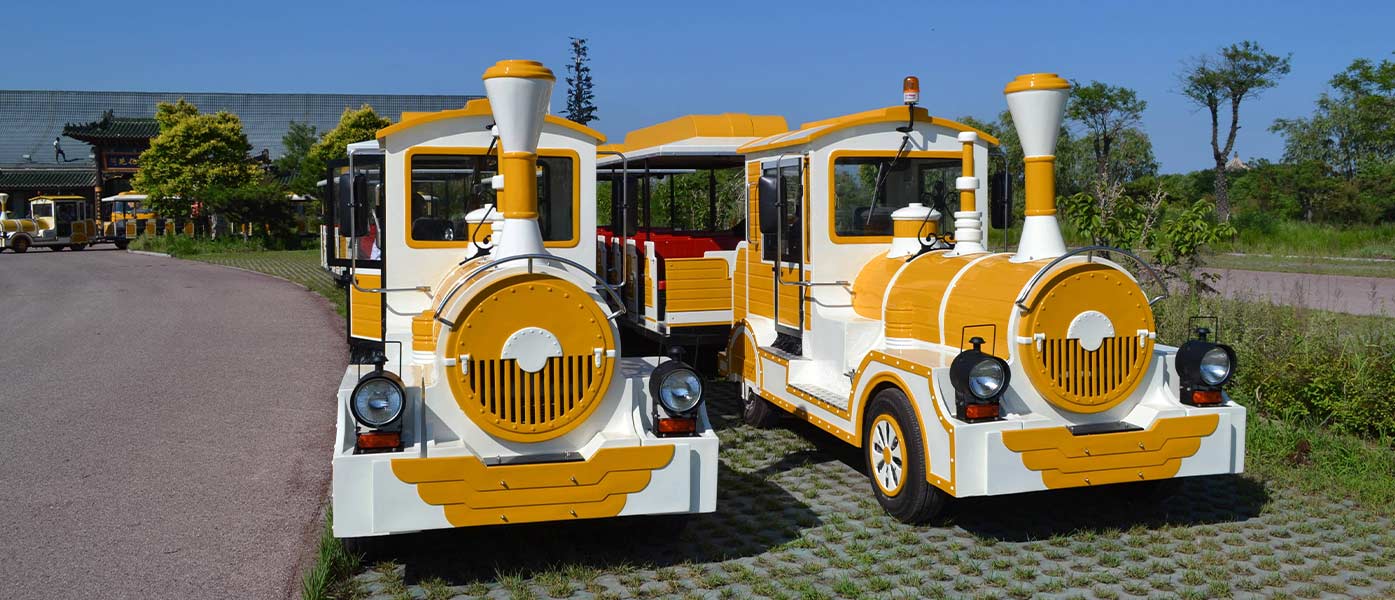
Yellow Trackless Train for Scenic Garden – Electric Theme Park Train Ride
How long does it take to charge a trackless train battery?
Standard lead-acid batteries typically take 8 to 10 hours to reach a full charge. Lithium-ion (LiFePO4) systems charge much faster, usually requiring only 2 to 4 hours.
Can you overcharge a battery-powered train ride?
Yes, if you use a generic charger. However, using the original “smart charger” prevents this. Smart chargers automatically stop delivering heavy current once the battery reaches 100% and switch to a maintenance mode (float charge) to prevent hazards.
Why does my train charger get hot during use?
It is normal for an industrial charger to become warm while pushing high current. However, if it becomes too hot to touch, or if the internal cooling fan fails to spin, disconnect it immediately and contact technical support.
How often should I charge an electric sightseeing train?
For standard daily operations, an overnight charge is ideal. For high-traffic days, partial charging between rides is recommended. Never let the battery drop below 20%. To learn more, read our complete amusement park train maintenance guide.
Leave A Message
If you are interested in our products and want to know more details,please leave a message here,we will reply you as soon as we can.
Leo Ma | Founder & CEO, Carnee Rides
With over 27 years of hands-on experience in the amusement rides industry, Leo Ma has transformed his deep frontline expertise into leading a premier global amusement equipment manufacturing company. Having worked his way up from the sales floor to the Founder of Carnee Rides, Leo understands exactly what park investors need: safe, durable, and high-ROI equipment. Today, he shares his decades of insider knowledge to help clients worldwide make smart, factory-direct purchasing decisions.