
what are you looking for?

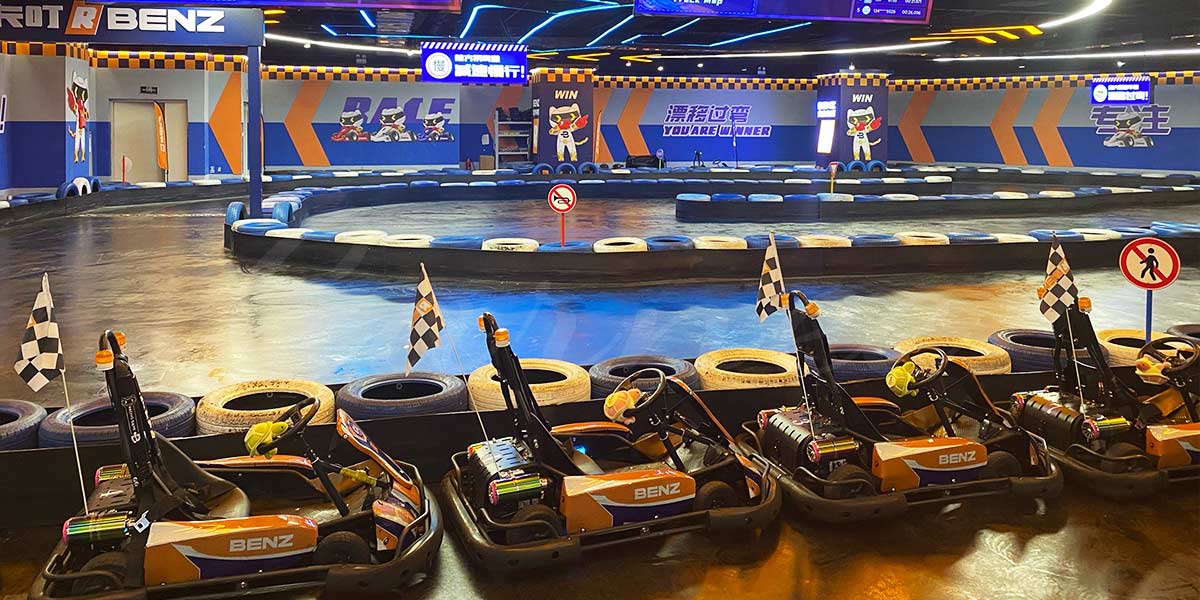
The commercial go-karting industry is experiencing massive global growth, delivering high-speed thrills to families, casual riders, and serious competitors alike. If you are an entrepreneur planning a high-end indoor Family Entertainment Center (FEC) or an investor launching a sprawling outdoor racing circuit, your foundational choice remains the same: should you power your fleet with electric or gas go-karts?
While both power systems offer undeniable excitement, compared to traditional gas go-karts, modern electric go-karts boast significant comprehensive advantages for commercial operations. However, the “right” choice still depends heavily on your venue type and target audience.
As a professional go-kart manufacturer in China, Carnee Rides has compiled this definitive guide to help you look past the sales pitches and analyze the real-world pros, cons, and long-term ROI of both options.
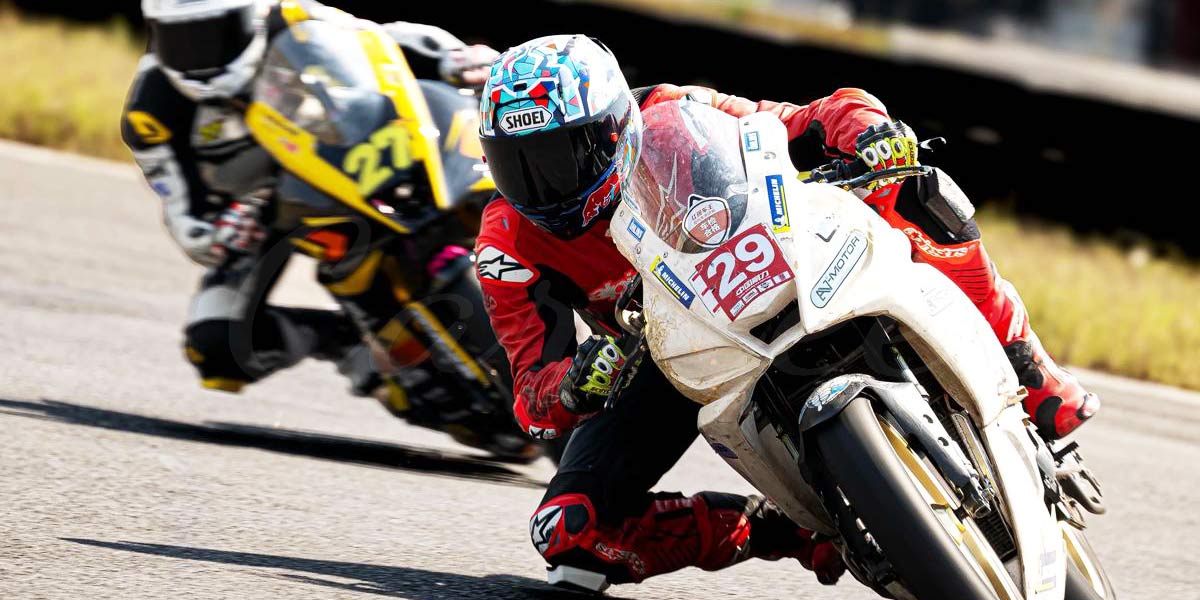
When investors inquire about a new go-kart, the first question is always, “How fast can they go?”
Electric Go-Karts (The Sprint Kings): Electric karts utilize advanced hub-motor technology that provides maximum torque instantaneously. While many commercial models are software-limited to 30-50 km/h for safety, their 0-to-top-speed acceleration is unmatched. The moment a driver presses the pedal, the kart delivers a rapid, linear burst of power. This instant throttle response makes them feel incredibly fast and highly competitive on tight, technical indoor tracks.
Gas Powered Go-Karts (The Top Speed Champions): Gas-powered karts operate on traditional combustion engines where torque builds gradually alongside engine RPMs. While the initial launch feels less aggressive, gas engines boast a higher top-speed ceiling. Adult gas karts equipped with 200cc+ four-stroke engines can easily push past 60-80 km/h on long outdoor straightaways, making them the ultimate choice for pure, top-speed adrenaline seekers.
For commercial track owners, the “cost per lap” is the metric that dictates profitability. You must calculate the Total Cost of Ownership (TCO) rather than just looking at the sticker price.
Initial Investment:
Gasoline go-Karts offer a much lower financial barrier to entry, typically ranging from $1,000 to $7,000 USD (roughly 7,000 to 50,000 RMB) per unit. Due to the high cost of lithium battery packs and intelligent control systems, commercial adult electric go-karts generally cost 1.4 to 1.6 times more upfront.
Daily Operating Costs: This is where the electric premium pays off. Electric fleets can save up to 61% in daily energy costs compared to gas-powered karts. The hourly electricity cost to operate an electric kart is only a fraction of the fuel expense required for a gas engine, significantly lowering operating costs. Although electric karts have a higher initial investment, most operators typically recover the extra cost within 8 to 12 months through savings in energy expenses.
Hidden Compliance Risks: Beyond daily fuel expenses, gas karts come with massive hidden compliance costs. Operators must pay for regular exhaust emission testing, muffler maintenance, and strict fuel storage permits.
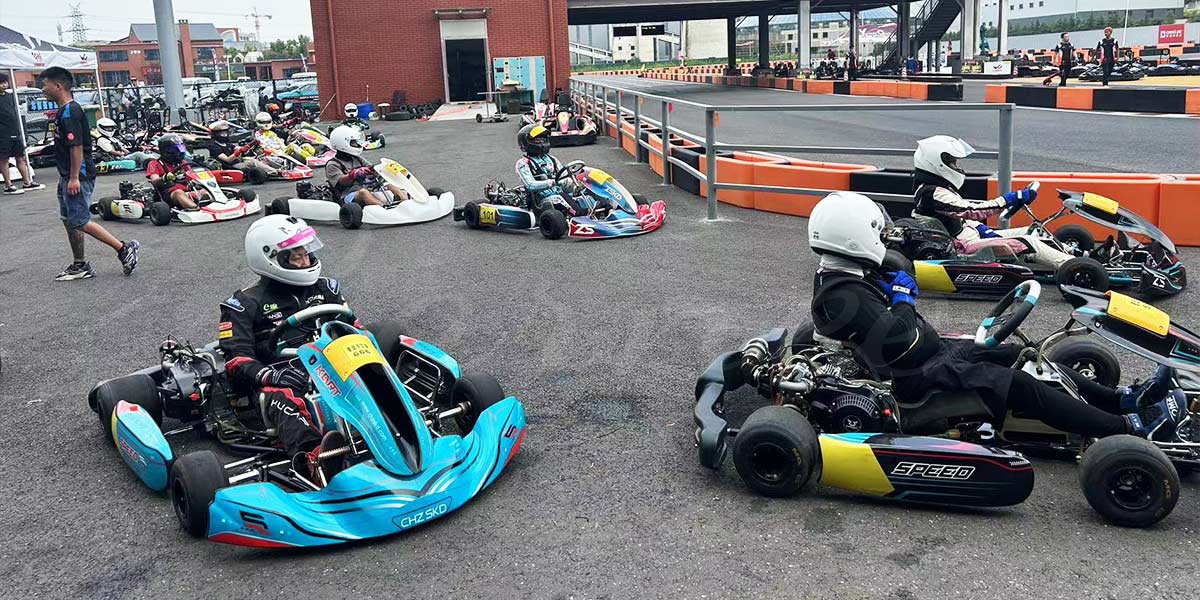
The power source plays a key role in shaping the physical sensations, cornering ability, and overall atmosphere of your track.
The Electric Balance & Sleek Design
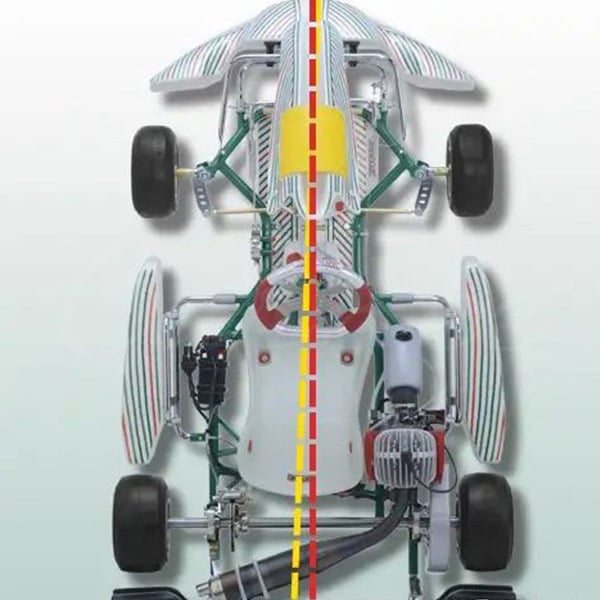
Electric go-karts replace the bulky engine with a battery pack, which allows the driver’s seat to be positioned perfectly on the central axis. This provides superior, balanced handling, especially on technical tracks with tight turns. Electric karts don’t require pull-cord start systems or constant engine access, allowing for a more streamlined and cohesive design. Their fiberglass body features fewer cutouts, making them look sleek and modern.
Additionally, electric systems often support futuristic LED lighting and digital signals, making them visually appealing and “Instagrammable” for younger audiences.
The Gas Vibe & Handling Quirks
For those who enjoy traditional racing, gas go-karts offer a loud engine growl and chassis vibrations, creating a more authentic motorsport experience. The roar of the engine and physical vibrations contribute to the thrill of the ride.
However, gas powered karts have their drawbacks. Due to the side-mounted engine, the seat is offset to one side, impacting balance. In a lower-end go kart gas powered, this imbalance leads to a noticeable handling flaw, making turning left feel completely different from turning right. High-end go kart with gas require precise engineering to ensure the weight shift is properly balanced for optimal handling.
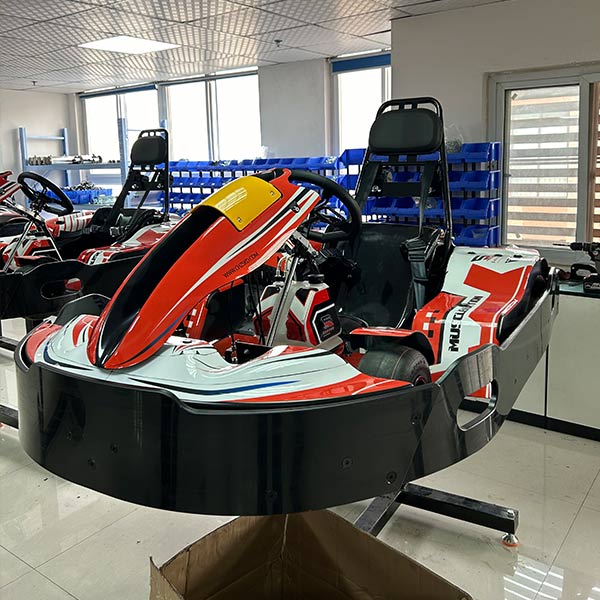
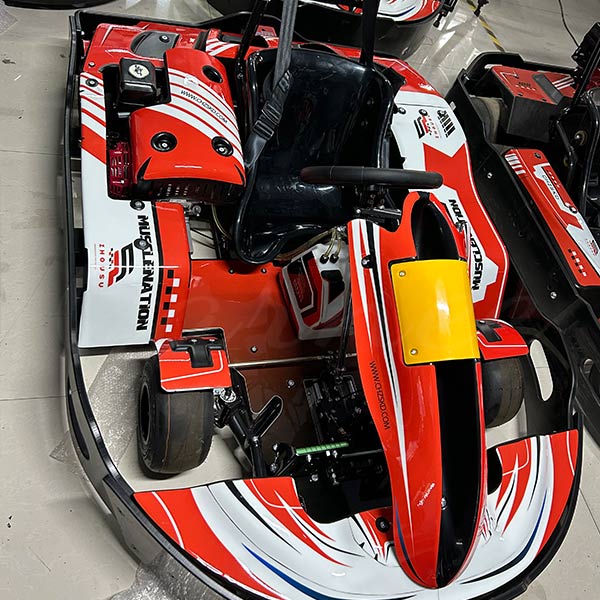
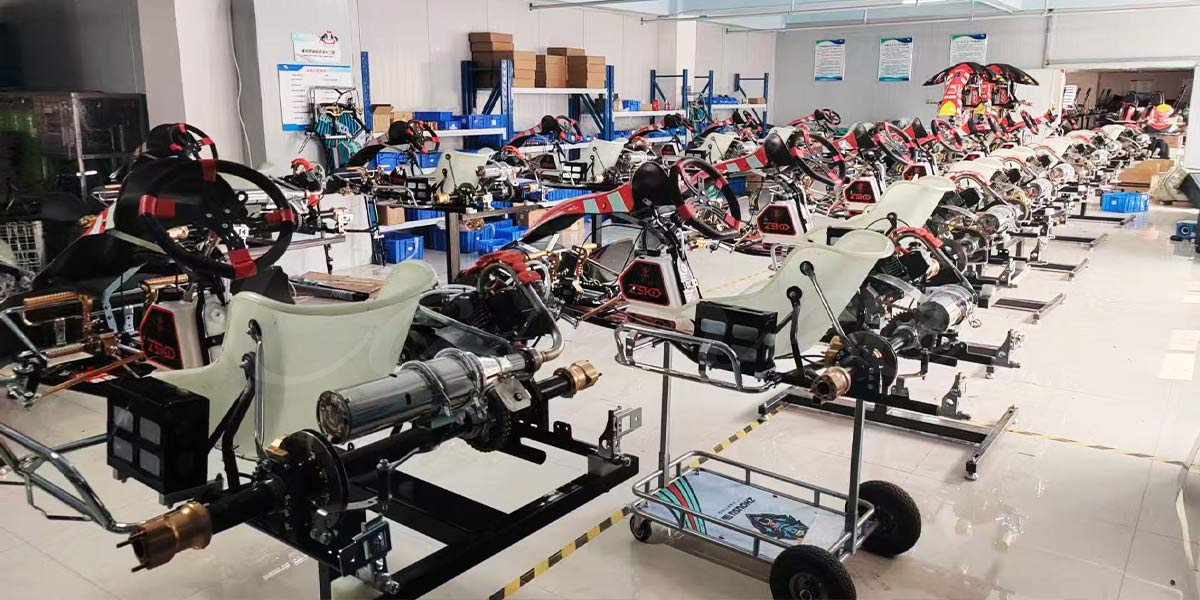
Electric go-karts are relatively easy to maintain. Since they do not require frequent oil changes, spark plug replacements, or carburetor adjustments, overall maintenance costs are reduced by approximately 27%. Your existing staff can handle day-to-day operations without specialized training. The main components that need periodic replacement include the tires and battery.
In contrast, gas go-karts require more complicated maintenance. They need precise tuning of carburetors, exhaust ports, intake valves, timing, and clutches, requiring highly skilled (and higher-paid) mechanics. Additionally, gas go-karts require regular oil changes, spark plug replacements, air filter cleaning, and chain adjustments, making the maintenance workload more frequent and intensive.
Gas go-karts excel in endurance, with a full tank providing 1 to 2 hours of continuous running, and refueling only taking about 5 minutes. Electric go-karts, on the other hand, provide shorter runtimes, typically offering 40 to 90 minutes of operation per charge, with a recharging time of around 1 hour. As a result, tracks using electric karts must carefully plan for battery rotation to avoid extended downtime. Furthermore, electric go-karts require dedicated charging stations, which increases the initial setup cost for the facility.
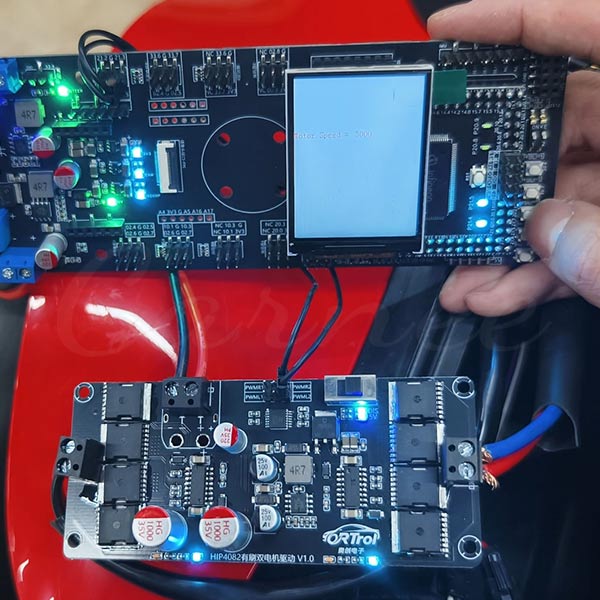
Modern track operators require high control over their fleet to ensure customer safety and mitigate operational risks.
In high-speed go-kart racing, collisions are inevitable, and fuel leakage is a major safety concern. Early gas-powered karts faced risks when fuel lines leaked directly onto hot engines, potentially leading to fires. While modern gas karts have relocated fuel tanks to the front to mitigate this risk, there is still a danger of fuel leaks in the event of a crash. Electric go-karts, on the other hand, completely eliminate this fire hazard by using batteries instead of fuel, providing a safer racing environment.
Electric go-karts are equipped with a reverse gear, which allows drivers to simply reverse out of tight spots or track barriers. This feature reduces the need for track marshals to intervene in case of an accident, improving the flow of operations. Gas-powered karts lack this feature, requiring manual intervention from track staff to push the kart back onto the track, which can be dangerous and time-consuming.
Electric racing go kart comes with advanced safety features, including the ability for operators to remotely shut down the entire fleet or limit the speed of certain karts. This is particularly useful for controlling junior drivers or when there’s a need for quick intervention. Gas-powered karts do not have this capability, and any intervention requires manual operation, which slows down response time and could compromise safety.
| Aspect | Electric Go-Karts | Gasoline Go-Karts |
|---|---|---|
| Power Source | Powered by an electric motor and battery pack, using hub motor technology. | Powered by a two-stroke or four-stroke gasoline engine, directly connected to the wheels. |
| Power Output | Instant torque, providing quick acceleration and smooth performance. | Torque output is gradual, requiring higher engine RPM to achieve maximum power. |
| Noise & Emissions | Zero emissions, low noise, suitable for indoor, CBD, and urban environments. | Loud noise, exhaust emissions, generally limited to outdoor use to avoid pollution and noise disturbance. |
| Control & Features | Can include reverse gear, speed limits, remote control, and data display screens (speed, distance). Balanced design with the seat at the centerline. | No reverse gear, manual handling required. Functions are primarily mechanical with no electronic displays. The seat is often offset due to engine placement. |
| Range & Recharging | Charging time: 20-30 minutes for competitive types or 40-90 minutes for entertainment types; recharge time: approximately 1 hour. | Full tank allows for 1-2 hours of continuous use, refueling time is quick (a few minutes). |
| Applications | Suitable for indoor tracks, city entertainment centers, family-friendly venues, and educational experiences. | Suitable for outdoor professional tracks, competitive events, and enthusiasts seeking authentic driving experiences. |
| Price | Higher initial cost, especially for adult entertainment models. | Lower initial cost, ranging from 7,000 to 50,000 RMB, with a lower entry barrier. |
| Maintenance Costs | Easier maintenance with fewer components to worry about; the main long-term cost is the battery replacement. | Higher maintenance costs, requiring regular oil, spark plug, and carburetor replacements, as well as engine-related repairs. |
| Competitive Level | Increasingly promoted in professional events with standard battery specifications for safety, but currently dominated by gas-powered go-karts in speed races. | Traditional choice for competitive go-karting, with established technology and high performance limits. |
Ultimately, the choice between electric and gas go-karts depends entirely on your venue’s specific goals, startup capital, and location.
If you manage a sprawling outdoor off-road track, host professional endurance racing leagues, and your drivers crave the authentic roar of a combustion engine, gas go-karts remain a powerful, cost-effective startup choice.
However, we must look at where the industry is heading. As global environmental regulations become increasingly strict, many Tier-1 cities have already banned the construction of new indoor gas-powered go-kart projects, actively encouraging the transition to electrification. Thanks to their eco-friendliness, zero emissions, high-performance instant torque, low maintenance overhead, and superior safety features, electric go-karts are rapidly becoming the undisputed mainstream choice for the future of the karting market.
If you are building an indoor racing center, operating within a premium city shopping mall, or simply want a future-proof investment that practically runs itself, electric fleets are the ultimate winner.
Yes, electric go-karts are worth it for indoor tracks or environmentally conscious venues. They offer a quieter and safer environment, require less maintenance, and lower energy costs. Although the upfront cost is higher, the long-term savings in fuel, maintenance, and compliance costs make them a better investment.
Electric go-karts are generally slower in terms of top speed but excel in acceleration, especially on tracks with tight corners. The instant torque from electric motors allows for rapid acceleration, which is beneficial on technical tracks.
Electric go-karts are typically limited to speeds between 30-50 km/h for safety reasons. Some high-performance models may reach speeds of 80 km/h, especially on larger, open outdoor tracks.
Electric go-karts typically run for 40-90 minutes per charge, depending on the model and track conditions. Charging typically takes about 1 hour, and track operators must plan for battery rotation to ensure uninterrupted service.
Gas go-karts are better suited for long outdoor tracks, competitive racing, and environments that demand high top speeds. They offer the authentic experience of engine noise, vibration, and fuel-powered excitement. Gas karts also have a longer run time, making them ideal for endurance races and outdoor events.
Yes, electric go-karts can be used outdoors, but they are better suited for shorter tracks with frequent turns. Their battery life limits their use for long-distance races. Gas go-karts are more suitable for long, open tracks due to their longer fuel endurance.
Yes, absolutely. Although commercial electric karts cost more initially, track operators typically recover this investment within the first 8 to 12 months.
The purchase price for a standard commercial gas go-kart typically ranges from $1,000 to $7,000 USD (roughly 7,000 to 50,000 RMB). The exact cost depends on the engine brand, chassis configuration, and safety features.
Yes, Carnee Rides manufactures high-performance commercial go-karts tailored for both adults and juniors. Our adult models (both electric and gas) feature reinforced chassis, wider seating, and higher power outputs suited for professional racing environments.

Whatsapp : +86 13623710276
Email : [email protected]
Address : High-tech Industrial Development Zone, Zhengzhou


WhatsApp us

