
what are you looking for?

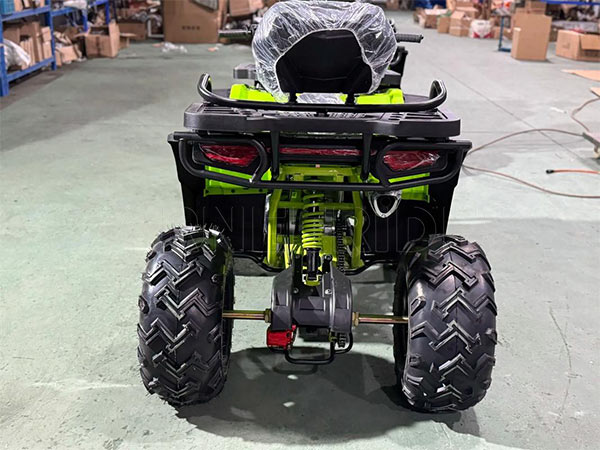
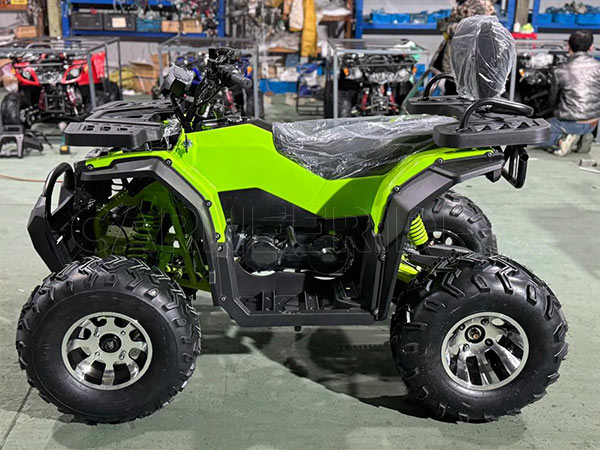
Last spring, we consulted with a commercial ATV rental park that had just lost three machines to catastrophic engine failure in a single month. The culprit? They had skipped their routine oil changes and air filter maintenance. That was roughly $100 worth of preventative care that resulted in over $7,000 in fleet downtime and repair bills.
As a premier source manufacturer with over 20 years of experience building commercial-grade off-road vehicles at Carnee Rides, we engineer our machines from the ground up. We know exactly what makes an ATV last 10,000 miles, and what kills it at 1,000. ATV maintenance is the systematic inspection, servicing, and replacement of wear components to ensure peak performance, rider safety, and maximum lifespan. Whether you ride trails on weekends or manage a fleet of utility quads on a ranch, a disciplined routine ATV maintenance plan is the single cheapest insurance policy your business will ever buy.
Strip away the jargon and ATV maintenance boils down to one thing: keeping every system on your quad in the condition the factory intended. Engine oil, coolant, brake fluid, air filtration, drivetrain components, electrical connections, tires — each one degrades at its own pace, and each one can leave you stranded (or worse, injured) when it fails.
In our decades of outfitting commercial fleets, we’ve seen patterns that repeat like clockwork. Operators who follow a consistent atv maintenance schedule almost never deal with a seized piston or a snapped CV axle. The ones who treat maintenance as optional? They’re the ones hauling their machines home on a flatbed trailer.
Here’s the math that convinces commercial buyers to get religious about it. A typical sport or utility ATV costs between $6,000 and $14,000 new. Annual routine maintenance — oil, filters, coolant, grease, brake pads — runs about $150 to $300 if you do it yourself. That’s roughly 2% of the purchase price per year to protect the other 98%. Skip it, and you’re gambling with engine rebuilds ($1,500–$3,000), transmission replacements ($800–$2,000), and suspension overhauls ($500–$1,200).
Safety is the other half of the equation. A brake line that’s been rubbing against the frame for six months doesn’t announce itself with a warning light. It announces itself when you squeeze the lever at the top of a hill and nothing happens. A pre-ride inspection takes five minutes. A trip to the emergency room takes a lot longer.
Bottom line: Routine ATV maintenance isn’t a chore — it’s the cheapest, simplest way to protect your investment, your safety, and your riding time. Every dollar you spend on preventative care saves you roughly $8 to $12 in reactive repairs down the road.
Pro Tip: Keep a dedicated notebook or spreadsheet where you log every service date and hour reading. When it's time to sell the machine, a documented ATV maintenance log adds 10–15% to the resale value.
This is the section you’ll want to bookmark. We’ve refined this atv maintenance checklist based on manufacturer engineering specs and fleet data. The goal is simple: nothing gets forgotten, and everything gets done at the right interval.
Think of it like a pilot’s pre-flight checklist. Fast, systematic, and non-negotiable.
Tire pressure — verify all four tires are within spec (typically 5–7 PSI for trail, 3–5 PSI for mud/sand).
Visual tire inspection — look for cuts, sidewall bulges, embedded objects.
Engine oil level — check with the machine on level ground, engine warm.
Coolant level — peek at the overflow reservoir (never open a hot radiator cap).
Brake lever and pedal feel — firm pressure, no spongy travel.
Throttle response — smooth snap-back when released.
Lights, kill switch, and horn — quick function test.
Chain or belt visual check — proper tension, no cracks or fraying.
Steering — turn bars lock-to-lock, feel for binding or clicking.
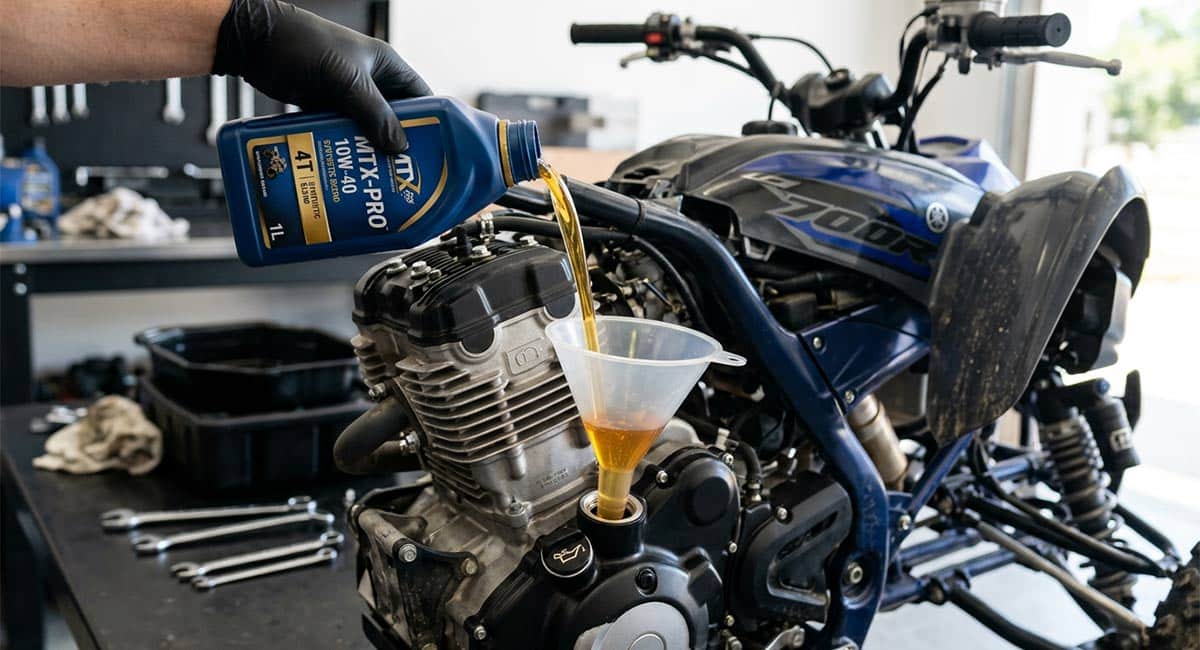
Change engine oil and replace oil filter.
Clean or replace air filter (more often in dusty conditions).
Inspect brake pads — replace when material is below 2mm.
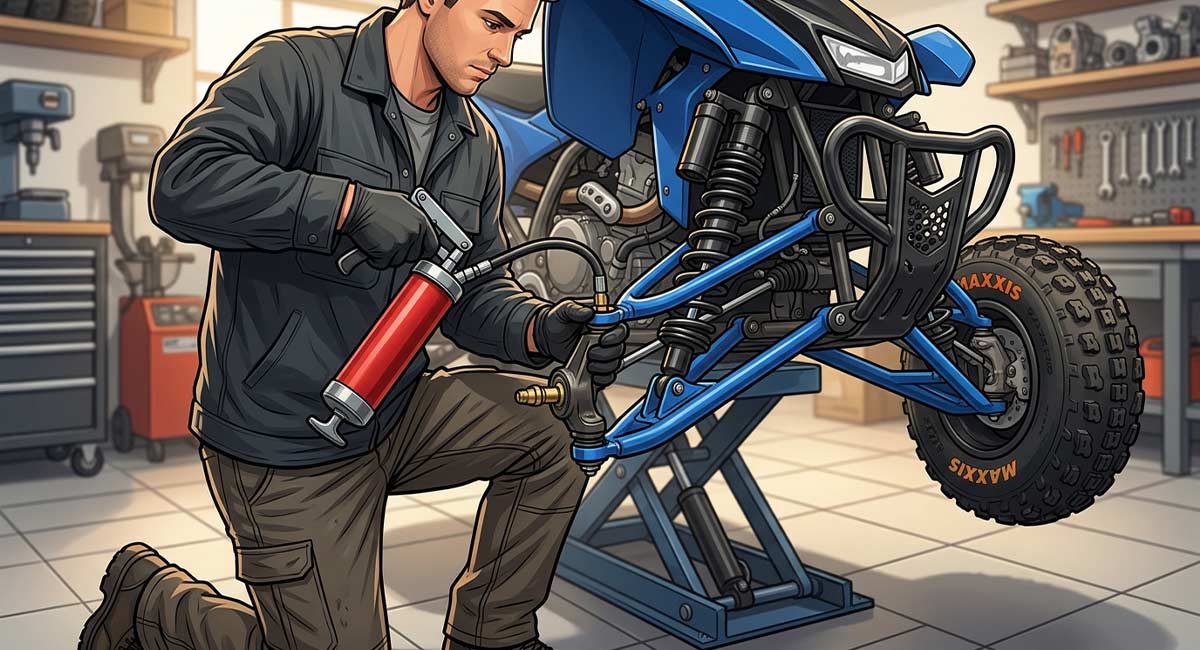
Grease all zerk fittings (A-arms, ball joints, tie rod ends, prop shaft).
Check and adjust chain tension or inspect CVT belt wear.
Inspect CV boots for tears or grease leakage.
Test battery voltage (should read 12.6V+ at rest, 13.5–14.5V while running).
Tighten chassis fasteners — especially skid plate bolts.
Inspect spark plug condition.
Flush and replace coolant.
Replace brake fluid (DOT 4 absorbs moisture over time).
Replace spark plug(s).
Inspect and repack wheel bearings.
Check differential fluid levels — front and rear.
Inspect suspension components: bushings, shock seals, spring condition.
Clean and inspect radiator fins.
Check all electrical connections for corrosion — apply dielectric grease.
| Task | Pre-Ride | Every 50 Hrs | Annual / 200 Hrs |
|---|---|---|---|
| Tire pressure & visual inspection | ✓ | ||
| Engine oil level check | ✓ | ||
| Coolant level check | ✓ | ||
| Brake feel test | ✓ | ||
| Throttle & kill switch test | ✓ | ||
| Engine oil & filter change | ✓ | ||
| Air filter clean/replace | ✓ | ||
| Brake pad inspection | ✓ | ||
| Grease all zerk fittings | ✓ | ||
| Chain/belt inspection & adjust | ✓ | ||
| CV boot inspection | ✓ | ||
| Battery voltage test | ✓ | ||
| Chassis fastener check | ✓ | ||
| Spark plug inspection | ✓ | ||
| Cable lubrication | ✓ | ||
| Coolant flush & replace | ✓ | ||
| Brake fluid replacement | ✓ | ||
| Spark plug replacement | ✓ | ||
| Wheel bearing repack | ✓ | ||
| Differential fluid check | ✓ | ||
| Suspension inspection | ✓ | ||
| Radiator cleaning | ✓ | ||
| Electrical connection service | ✓ | ||
| Exhaust system inspection | ✓ | ||
| CVT belt replacement (if worn) | ✓ |

A checklist tells you what to do. This section is about the how and why—the engineering details that separate a machine running strong at 5,000 miles from one falling apart at 2,000.
Grease Like Your Quad’s Life Depends On It Most people undergrease. They pump the grease gun twice and move on. Here’s the right way: pump until you see fresh grease pushing out around the seal or boot of the fitting. That old, dark grease being displaced was no longer protecting anything. Budget 15 minutes and don’t shortcut it.
ATV Maintenance After Mudding Mud is the ultimate destroyer of bearings and brakes. After mudding, use a pressure washer for the frame and skid plates, but switch to a garden hose for everything above the engine. High-pressure water blasted directly at bearing seals or the airbox will cause hydrolocking and rust. Always run the engine for 10 minutes after washing to evaporate moisture from the exhaust and engine surfaces.
Tire Pressure Is More Important Than You Think Running ATV tires just 2 PSI over the recommended pressure increases the chance of a rolled bead on aggressive terrain by roughly 40%. The sweet spot is narrow:
Hard-packed trails: 6–7 PSI
Rocky terrain: 7–8 PSI (protects rims)
Mud / Sand: 3–5 PSI (maximizes tread footprint)
If you can handle these DIY service tasks, you’ll cover about 80% of your routine atv maintenance without ever visiting a shop.
Warm the engine for 3–5 minutes so oil drains faster. Remove the drain plug and old filter. Apply a thin film of fresh oil to the new filter's O-ring and hand-tighten it. Reinstall the drain plug using a torque wrench (usually 18–22 ft-lbs) to avoid stripping the aluminum case. Fill with the correct amount of synthetic oil.
Your engine inhales thousands of liters of air per minute. A compromised filter lets abrasive particles score the cylinder walls. If using a reusable foam filter, wash in warm soapy water, squeeze dry (never wring), and apply filter oil evenly. If using a paper filter, ensure it seats properly in the airbox.
Check slack at the midpoint of the chain's bottom run. Loosen the rear axle nut, turn the adjuster bolts equally on both sides, and verify alignment. Torque the axle nut back to spec and apply high-quality chain lube.
Never use tap water. The minerals cause scale buildup inside the cooling passages. Use manufacturer-specified coolant mixed with distilled water (usually 50/50). For a full flush, drain the radiator and engine block, flush with distilled water, refill, and bleed air from the system.
Recreational riders put their quads through a lot, but work ATVs hauling feed, towing trailers, or plowing snow live a completely different life. The stress on every component is exponentially higher.
Shrink your oil intervals: Where a recreational rider might go 50 hours, a work ATV under heavy load should drop to every 25–30 hours.
Watch the drivetrain: Towing puts enormous heat into the transmission. Check diff fluid every 50 hours.
Protect the intake: Dusty farm roads destroy air filters. Check them every 10–15 hours. A pre-filter is mandatory.
| Additional Task | Frequency |
|---|---|
| Oil change (heavy-duty cycle) | Every 25–30 hours |
| Air filter check (dusty environments) | Every 10–15 hours |
| Differential fluid change | Every 100 hours |
| Hitch receiver and mounting point inspection | Monthly |
| Winch cable/rope and motor inspection | Monthly |
| Cargo rack bolt torque check | Every 50 hours |
| Cooling system flush (heavy load use) | Every 6 months |
| Frame weld and crack inspection | Quarterly |
If you’re running a fleet, consider tracking hours with an inexpensive hour meter (about $15, wires into the spark plug lead). It removes all the guesswork from interval-based maintenance and pays for itself in the first month.
When managing a commercial fleet, engine reliability is everything. Unlike mixed-brand consumer ATVs that require vastly different maintenance protocols, unifying your fleet simplifies everything.
At Carnee Rides, our ATVs are powered by legendary Honda and globally trusted Lifan engines. This ensures bulletproof performance and universal parts availability—meaning your mechanics can find oil filters, spark plugs, and carb components anywhere in the world.
We combine the unkillable reliability of a Honda/Lifan powerplant with Carnee Rides’ cost-effective, factory-direct chassis and suspension components. This OEM advantage drastically lowers the average atv maintenance cost by utilizing standardized parts, easy-access service points, and heavy-duty components designed for simplified preventative care. It’s the ultimate solution for minimizing downtime in rental parks and agricultural operations.
Using Automotive Oil: Automotive oil often contains friction modifiers incompatible with wet clutches. It will cause your ATV’s clutch to slip within 200 miles. Stick to JASO MA/MA2 rated oils.
Over-Torquing Bolts: ATV engines are primarily aluminum. Tighter does not mean better; it means stripped threads and expensive Helicoil repairs. Use a torque wrench.
Neglecting Electrical Connections: Corrosion is the #1 cause of ATV electrical failures. Once a year, disconnect accessible connectors, spray contact cleaner, apply dielectric grease, and reconnect.
We highly encourage DIY maintenance for routine tasks (oil, filters, brakes, greasing). However, certain jobs require specialized tools and warrant professional service to avoid safety risks:
Valve adjustments: Requires precision feeler gauges and model-specific clearances.
Suspension rebuilds: Compressed nitrogen in shock absorbers can be dangerous if released improperly.
ECU diagnostics: Requires dealer-level diagnostic tools to read proprietary ATV fault codes.
Internal transmission rebuilds: Requires case splitting and critical clearance measurements.
When a task falls outside your comfort zone, never hesitate to consult a certified local mechanic or reach out directly to your ATV manufacturer for technical support. As a leading Chinese ATV quad bike manufacturer, Carnee Rides believes our responsibility doesn’t end when the vehicle leaves the factory. We provide comprehensive after-sales support, factory service manuals, and detailed maintenance guidance to every customer and commercial fleet operator. If your mechanics ever hit a roadblock in their routine, our engineering team is just a message away.
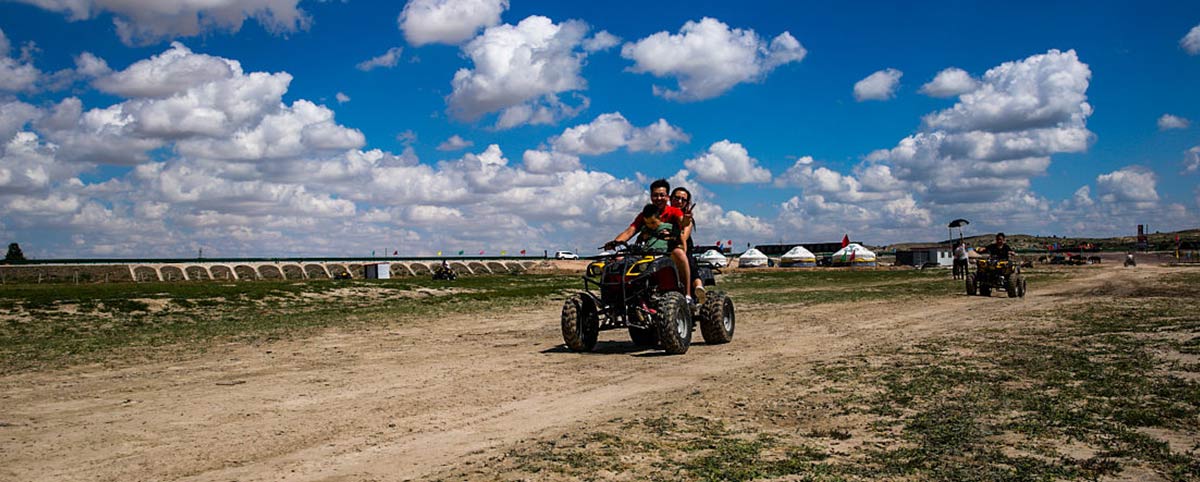
Before you touch a single bolt, let’s talk about what belongs in your garage. Trying to service an ATV with a rusty adjustable wrench creates more problems than it solves — stripped bolts, incorrect torque, and half-finished jobs.
Essential Hand Tools You don’t need a professional shop setup, but you do need the basics:
Torque wrench (inch-pound and foot-pound): This is non-negotiable. Over-torquing drain plugs and under-torquing axle nuts are two of the most common DIY mistakes. A good torque wrench pays for itself the first time you don’t strip an oil pan thread.
Metric socket set (8mm–22mm): Most ATVs are metric. Get a 3/8″ drive set with deep and shallow sockets.
Grease gun with flex hose: Zerks on A-arms, ball joints, and tie rod ends need regular greasing. The flex hose lets you reach fittings tucked behind skid plates.
Tire pressure gauge (0–30 PSI range): ATV tires run at much lower pressures than car tires — typically 4 to 10 PSI. A standard automotive gauge isn’t precise enough.
Digital multimeter: For diagnosing battery health, checking charging system voltage, and troubleshooting electrical gremlins.
Pliers set (needle-nose, channel-lock, snap ring): Snap ring pliers are the one most people forget. You’ll need them for axle and suspension work.
Drain pan and funnel: Keep your workspace clean and professional.
Consumables and Products Worth Stocking
OEM or high-quality aftermarket oil filters: Stick with OEM or a reputable brand.
Synthetic engine oil: Most modern ATVs call for 10W-40 or 5W-40 full synthetic. Check your owner’s manual.
Dielectric grease: A tiny tube protects every electrical connector from corrosion.
OEM air filter + pre-filter: If you ride in dusty conditions, a foam pre-filter extends service life dramatically.
Fuel stabilizer: Essential for any ATV that sits for more than 30 days between rides.
For recreational riding, every 50 hours or at least once per season. For work ATVs under heavy load, shorten that to every 25–30 hours.
If you do the work yourself, expect to spend $150 to $300 per year on consumables. Taking it to a dealer can jump to $400–$800. Either way, preventative care is significantly cheaper than reactive engine repairs.
Yes. 4×4 ATVs have a front differential that needs fluid changes, a front driveshaft that requires greasing, and an engagement mechanism that needs periodic service.
Need more answers? Whether you are deciding between a gas or electric model, or troubleshooting common off-road issues, check out our comprehensive Ultimate ATV FAQ Guide for everything you need to know about commercial and recreational quads.
You’ve made it through the guide. Now it’s time to execute:
Print the checklist: Pin the maintenance schedule to your garage wall. Visual reminders work.
Gather your tools: If you don’t have a torque wrench, buy one today.
Start a maintenance log: Record the date and hour reading every time you service the machine. Consistency is the secret to a 10,000-mile ATV.

Whatsapp : +86 13623710276
Email : [email protected]
Address : High-tech Industrial Development Zone, Zhengzhou


WhatsApp us

