Amusement Park Train Types: How to Choose the Right Train for Your Park

07

Jun

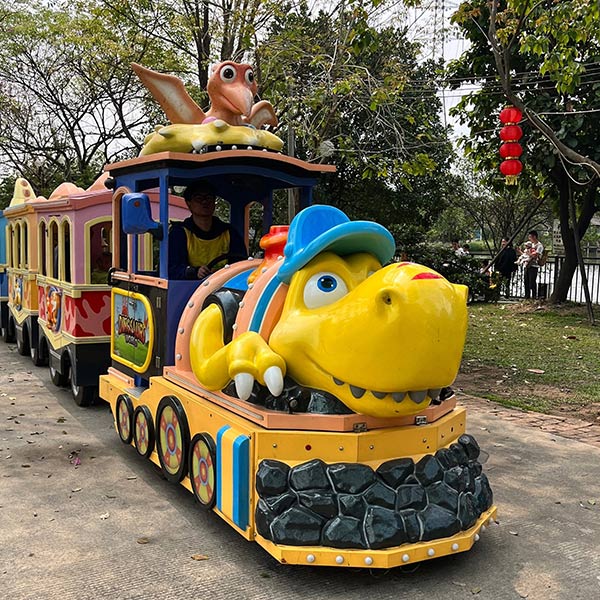
Choosing the right amusement park train type is not only about appearance. It affects your project budget, route planning, passenger capacity, operating cost, maintenance difficulty, visitor experience and long-term return on investment. The main types of amusement park trains include trackless trains, track trains, electric amusement trains, diesel or gasoline tourist trains, steam-style trains, mall trains, scenic area trains, kids trains and custom themed trains.

For a small indoor venue, a compact electric trackless train may be the best choice. For a large scenic area, a higher-capacity tourist train may be more practical. For a cultural attraction or theme park, a vintage steam-style train ride can become both a transportation tool and a landmark attraction.

If you are new to this equipment, you can first read our guide on what an amusement park train is. This article focuses more deeply on different amusement park train types and how buyers can choose the right model for a park, resort, mall, zoo, scenic area or tourist attraction.

What Are the Main Types of Amusement Park Trains?

Amusement park trains can be classified in several ways. For buyers, the most useful method is to classify them by track system, power source, application scenario, passenger capacity and theme style.

Classification MethodCommon Train TypesWhy It Matters
By track systemTrackless train, track train, mini rail trainAffects route flexibility, civil work and installation cost
By power sourceElectric, diesel, gasoline, steam-styleAffects operating cost, noise, emissions and endurance
By application scenarioMall train, theme park train, zoo train, resort train, scenic trainAffects capacity, comfort and route planning
By design styleVintage, cartoon, modern, custom themedAffects visitor experience and photo value
By capacityKids train, family train, tourist train, large-capacity trainAffects hourly throughput and peak-season operation

A professional buyer should not ask only, “Which train looks good?” The better question is:

Which amusement train type matches my site size, visitor flow, road condition, operating hours, theme style and budget?

Amusement Park Train Types by Track System

Trackless Amusement Park Trains

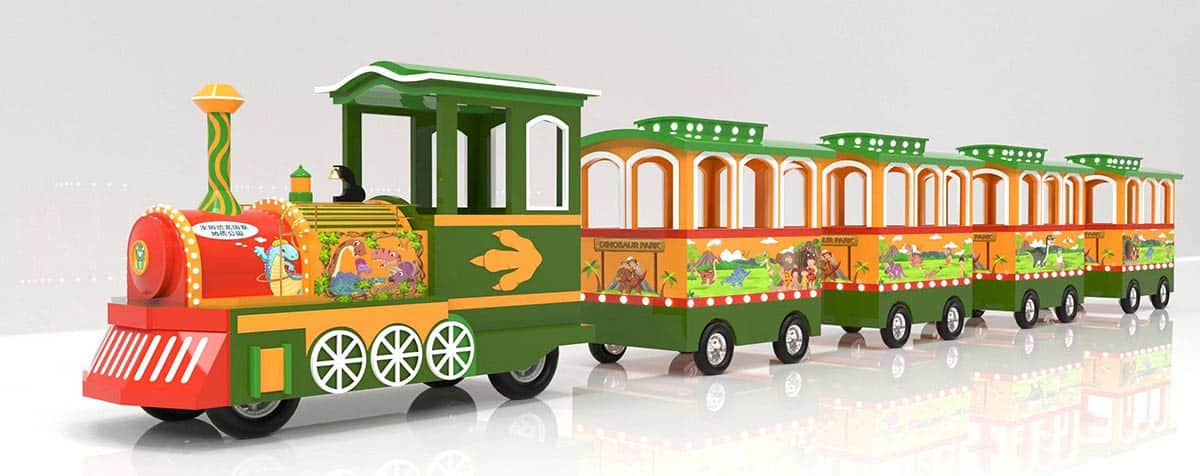
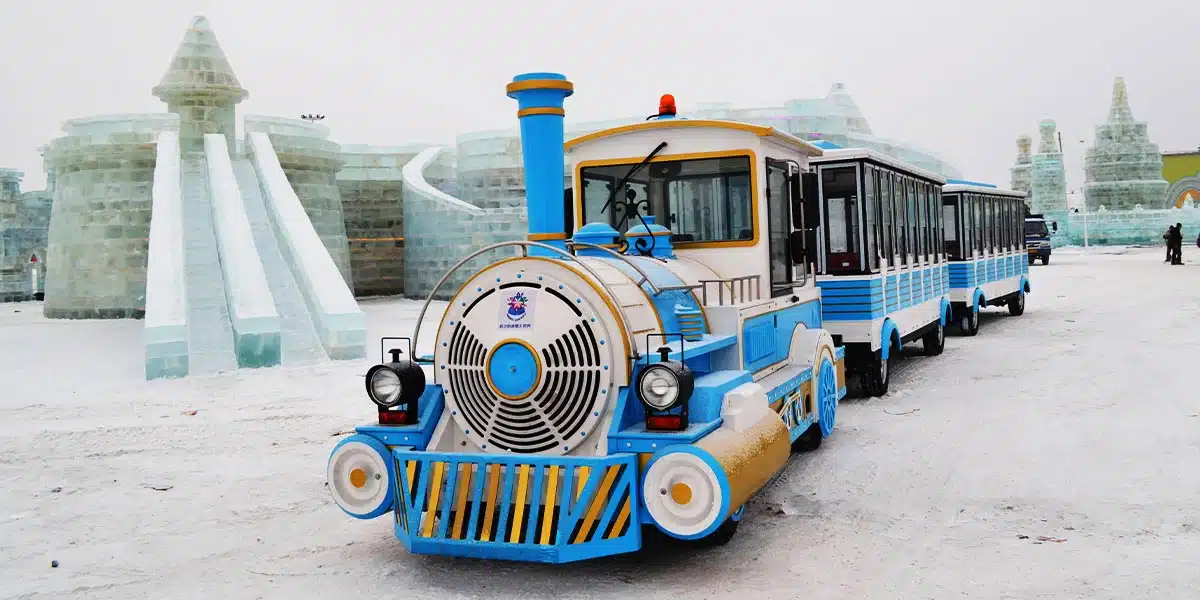
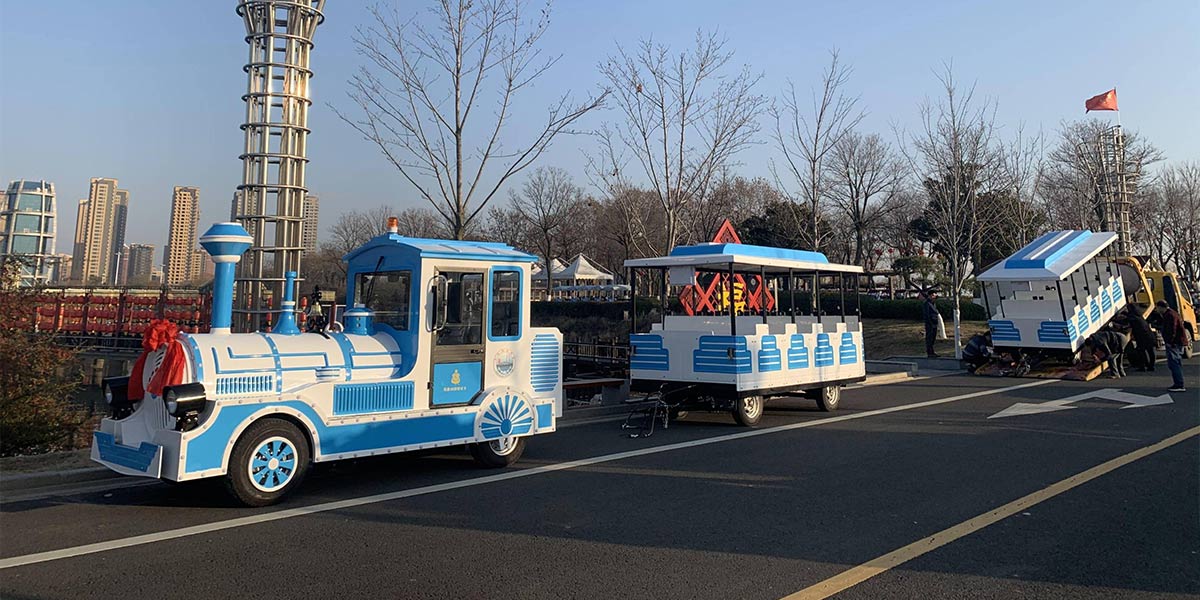
A trackless train is one of the most popular amusement park train types today. It looks like a small train, but it runs on rubber tires instead of steel rails. It can operate on paved roads, park paths, resort roads, plazas and sightseeing routes without building a fixed railway.

Trackless trains are popular because they are flexible, easier to launch and usually more cost-effective in the early stage of a project. The route can be changed when the park layout changes, and the train can also be used for seasonal events, festivals or temporary operating areas.

Best for:

  • Shopping malls
  • Theme parks
  • Resorts
  • Scenic areas
  • Zoos
  • City parks
  • Large communities
  • Carnivals and temporary events

Main advantages:

  • No rail construction required
  • Flexible route planning
  • Lower civil construction cost
  • Faster project launch
  • Suitable for many paved surfaces
  • Easier to relocate within the same site

Limitations:

  • Requires suitable road surface
  • Route safety depends on road design and operation management
  • Turning radius and slope ability must match the site
  • Capacity may be lower than large rail tourist trains

For many buyers who want flexible operation and faster installation, a trackless train is usually the first option to consider. If you want a more detailed scenario analysis, our guide on where you can use a commercial trackless train explains common applications in parks, malls, resorts and public attractions.

Track Amusement Park Trains

A track train ride runs on a fixed rail line. Compared with a trackless train, it provides a more authentic train experience. The route is fixed, the running direction is stable, and the entire system can be designed as a complete scenic or themed journey.

Amusement track trains are often used in large theme parks, cultural tourism towns, forest parks, mine parks, heritage attractions and scenic routes where the train itself becomes part of the visitor experience.

Best for:

  • Large theme parks
  • Cultural tourism projects
  • Forest parks
  • Heritage sites
  • Mining-themed parks
  • Fixed scenic sightseeing routes
  • Large parks with permanent tour lines

Main advantages:

  • Strong “real train” experience
  • Stable route and guided operation
  • High theme value
  • Suitable for long-term landmark projects
  • Can become a signature attraction

Limitations:

  • Higher initial investment
  • Requires rail design and construction
  • Route is difficult to change later
  • Longer project planning period
  • More site engineering work

A track train is a better choice when the project wants to create a permanent tourist route or iconic scenic attraction, not just a flexible transport service. Before buying a rail-based train system, buyers should also understand common risks in route design, rail construction and supplier selection. You can refer to our guide on buying amusement track trains and avoiding costly traps.

Mini Rail Trains

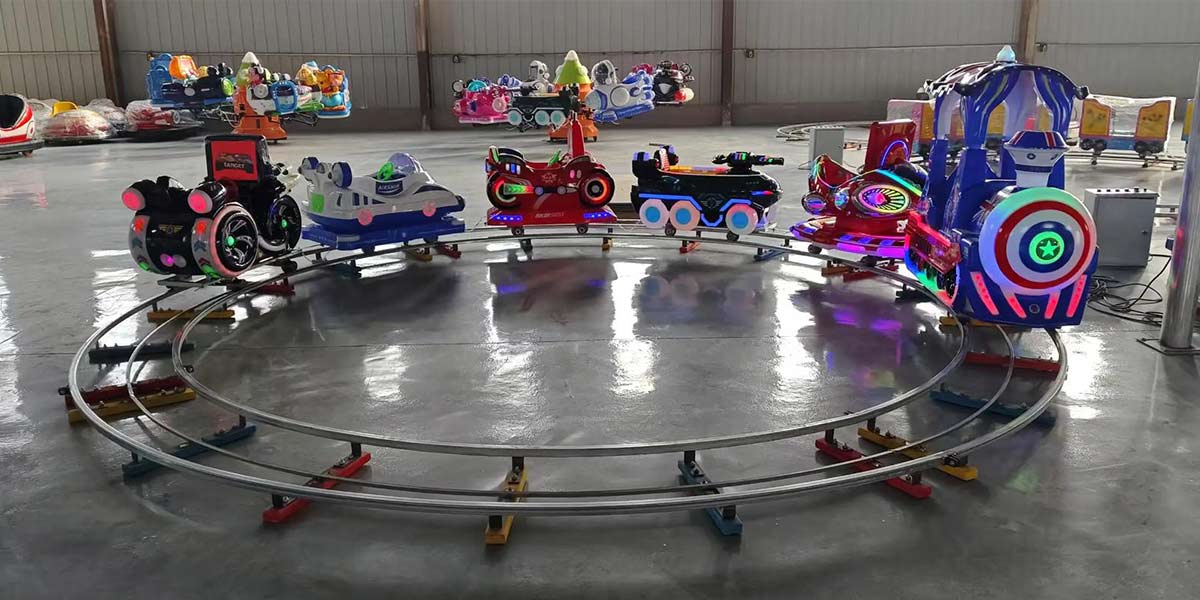
A mini rail train is a smaller rail-based train ride. It is often used in children’s parks, family entertainment centers, small amusement parks and indoor or outdoor themed areas. It provides a gentle and controlled ride experience for children and families.

Mini rail trains are usually not designed for large-scale transportation. Their value is more about fun, safety, decoration and family interaction.

Indoor kiddie track train rides for family entertainment centers and amusement parks

Best for:

  • Children’s parks
  • Indoor family entertainment centers
  • Kids amusement zones
  • Small parks
  • Parent-child attractions

Main advantages:

  • Strong appeal to children
  • Safe and controlled route
  • Good decorative value
  • Suitable for themed kids zones
  • Easy to combine with other kiddie rides

Limitations:

  • Limited capacity
  • Less route flexibility than trackless trains
  • More entertainment-focused than transport-focused

For children’s train projects, safety management is especially important. If your project mainly serves children, our kids amusement trains safety and operation guide can help you plan passenger rules, operator training and daily inspection.

Amusement Park Train Types by Power Source

Electric Amusement Park Trains

An electric theme park train is now the mainstream choice for many parks, malls and tourist attractions. It is powered by batteries and is usually quieter, cleaner and easier to operate than fuel-powered models.

Electric trains are especially suitable for locations that require low noise, zero local emissions and better passenger comfort.

Best for:

  • Shopping malls
  • Eco parks
  • Zoos
  • Resorts
  • Urban parks
  • Indoor or semi-indoor venues
  • Family entertainment centers

Main advantages:

  • Low noise
  • No local exhaust emissions
  • Lower daily energy cost
  • Smooth operation
  • Good visitor comfort
  • Better for animal parks and nature attractions

Limitations:

  • Battery range must match the route length
  • Charging time and charging station planning are important
  • Battery replacement cost should be included in long-term planning

For most modern amusement train projects, electric trains provide a good balance between comfort, environmental performance and operating cost. If you are comparing battery options, our article on lithium battery electric sightseeing train features explains why lithium batteries are becoming popular in modern tourist train projects.

Diesel or Gasoline Amusement Trains

Diesel or gasoline amusement trains are usually used in large outdoor areas, long routes or sites where charging facilities are limited. They provide stronger endurance and can be useful for mountainous scenic areas, large parks or long-distance sightseeing routes.

Best for:

  • Large outdoor scenic areas
  • Long-distance tourist routes
  • Mountain parks
  • Sites with limited charging infrastructure
  • Projects requiring stronger climbing ability

Main advantages:

  • Strong power
  • Long endurance
  • Suitable for longer routes
  • Less dependent on charging stations

Limitations:

  • Higher fuel cost
  • More noise
  • Exhaust emissions
  • More engine maintenance
  • Not suitable for indoor or eco-sensitive areas

Fuel-powered train rides are not the best choice for every project, but they still have value in special outdoor environments where endurance and power are more important than quiet operation.

Steam-Style Tourist Train Rides

A steam-style tourist train is usually designed to look like a classic steam locomotive. In many modern projects, the steam effect is simulated while the actual power system can be electric or fuel-based.

The main value of this train type is atmosphere. It creates nostalgia, storytelling and photo appeal.

Best for:

  • Theme parks
  • Cultural tourism towns
  • Historic streets
  • Film studios
  • Heritage attractions
  • Resorts with vintage themes
  • Family tourist attractions

Main advantages:

  • Strong visual identity
  • High photo value
  • Good for storytelling
  • Suitable for themed scenic routes
  • Can become a landmark attraction

Limitations:

  • Exterior customization may increase cost
  • Decorative parts need maintenance
  • Not always the lowest-cost option

If your project needs a memorable “moving landmark,” a steam-style tourist train can be more valuable than a basic transport vehicle.

Hybrid or Special Power Trains

Some projects may use hybrid or special power systems depending on terrain, route length and local requirements. These are not the most common options, but they can be useful for large scenic routes or customized tourism projects.

Before choosing a special power system, buyers should calculate:

  • Route distance
  • Slope and road condition
  • Daily operating hours
  • Energy supply
  • Maintenance ability
  • Local environmental rules
  • Long-term spare parts supply

For most commercial buyers, electric and diesel/gasoline systems remain the most practical choices.

Amusement Park Train Types by Application Scenario

Shopping Mall Trains

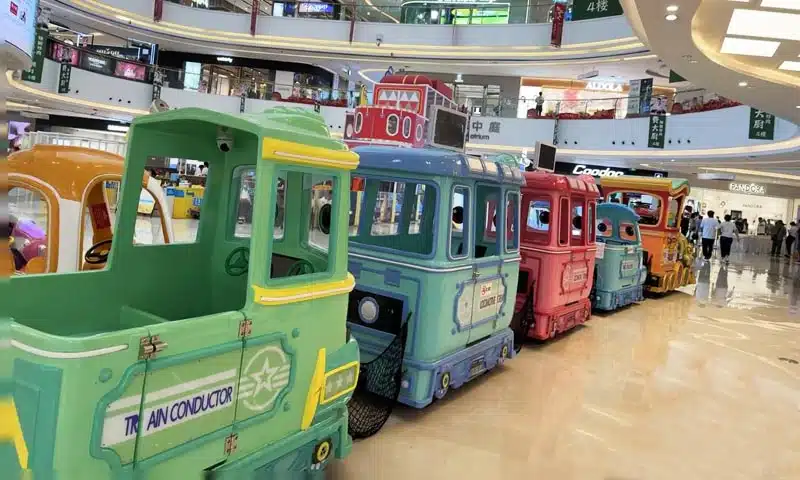
A shopping mall train is usually a compact electric trackless train. It should be quiet, colorful, easy to operate and suitable for indoor family traffic.

The goal of a mall train is not long-distance transport. It is mainly used for children’s entertainment, family engagement and additional revenue inside a commercial space.

Recommended train type:
Electric trackless train or mini train ride.

Key selection points:

  • Compact turning radius
  • Low noise
  • Bright appearance
  • Safe speed control
  • Easy charging
  • Soft family-friendly design
  • Easy operation for mall staff

If your project is specifically for a shopping mall, you can also read our buyer’s guide on choosing the best shopping mall trackless train brand.

Theme Park Trains

Theme park trains can be trackless or track-based, depending on the park layout. A large theme park may use a track train to connect themed zones, while a smaller park may choose a trackless train for flexible internal transportation.

Recommended train type:
Track train, trackless tourist train or themed steam-style train.

Key selection points:

  • Passenger capacity
  • Route length
  • Theme design
  • Station planning
  • Queue management
  • Visitor flow efficiency
  • Photo and storytelling value

A theme park train should not only move people. It should also support the park’s story, atmosphere and guest experience.

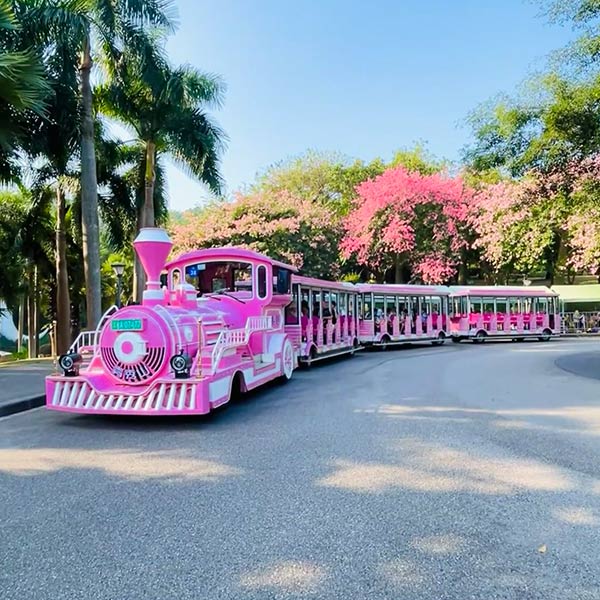
Sightseeing Trackless Train for Flower Park

Scenic Area Tourist Train Rides

A scenic area tourist train is often used to connect parking lots, entrances, viewing platforms, lakeside routes, forest areas or mountain attractions. It can reduce walking pressure and improve visitor experience.

Recommended train type:
Electric or diesel tourist train, depending on route length and terrain.

Key selection points:

  • Route distance
  • Slope and road condition
  • Passenger capacity
  • Weather protection
  • Battery range or fuel endurance
  • Maintenance access
  • Emergency route planning

For eco-sensitive scenic areas, electric trains are usually better. For long routes or steep outdoor terrain, fuel-powered or high-power electric options may be considered.

Zoo and Safari Park Trains

Zoo trains need to be quiet, stable and comfortable. In animal parks, low noise and low emissions are especially important because they reduce disturbance to animals and visitors.

Recommended train type:
Electric trackless train or electric track tourist train.

Key selection points:

  • Low noise
  • Smooth driving
  • Wide viewing windows
  • Safe doors or barriers
  • Slow sightseeing speed
  • Comfortable seating
  • Easy cleaning and maintenance

A zoo train should help visitors observe animals comfortably while keeping the environment calm.

Resort and Hotel Trains

Resort trains are often used for guest transport, family entertainment and photo-friendly sightseeing. They may connect hotel buildings, beaches, lakes, restaurants, playgrounds and activity areas.

Recommended train type:
Electric trackless train or custom themed tourist train.

Key selection points:

  • Comfortable seats
  • Weather protection
  • Elegant appearance
  • Quiet operation
  • Good night lighting
  • Custom branding
  • Anti-corrosion design for seaside resorts

For seaside resorts, anti-corrosion treatment and weather-resistant materials are especially important.

City Sightseeing Train Rides

City sightseeing trains are usually trackless tourist trains that run on approved urban routes or tourist streets. They serve as both transportation and a tourism product.

Recommended train type:
Electric or fuel-powered trackless sightseeing train.

Key selection points:

  • Road legality
  • Passenger capacity
  • Lighting and signage
  • Audio guide system
  • Safety doors
  • Branding design
  • Easy maintenance

City sightseeing projects should check local traffic and road operation requirements before purchasing.

Cultural and Historical Attractions

For old towns, film studios, museums, heritage streets and cultural tourism projects, the train’s appearance may be as important as its function.

Recommended train type:
Steam-style tourist train, vintage track train or custom themed trackless train.

Key selection points:

  • Vintage design
  • Themed painting
  • Photo appeal
  • Storytelling effect
  • Station design
  • Audio guide or multimedia system

In this type of project, the train is not just transport. It becomes part of the cultural experience.

Train Capacity Guide: Which Size Should You Choose?

Passenger capacity should match visitor flow, route length and operating frequency. A train that is too small may create long queues. A train that is too large may waste energy and increase purchase cost.

Project TypeSuggested CapacityRecommended Train Type
Indoor mall / small kids zone8–16 passengersMini electric train
Small park / city plaza16–28 passengersElectric trackless train
Medium scenic area / zoo28–42 passengersTourist trackless train
Large resort / theme park42–72 passengersLarge electric or fuel tourist train
Fixed scenic route50+ passengersTrack tourist train

Capacity should be calculated based on peak-hour visitor flow, not only average daily traffic. If your park receives large weekend or holiday crowds, higher-capacity trains may improve operating efficiency.

Trackless Train vs Track Train: Quick Comparison

FactorTrackless TrainTrack Train
Route flexibilityHighLow
Initial civil workLowerHigher
Installation speedFasterSlower
Authentic train feelingMediumHigh
Route stabilityDepends on road and driverVery stable
Best forFlexible parks, malls, resortsFixed scenic routes, theme parks
Route changesEasyDifficult
Long-term landmark valueMediumHigh

If you need a flexible and fast-launch solution, choose a trackless train. If you want a permanent scenic route with a stronger railway experience, choose a track train.

For a deeper comparison, read our full guide on trackless train vs track train.

Key Factors When Choosing an Amusement Park Train Type

1. Site Size and Route Length

Small venues usually need compact electric trains. Large scenic areas need trains with longer range, stronger power and higher capacity. Route length directly affects battery size, charging plan, fuel use and operating schedule.

2. Road and Terrain Conditions

Flat paved roads are suitable for most trackless trains. Slopes, curves, gravel roads and complex outdoor terrain require stronger chassis, braking and power configuration.

For track trains, professional route design and rail construction are essential.

3. Visitor Group

Children and families prefer colorful, cartoon or soft-themed trains. Adult tourists may prefer comfortable sightseeing trains. Cultural attractions may need vintage or steam-style trains.

The train type should match the visitor profile.

4. Transport or Attraction Function

Some trains mainly solve transportation problems. Others are designed as attractions. A transport train should focus on capacity, reliability and efficiency. An attraction train should focus more on theme, photo value and experience.

5. Operating Cost

Electric trains usually have lower daily energy cost and less noise. Fuel-powered trains may offer longer endurance but require fuel, engine maintenance and emission management.

Buyers should compare total life-cycle cost, not only purchase price. For electric train projects, battery condition is a major long-term factor. Our guide on electric sightseeing train battery maintenance vs replacement can help operators decide whether to maintain or replace aging batteries.

6. Maintenance and Spare Parts

A good amusement train project needs long-term maintenance support. Before buying, check whether the manufacturer provides manuals, spare parts, technical guidance and after-sales service.

Downtime during peak season can cost more than the price difference between two suppliers. For daily operation and maintenance planning, refer to our trackless train maintenance SOP.

7. Safety and Emergency Planning

Train safety is not only about the product itself. It also depends on speed control, route planning, passenger boarding rules, emergency response and operator training.

Buyers should check local safety rules before operation. IAAPA provides general ride safety tips for guests, including following posted rules, obeying height and health restrictions, keeping hands and feet inside the ride and staying seated until the ride stops. For standards references, ASTM F24 covers amusement ride design, manufacturing, testing, operation, maintenance, inspection and quality assurance.

Useful external references:

8. Customization

Custom train ride design can improve branding and visitor experience. Buyers can customize:

  • Train head shape
  • Carriage color
  • Seating style
  • Roof style
  • Lighting
  • Audio guide
  • Logo
  • Theme painting
  • Open or enclosed carriage
  • Air conditioning or fan options

Customization is especially valuable for resorts, theme parks, cultural towns and branded tourist attractions.

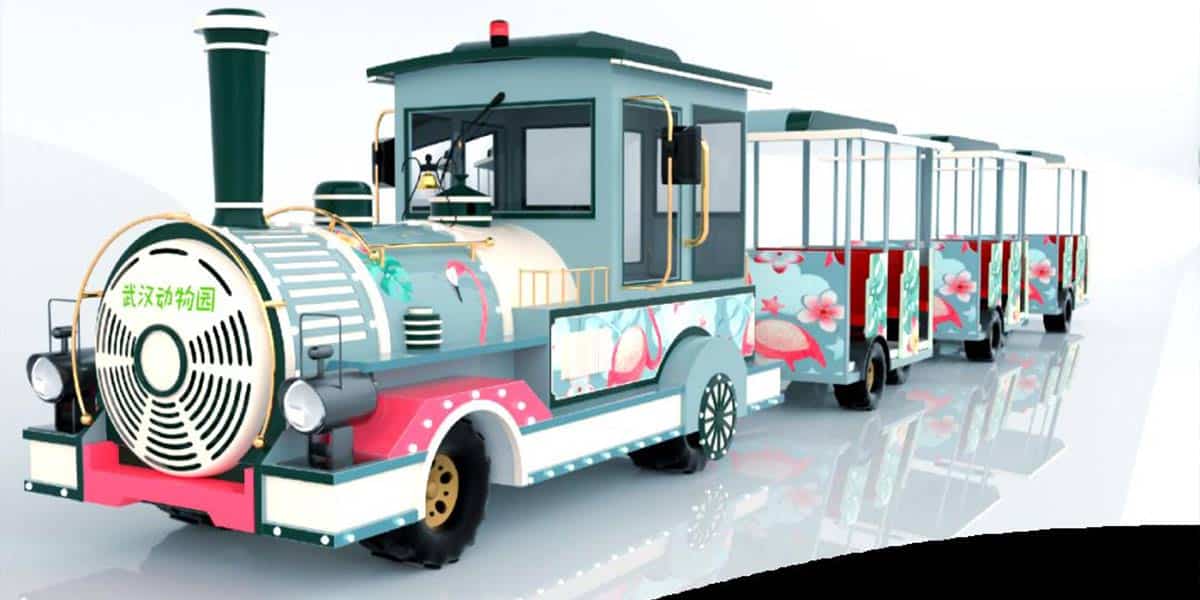
Flamingo theme trackless train for zoo park, scenic area and family tourist attractions

Common Buying Mistakes to Avoid

Many buyers make mistakes because they focus only on appearance or low price. A better purchase decision should consider operation and long-term value.

Avoid these mistakes:

  • Buying a train before confirming route length
  • Ignoring slope and road conditions
  • Choosing too small a capacity for peak traffic
  • Choosing a fuel train for a quiet indoor or eco-sensitive site
  • Choosing a track train without enough civil work budget
  • Ignoring charging time and battery range
  • Focusing only on exterior design while ignoring chassis quality
  • Forgetting spare parts and maintenance support
  • Not checking local safety and traffic requirements
  • Choosing a supplier without project guidance

A good amusement park train should fit your site, not just your product catalog preference.

How to Choose a Reliable Amusement Park Train Manufacturer

The right manufacturer should not only sell a train. It should help buyers choose the right model, capacity, power system, route plan and maintenance solution.

Before ordering, ask:

QuestionWhy It Matters
Can the manufacturer recommend a model based on your site?Prevents wrong train type selection
Can they provide electric and fuel-powered options?Gives flexibility for different routes
Can the appearance be customized?Helps match the park theme
Can they support route and capacity planning?Improves operation efficiency
Are manuals and maintenance documents provided?Helps long-term operation
Are spare parts available?Reduces downtime
Is after-sales support clear?Protects your investment

If you need a supplier checklist, read our guide on how to choose a reliable trackless train manufacturer.

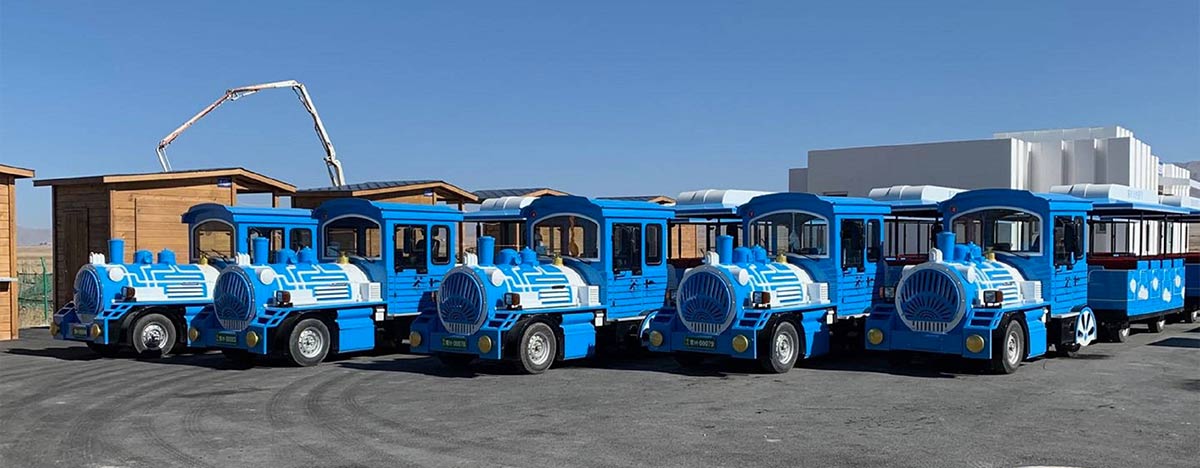
Amusement park trains for sale from factory with multiple blue tourist train sets
Amusement Park Trains for Sale from Factory Carnee Rides

How Carnee Trains Helps Buyers Choose the Right Train Type

Choosing the right amusement train comes down to more than picking a model from a catalogue. Site conditions, visitor profiles, route length and operating budget all pull in different directions — and the wrong choice shows up fast once the train is running.

Carnee Trains works with parks, shopping malls, resorts, zoos, scenic areas and city sightseeing operators to match the right train type to each project. Before recommending anything, we look at:

  • Site size and road condition — paved indoor loops, gravel outdoor paths and unpaved resort terrain each call for a different drivetrain and chassis setup

  • Route length and passenger capacity — a 400m mall loop and a 3km lakeside sightseeing route have completely different throughput and battery requirements

  • Target visitors — children’s venues, family parks and adult tourist circuits need different seat configurations and speed profiles

  • Power preference and local climate — electric motors suit enclosed or noise-sensitive spaces; diesel or gas options handle longer outdoor routes in humid or high-altitude environments

  • Theme design and budget — from standard models to fully custom appearances, the visual brief shapes both the production timeline and the unit cost

  • Operation schedule and maintenance needs — high-frequency commercial use requires a different maintenance plan than seasonal or weekend-only operation

Our train range covers two main directions. Trackless train for sale is the more flexible option — no track infrastructure, easier to reroute, and well suited to malls, resorts and venues where the path may change. Track train ride for sale makes sense when the route is fixed and you want a classic, immersive experience — popular for theme parks, children’s rides and scenic railway circuits where the track itself is part of the attraction.

Beyond model selection, we support buyers through appearance customization, technical configuration, export packing, shipping coordination, on-site operation guidance and after-sales service.

If you are not sure which train type fits your project, send us your site layout, route length, estimated passenger flow and operating plan. Our team will come back with a practical recommendation — not just a product list.

FAQ About Amusement Park Train Types

A trackless train is better for flexible routes, lower civil work and faster installation. A track train is better for fixed scenic routes, authentic train experience and long-term landmark projects. The better choice depends on your route, budget and business model.

Yes, electric amusement park trains are often better for malls, zoos, resorts, parks and eco-friendly attractions because they are quiet, clean and have lower daily energy costs. Diesel trains may be better for long routes, steep terrain or places with limited charging facilities.

A compact electric trackless train is usually the best choice for a shopping mall. It is quiet, colorful, easy to operate and does not require rail construction. It works well for children’s entertainment and family traffic attraction.

A scenic area can use either an electric trackless tourist train or a diesel tourist train, depending on route length and terrain. Electric trains are better for short, eco-sensitive routes. Diesel or high-power models may be suitable for long routes or steep outdoor areas.

Conclusion: The Best Train Type Depends on Your Project

There is no single right answer — the best amusement park train type is the one that fits your route, your visitors and your operating reality. If you have a site layout or project brief ready, send it to our team and we will recommend a specific model based on your actual conditions — not just a general category.

Leave A Message
If you are interested in our products and want to know more details,please leave a message here,we will reply you as soon as we can.
  • author
    Leo Ma | Founder & CEO, Carnee Rides
    With over 27 years of hands-on experience in the amusement rides industry, Leo Ma has transformed his deep frontline expertise into leading a premier global amusement equipment manufacturing company. Having worked his way up from the sales floor to the Founder of Carnee Rides, Leo understands exactly what park investors need: safe, durable, and high-ROI equipment. Today, he shares his decades of insider knowledge to help clients worldwide make smart, factory-direct purchasing decisions.
Service Station
Leave A Message
Leave A Message
If you are interested in our products and want to know more details,please leave a message here,we will reply you as soon as we can.

Home

Products

About

Contact