
what are you looking for?

Whether you operate a pastel-colored kiddie train in a modern shopping mall or a heavy-duty vintage amusement park train at a large outdoor scenic resort, preventive maintenance is the ultimate key to maximizing your Return on Investment (ROI).
As a leading trackless train manufacturer with over 20 years of experience, Carnee Rides has found that over 80% of amusement park trains breakdowns stem from a lack of daily care. To guarantee absolute passenger safety and significantly extend the lifespan of your equipment, we have compiled this comprehensive, step-by-step trackless train maintenance guide and Standard Operating Procedure (SOP).
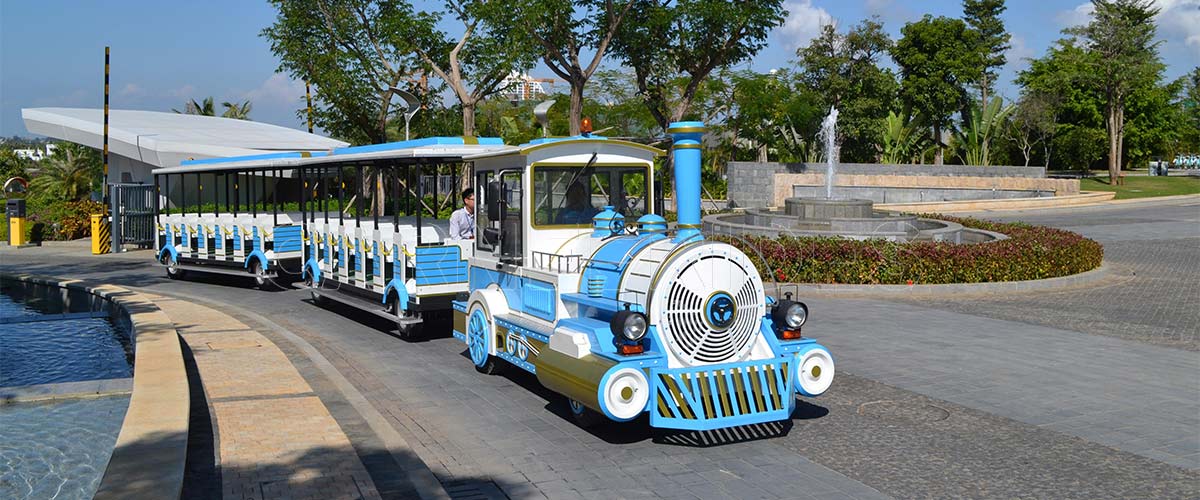
Before diving into specific parts, every amusement ride operator and fleet maintenance crew must master the six core elements of maintenance. These are the foundations for keeping your commercial tourist trains running smoothly for years:
Lubrication: Reduce mechanical friction. Regularly apply high-quality grease or gear oil to high-frequency moving parts like steering bearings, drive chains, and front/rear axles.
Cleaning: Dust and debris are the “silent killers” of electronic components. Regularly clean the FRP body and wheel rims. More importantly, use compressed air (never high-pressure water washers) to blow dust off the motor and controller to prevent overheating.
Inspection: Catch problems before they cause downtime. Conduct daily visual checks for cracks in the bodywork, fluid leaks (hydraulic or gear oil) under the chassis, swollen battery casings, and listen for abnormal mechanical noises.
Tightening: The constant vibration of a loaded sightseeing trackless train ride will eventually loosen fasteners. Prioritize checking driveshaft bolts, wheel lug nuts, suspension components, and high-voltage battery connection terminals.
Adjustment: Keep the trackless train ride in optimal working condition. This includes adjusting the clearance between brake pads and drums/discs, calibrating steering wheel free play, and fine-tuning pedal sensitivity.
Replenishment: Strictly adhere to replacement cycles. Regularly replace rear axle gear oil and brake fluid (usually every 1–2 years). For lead-acid setups, top up with dedicated distilled water, and always maintain standard tire pressure.
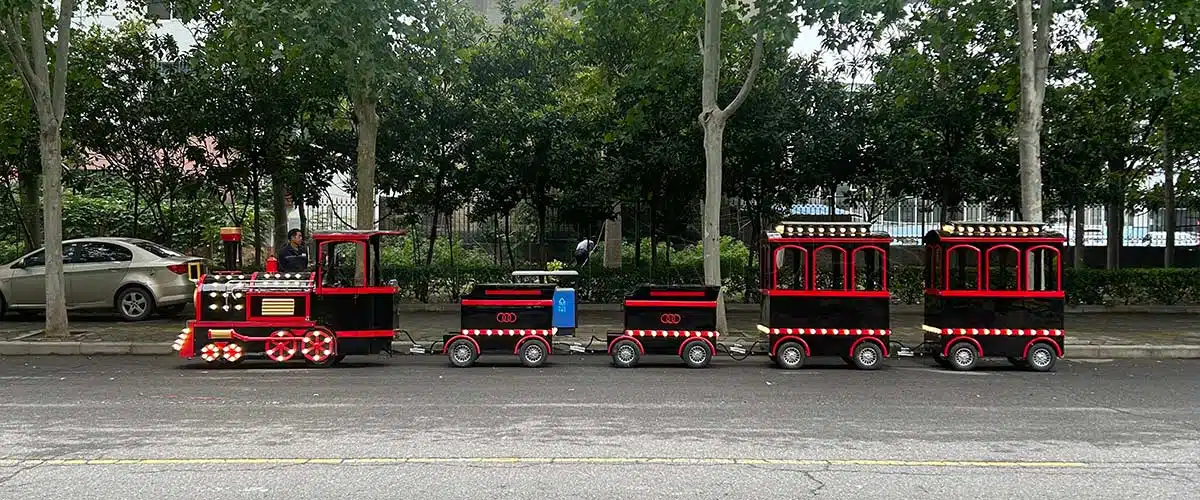
To standardize your daily operations, print out the following checklists and have your fleet operators complete them routinely:
Tires & Tire Pressure: Check the pressure of the commercial trackless train vacuum tires. Low pressure increases rolling resistance, drastically increasing power consumption and reducing range. High pressure reduces braking grip.
Braking System Test: Test the front and rear brakes at a low speed on flat ground. Ensure they are responsive and listen for any harsh metal-on-metal scraping sounds.
Lights & Horns: Turn on headlights, turn signals, warning strobe lights, and interior carriage LED strips. Test the electronic horn or classic train bell to ensure it is loud and clear.
Battery Level: Confirm the dashboard shows a full charge and the Battery Management System (BMS) shows no warning alerts.
Towing Connections: This is critical! Carefully inspect the towing hitch, safety chains, and electrical connection plugs between the locomotive and the passenger carriages. Ensure everything is securely locked.
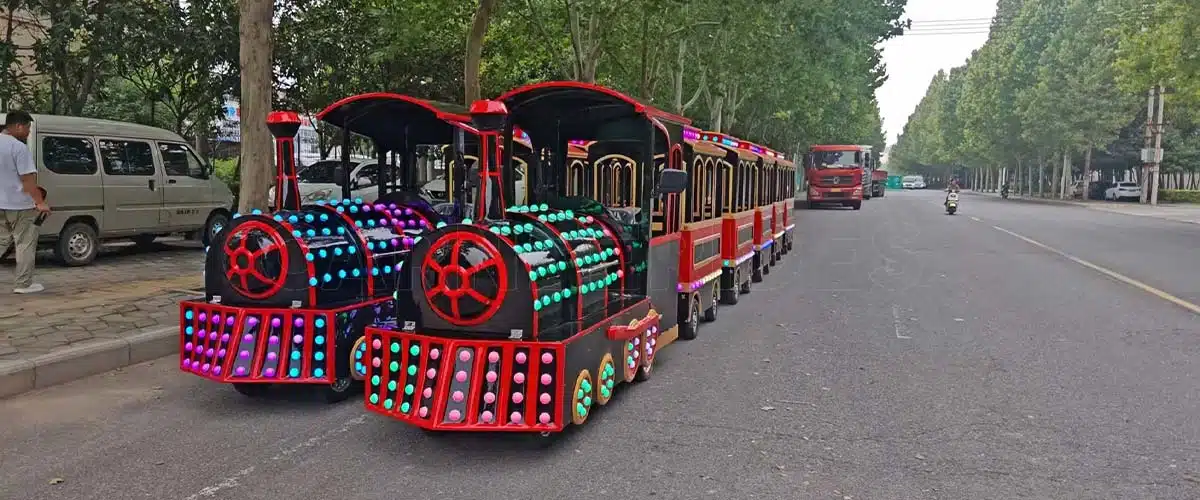
Chassis & Suspension: Use a lift or inspection pit to check the front and rear axles for oil leaks. Inspect leaf springs and shock absorbers for cracks or severe wear.
Steering System: Check if the steering wheel turns smoothly. If there is stiffness or binding, immediately loosen the front fork lock nut, apply lubrication, and ensure accurate front-wheel alignment to prevent drifting.
Drivetrain: Inspect the driveshaft and universal joints for wear, and replenish with lubricating grease.
Electrical Wiring: Disconnect the main power supply. Inspect the entire wiring harness for aging or exposed wires, ensuring all high-frequency connectors are tight and free of oxidation.
The health of your braking system is directly tied to the lives of your passengers.
Brake Pad Wear Limits: Remove the wheels periodically to inspect the brake pads. When the friction material wears down to 1/3 of its original thickness, it must be replaced immediately. Never take chances with worn brakes.
Brake Fluid Management: Brake fluid is the lifeblood of stopping power. If the fluid level in the reservoir drops below the MIN line, or if the fluid turns cloudy or dark, drain the lines and replace it with fresh fluid immediately.
Cleaning Taboos: Brake discs and drums accumulate metal dust over time. Use a dedicated brake cleaner. Never use acidic cleaners or wipe them with motor oil, as this can lead to total brake failure.
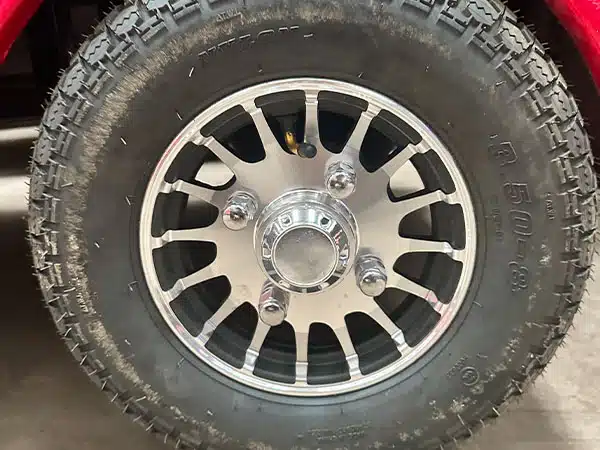
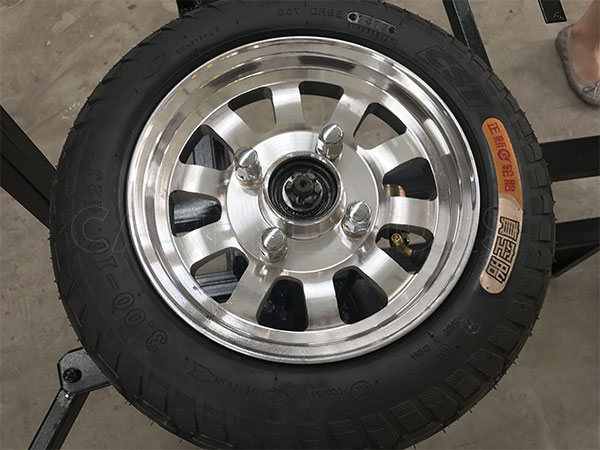
As the only part of the sightseeing train that touches the ground, tire maintenance cannot be ignored.
Regular Tire Rotation: Because the locomotive is heavy and weight distribution is uneven, periodically rotating the tires (front-to-back, left-to-right) prevents uneven wear. A high-quality commercial tire can last up to 80,000–90,000 kilometers if rotated properly.
Road Conditions & Damage: Avoid aggressive driving over potholes or sharp gravel. If you notice deep cracking or bulging on the sidewall, replace the tire immediately. Always use the exact OEM specifications.
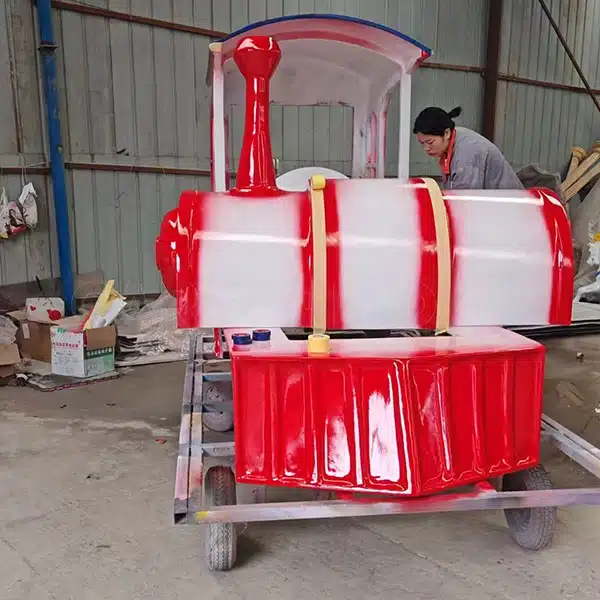
A trackless train isn’t just a vehicle; it’s a moving photo opportunity for your venue. A beautiful exterior guarantees a steady stream of riders.
Sun & UV Protection: High-quality theme park trains (like those from Carnee Rides) utilize durable Fiberglass Reinforced Plastic (FRP) and automotive-grade paint. However, prolonged exposure to harsh UV rays will eventually fade any gel coat. We highly recommend parking the train indoors or under a canopy during off-hours.
Gentle Washing: Wash the body with a pH-neutral car soap and a soft microfiber sponge. Never use highly corrosive industrial degreasers, as they will destroy the paint’s gloss. Apply anti-rust wax to metal bumpers and decorative trims periodically.

Even the best equipment cannot withstand abusive operation. Following strict driving protocols can reduce failure rates by over 50%:
Soft Start: When an electric train accelerates from a dead stop, the motor draws a massive electrical current. Stomping on the accelerator puts immense thermal stress on the controller. The correct method: Press the pedal slowly and smoothly, allowing electrical energy to convert to kinetic energy gradually.
Predictive Braking: Whenever safe, minimize sudden acceleration and hard braking. If you need to slow down, release the throttle pedal early and let the vehicle coast. This utilizes natural resistance (and regenerative braking, if equipped) to slow the train down, protecting motor components and saving a massive amount of battery power.
💡 Expert Tip: The battery pack is the heart—and the most expensive replaceable component—of your electric trackless train. Understanding battery care is mandatory for every operator
The OEM Charger Rule: Always use the original matching charger. Mixing chargers of different voltages or brands is highly dangerous and can easily lead to overcharging, overheating, or even fires.
Avoid Extreme Discharge: Never run your battery completely empty (0%) before charging. Deep discharging causes irreversible damage to the battery’s chemical activity. Even if the train is stored for the off-season, you must perform a full charge/discharge cycle at least once a month.
The rules above are just the basics. Do you know the exact maintenance differences between Lead-Acid and LiFePO4 batteries in freezing winter conditions? Want to know the exact charging habits that can extend your battery pack's lifespan by up to 3 years? Read our ultimate deep-dive guide here: 👉 Pro Tips: How to Extend Your Electric Trackless Train Battery Life
Pro Tips for Operators Tweet
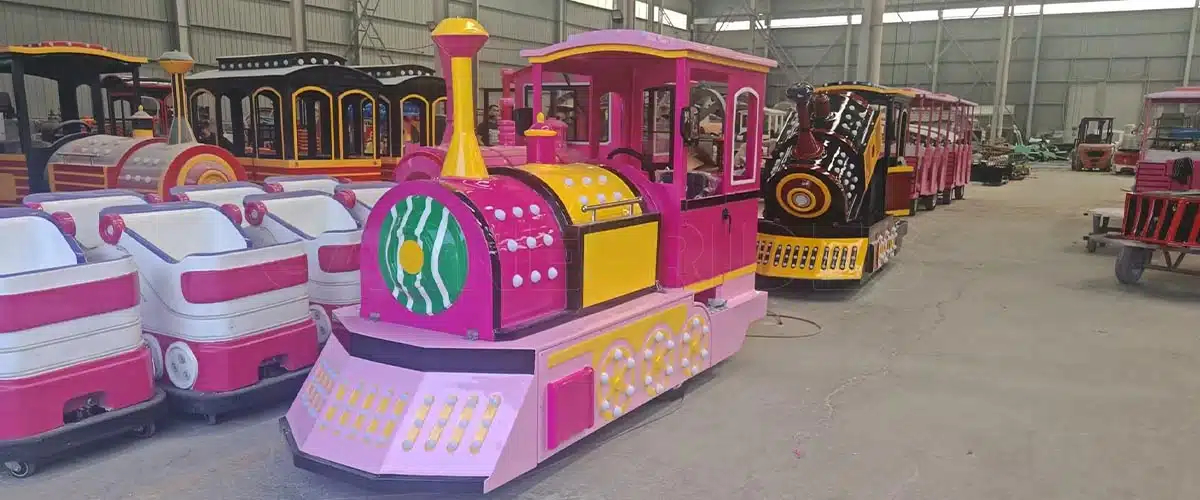
Routine trackless train maintenance is not a “chore”—it is the protective moat around your amusement ride investment. By strictly following this SOP checklist, your trackless sightseeing train will not only maintain peak performance but also provide every guest with a safe, smooth, and magical journey.
If you encounter any complex technical issues during your daily maintenance, or if you need to source OEM-grade replacement parts (such as brake pads, vacuum tires, or custom controllers), contact the Carnee Rides Engineering & Support Team. We provide reliable, factory-direct technical support and parts to keep your business moving!
A commercial trackless train requires daily preventive maintenance to ensure passenger safety. The daily checklist includes inspecting the vacuum tire pressure, testing the front and rear braking systems, checking battery charge levels (and BMS status), and physically verifying that all towing hitches and safety chains between the locomotive and carriages are securely locked.
Yes! The comprehensive maintenance checklist provided in this guide is designed to be the ultimate SOP for your fleet operators. We highly recommend copying our Daily and Weekly Inspection Checklists from the sections above and saving them as a PDF document to print and distribute to your amusement park maintenance crew. If you purchase a train from Carnee Rides, a factory-certified trackless ride maintenance manual PDF is included.
Unlike traditional trains, an electric trackless train does not require physical steel tracks. It operates on battery power (typically heavy-duty Lead-acid or LiFePO4 lithium batteries) that drives an electric motor. The operator steers the locomotive exactly like a standard motor vehicle using a steering wheel, and it pulls multiple articulated passenger carriages using heavy-duty mechanical hitches, making it highly flexible for shopping malls and scenic resorts.
Yes, maintenance requirements can vary by region. For example, in California, trackless trains used as amusement rides may fall under the jurisdiction of the DOSH (Cal/OSHA) Amusement Ride and Tramway Unit. Operators in strictly regulated areas like California must maintain rigorous, documented maintenance logs based on the manufacturer’s (OEM) guidelines and undergo annual safety inspections to remain compliant.
(For more FAQs, read: The Ultimate Trackless Train FAQ Guide: Everything You Need to Know Before Buying)

Whatsapp : +86 13623710276
Email : [email protected]
Address : High-tech Industrial Development Zone, Zhengzhou


WhatsApp us

